The legal fraternity across the North-Eastern states of Assam, Nagaland, Mizoram, Arunachal Pradesh, and Sikkim has successfully concluded its democratic process with the declaration of the Bar Council election results. Held on April 22, the election saw a competitive field of 33 candidates vying for 23 available seats. The results, officially declared on Tuesday, April 29, 2026, have brought forward a mix of veteran legal minds and influential bar representatives to lead the council for the upcoming term.
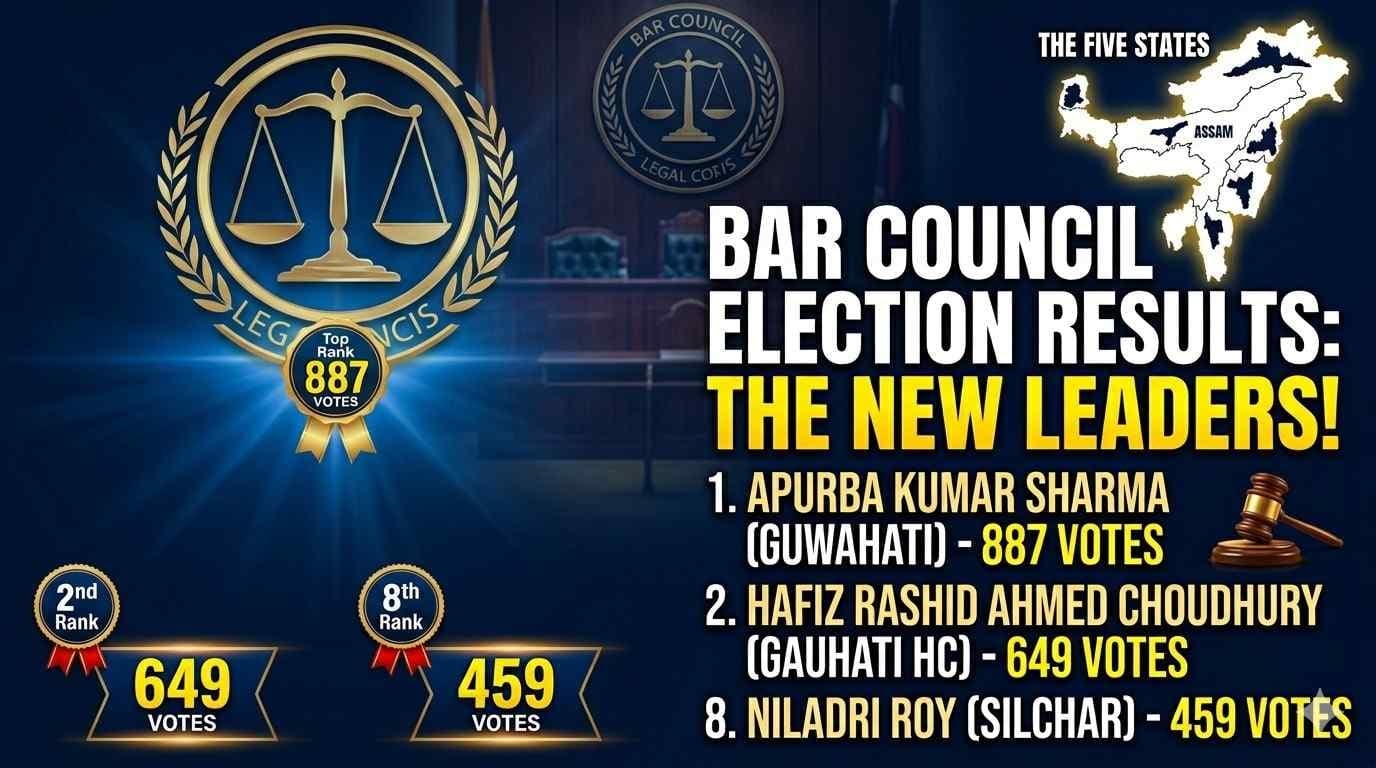
Dominating the polls was Apurba Kumar Sharma from Guwahati, who secured the top position with an impressive 887 votes. Sharma’s victory underscores his significant standing within the regional legal community and reflects a strong mandate from his peers. Close behind him, senior lawyer of the Gauhati High Court, Hafiz Rashid Ahmed Choudhury, secured the second position. Choudhury garnered 649 votes, reinforcing his reputation as a respected figure in the higher judiciary of the region.
The elections also highlighted strong representation from various bar associations across the states. Niladri Roy, the editor of the Silchar Bar Association, achieved a notable victory by securing the eighth position with 459 votes. His election is seen as a significant win for the Silchar legal circle, ensuring that the voices of practitioners from the Barak Valley are well-represented in the regional council.
The diversity of the newly elected body is further reflected in the inclusion of members from across the constituent states. Tanup Talukdar of Arunachal Pradesh secured the third position in the rankings, while Girin Pegu of Guwahati followed in fourth place. This broad geographical distribution of winners ensures that the unique legal challenges and administrative needs of each state—from the hilly terrains of Mizoram to the borders of Sikkim—are addressed by a council with deep local roots.
For the legal professionals in these five states, the Bar Council serves as a critical regulatory and representative body. The successful election of senior advocates like Hafiz Rashid Ahmed Choudhury and proactive members like Niladri Roy suggests a focus on balancing high-court advocacy with the grassroots needs of district bar associations. The council will now be tasked with maintaining professional standards and safeguarding the rights of advocates across the jurisdiction.
The election process itself was marked by high participation and rigorous competition, as evidenced by the 33 candidates who contested for the limited 23 spots. The transparency of the vote count and the timely declaration of results have been welcomed by the legal community. With the final tally now public, the transition to the new leadership is expected to bring fresh momentum to the council’s administrative and reformative agendas.
As the 23 elected members prepare to take their seats, the focus shifts to the collaborative efforts needed to modernize legal practice in the North East. Key priorities are likely to include digital infrastructure for bar members, welfare schemes for young advocates, and navigating the complexities of multi-state jurisdiction that the Bar Council of Assam, Nagaland, Mizoram, Arunachal Pradesh, and Sikkim uniquely manages.
In conclusion, the election results of 2026 represent a vote for stability and experienced leadership. With Apurba Kumar Sharma at the helm of the vote tally and seasoned experts like Hafiz Rashid Ahmed Choudhury in key positions, the legal community looks forward to a term defined by professional integrity and robust representation. The inclusion of diverse voices from Silchar to Arunachal Pradesh ensures that the council remains a truly representative body for the diverse legal landscape of the North East.