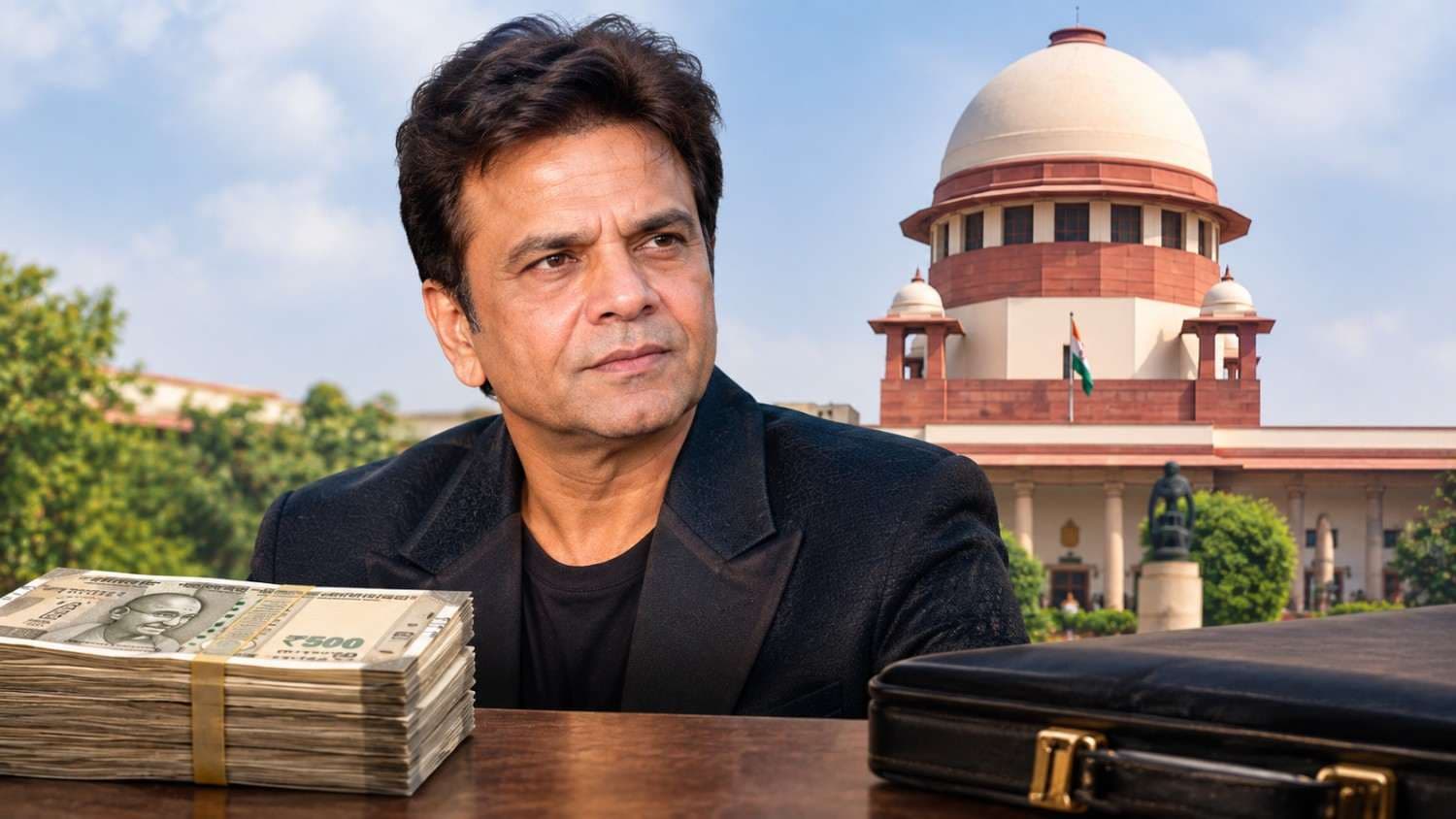
The Supreme Court on Tuesday granted Bollywood actor Rajpal Yadav a final extension to deposit Rs 5 crore with the Court Registry, thereby continuing his interim protection from surrender in seven cheque bounce cases. The bench, comprising Chief Justice of India Surya Kant, Justice Joymalya Bagchi and Justice V Mohana, was hearing Yadav’s special leave petition challenging his conviction and three-month jail sentence imposed by the Delhi High Court.
The Court had previously exempted Yadav from surrendering, subject to his depositing Rs 5 crore with the Registry. During the hearing, Senior Advocate PS Patwalia, representing Yadav, sought two weeks’ time to comply with the deposit condition. Counsel submitted that the actor currently had no liquid funds but intended to raise the amount by selling property, including immovable assets owned by his mother. He stated that the defence would return with a concrete proposal, including a draft for at least Rs 2 crore.
Chief Justice Surya Kant remarked during the proceedings that Yadav, being a Bollywood actor, should not be perceived as acting in the matter. The CJI further observed that the actor’s past conduct did not inspire confidence in his willingness to comply with court orders. Despite these observations, the bench accepted the plea for additional time, stating that a two-week extension would be granted as a.
The Court directed that Yadav’s exemption from surrender would remain in force until October 5, 2026. However, as a interim measure, the bench directed him to deposit his passport with the Registry immediately. The matter has been listed for further hearing on October 5, when the compliance status regarding the deposit will be reviewed.
The case is titled Rajpal Naurang Yadav and another v. M/s Murli Projects Pvt Ltd, SLP(Crl) 16923/2026, and arises from seven cheque dishonour complaints filed against the actor. The Delhi High Court had convicted Yadav and sentenced him to three months’ imprisonment, a judgment he is currently challenging before the Supreme Court.
By granting this final opportunity, the Court has balanced the need for judicial discipline with the practical realities of asset liquidation, while making clear that further indulgence will not be entertained beyond the stipulated date.
The order underscores the Court’s insistence on compliance with monetary conditions attached to interim relief, particularly in cases involving financial obligations arising from cheque bounce offences under Section 138 of the Negotiable Instruments Act.
No further adjournments or extensions are expected unless the full amount is deposited with the Registry by the next date of hearing.
The Court’s decision reflects its adherence to the principle that interim protections are conditional and contingent upon strict adherence to imposed terms, even when the applicant professes willingness to comply through future arrangements.