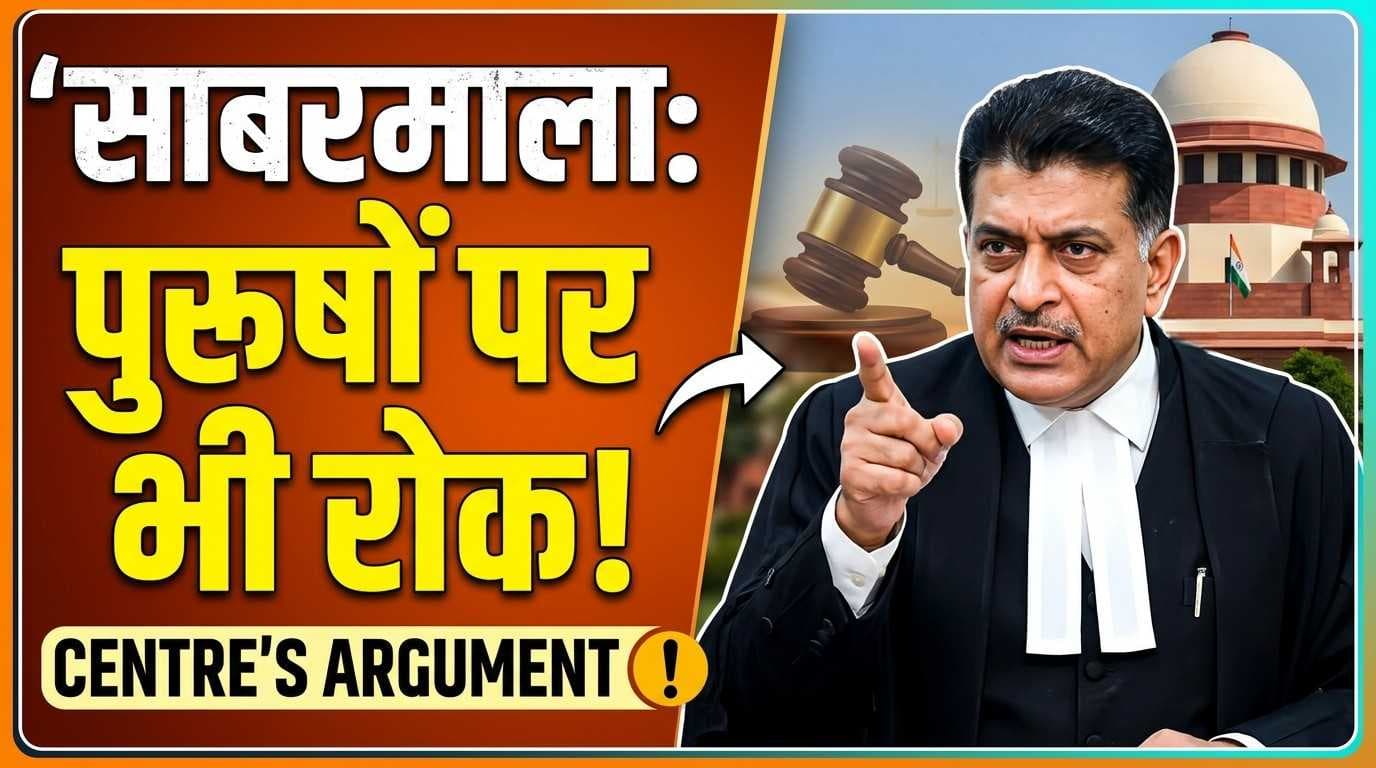
In the ongoing Sabarimala reference hearing before a nine-judge Constitution Bench, the Central Government has presented a compelling argument regarding the diversity of religious practices in India. Representing the Centre, Solicitor General Tushar Mehta pointed out that the restriction on entry in certain places of worship is not exclusively directed at women. He highlighted that there are several temples across the country where even men are prohibited from entering or participating in specific rituals. This submission aims to illustrate that such exclusions are often rooted in deep-seated denominational traditions rather than being inherently discriminatory or based solely on gender.
The Centre's argument serves to challenge the notion that all religious exclusions are a violation of the right to equality under Article 14 of the Constitution. By citing examples of male exclusion, the Solicitor General suggested that these practices are part of the unique "Essential Religious Practices" of specific deities or shrines. The government contended that the judiciary should be cautious when interfering with these age-old traditions, as they are often tied to the specific character or the "Naishtika Brahmachari" (celibate) nature of the presiding deity, as is the case with Lord Ayyappa at Sabarimala.
A significant portion of the hearing was dedicated to defining the scope of judicial review in matters of faith. The Centre argued that "constitutional morality" should not be used as a tool to override the collective conscience of a religious denomination unless the practice is patently "oppressive" or "abhorrent," such as Sati or untouchability. The Solicitor General emphasized that if a practice is not a social evil but a matter of faith, the court must respect the autonomy of the religious group. This perspective seeks to protect the pluralistic fabric of Indian society where different shrines follow vastly different customs.
The bench, led by the Chief Justice of India, engaged with the idea of whether a "denominational right" under Article 26 can exist independently of individual rights under Article 25. The Centre maintained that the rights of a religious sect to manage its own affairs in matters of religion are essential to the freedom of conscience. By bringing up the exclusion of men in other temples, the government aimed to show that religious "untouchability" is a misnomer in this context, and that these rules are often reciprocal and specific to the lore and legend of the individual temple.
This line of reasoning is crucial because it expands the debate beyond the specific facts of the Sabarimala case to the broader interpretation of religious freedom in India. If the Court accepts that gender-based restrictions can be part of a legitimate denominational practice, it would set a precedent for other pending cases, including those involving the entry of women into mosques and the rights of Parsi women married to non-Parsis. The Centre’s stance reflects a conservative approach to judicial intervention, advocating for the preservation of traditional religious boundaries.
As the proceedings continue, the nine-judge bench is tasked with reconciling these traditional arguments with modern constitutional values. The discussion on male exclusion highlights the complexity of Indian secularism, where the law must navigate a path between reform and the protection of diversity. The final ruling on this reference will determine whether the "Essential Religious Practices" test remains a viable legal standard or if the principles of individual equality will eventually take precedence over all denominational traditions, regardless of which gender they exclude.