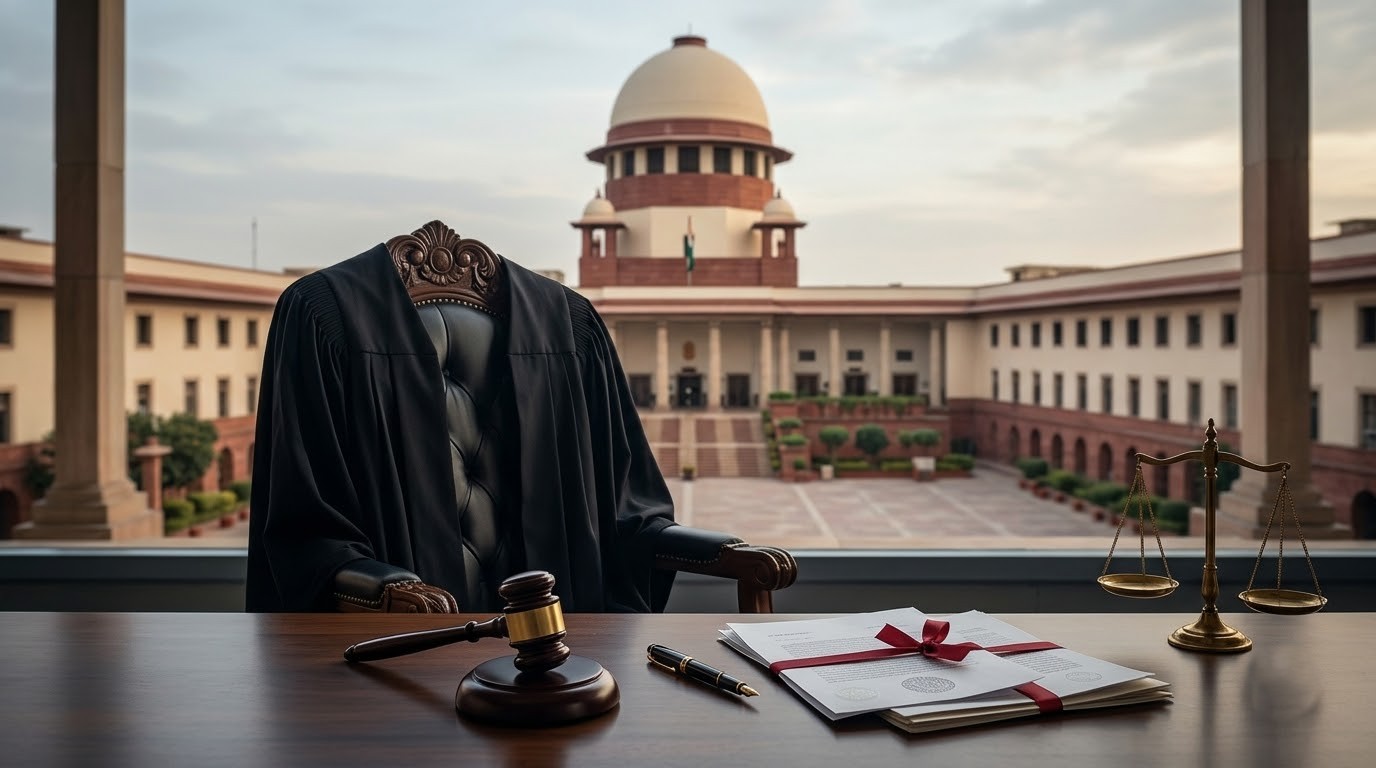
The Supreme Court on Wednesday directed the Union of India to file a counter affidavit in a public interest litigation challenging the entitlement of constitutional functionaries to post-retirement perks and amenities when they resign from office to evade removal proceedings. A bench comprising Chief Justice of India Surya Kant and Justice Joymalya Bagchi passed the order after Solicitor General Tushar Mehta submitted that the petitioner appears to have a case on merits.
The Solicitor General informed the bench that he would take instructions and file a response on behalf of the Centre. I think the petitioner has a case. The petitioner seems to have a case. I will file a response, Mehta stated during the hearing. The court subsequently adjourned the matter to allow the Union government to place its formal reply on record.
What is the core legal challenge regarding perks for resigning judges?
The petition seeks a declaration that constitutional functionaries who resign mid-tenure to avoid impeachment or removal proceedings should not be entitled to retain benefits attached to their offices. It argues that such resignations defeat constitutional accountability and violate Article 14 by creating a discriminatory regime compared to ordinary public servants.
The plea was filed to restrain the grant of perks, amenities, facilities, and other entitlements to high constitutional functionaries, specifically judges, who demit office before the conclusion of removal proceedings initiated against them. The Supreme Court had earlier issued notice on the petition.
Petitioner's Contentions on Constitutional Obligation and Article 14
The petitioner contends that holding a high constitutional office imposes an unwritten constitutional obligation to complete the tenure or to face a transparent procedure of removal. The plea argues that an easy option of resigning to avoid removal is neither contemplated nor desirable under the constitutional scheme. These kinds of resignation defeat the confidence which the Constitution places upon the High Constitutional Functionaries, the petition states.
The petition highlights historical instances where constitutional functionaries have resigned solely to avoid removal. It is argued that such resignations are tendered primarily because the functionaries are aware they would retain the same perks and amenities post-resignation as they would upon completing their full tenure.
Invoking Article 14 of the Constitution, the plea flags a disparity between constitutional functionaries and non-constitutional government employees. It points out that non-constitutional functionaries are generally not permitted to resign if they are facing departmental proceedings that may lead to removal. The petitioner argues that the position of constitutional functionaries should be higher, requiring them to demonstrate probity in public life by completing their tenure or facing removal proceedings like any other employee.
Any discrimination between such non-constitutional employees and Constitutional Functionaries is hostile discrimination and is violative of Article 14 of the Constitution, the plea asserts.
Category | Resignation During Proceedings | Entitlement to Perks Post-Resignation |
|---|---|---|
Constitutional Functionaries (Judges) | Permitted to resign to avoid removal | Retain full perks and amenities |
Non-Constitutional Functionaries | Not allowed to resign during departmental proceedings | Lose benefits if removed; resignation often barred |
The matter remains pending before the Supreme Court for further hearing upon the filing of the Centre's counter affidavit. The court's decision to seek the government's response indicates a prima facie recognition of the substantial constitutional questions raised regarding accountability, parity in public employment, and the integrity of the impeachment process.