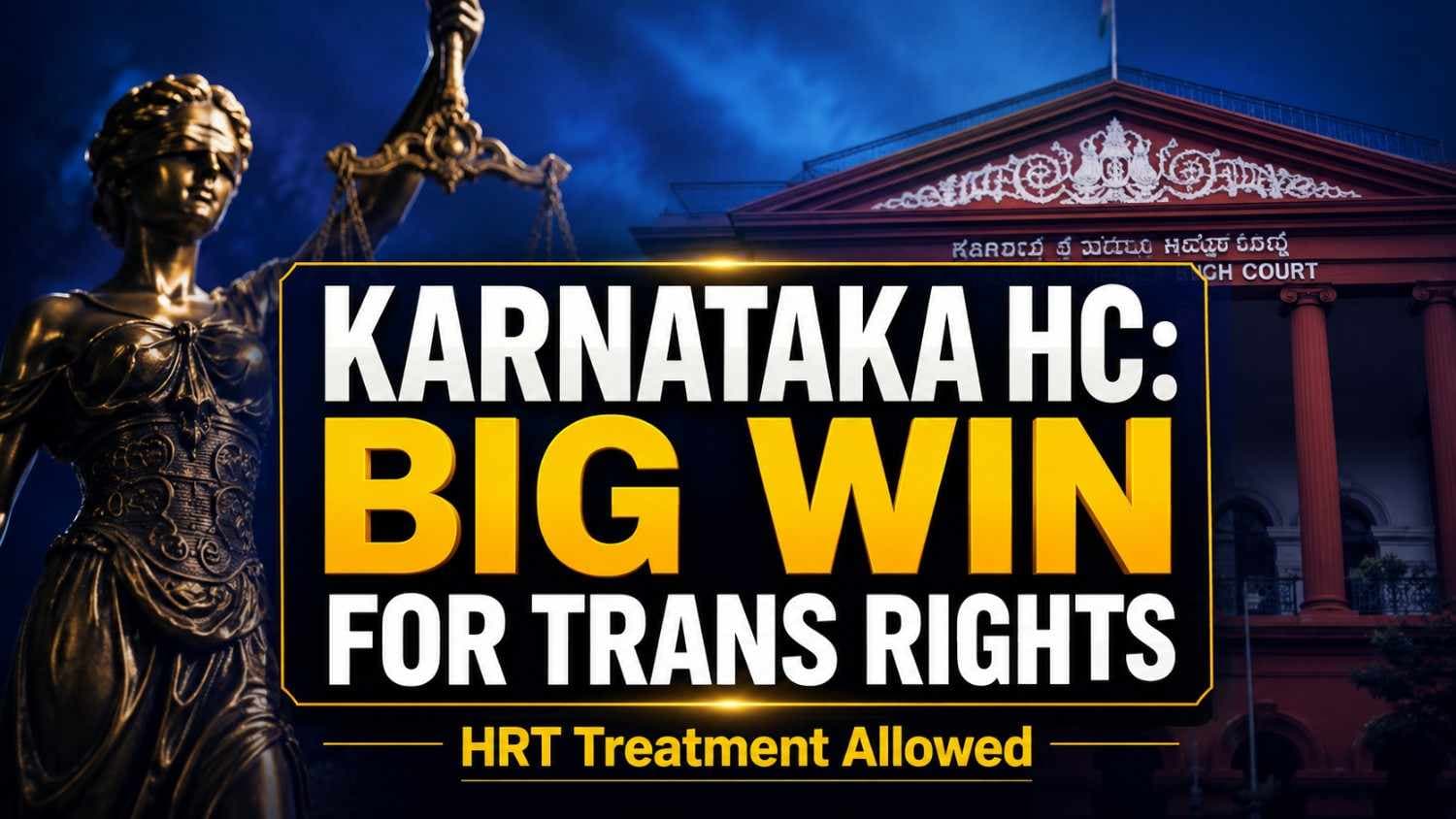
In a significant interim measure protecting the bodily autonomy and gender identity of transgender individuals, the Karnataka High Court has permitted two transwomen to continue their ongoing Hormone Replacement Therapy (HRT). The decision comes at a crucial time as the petitioners have challenged the constitutional validity of the recently enacted Transgender Persons (Protection of Rights) Amendment Act, 2026.
Justice Sachin Shankar Magadum, presiding over a single-judge bench, passed the order while hearing two separate petitions. The Court noted that the petitioners should be allowed to continue their medical treatment as per their existing records, subject to the final outcome of the writ petition and any future directions from the Supreme Court.
The legal battle stems from the controversial 2026 Amendment to the Transgender Persons (Protection of Rights) Act. The petitioners argue that the new law drastically narrows the definition of a "transgender person" under Section 2(k).
Under the original 2019 Act, the definition was broad and inclusive, recognizing self-perceived gender identity regardless of medical intervention. However, the 2026 Amendment allegedly excludes those who identify as transsexual or non-binary without specific medical procedures, creating a "legal vacuum" for many in the community.
Representing the petitioners, Senior Advocate Jayna Kothari raised alarms over the newly inserted Section 18(g) of the Amendment. This provision reportedly criminalizes acts that "force" a person to dress or conduct themselves outwardly as a transgender person under certain circumstances.
Advocate Kothari informed the Court that this vague wording has created a "chilling effect" in the medical community. Doctors and hospitals, fearing legal repercussions under the new penal provisions, have reportedly started refusing to renew prescriptions for Hormone Replacement Therapy.
"The very act of taking HRT is to allow a person to present themselves as a transgender individual. If this is interpreted as a violation of the new section, the community loses its right to healthcare and identity," the petitioners argued.
The Union Government, represented by Additional Solicitor General (ASG) Arvind Kamath, strongly opposed the interim stay. The ASG argued that the petitioners' fears were merely "anticipatory." He contended that no specific authority had officially passed an order stopping the petitioners from taking their medication.
"These tablets are available in pharmacies. No one has stopped the first petitioner from accessing her treatment," the ASG submitted. He further distinguished this case from a similar recent ruling by the Kerala High Court, where a hospital had abruptly halted treatment. In the present case, the government argued, there was no such immediate administrative action to warrant court intervention.
The Union also informed the Court that the Supreme Court is already seized of similar matters (such as Laxmi Narayan Tripathi v. Union of India) and that transfer petitions are being filed to consolidate these cases at the apex level.
Despite the Union's objections, Justice Magadum recognized the sensitivity of the medical transition process. HRT is not a treatment that can be stopped and started without significant physiological and psychological impact. By allowing the "continuation" of the therapy, the Court has ensured that the status quo of the petitioners' health and identity is maintained while the larger constitutional questions are debated.
The Court’s order stated: "The petitioner shall be permitted to continue hormone replacement therapy as per the existing medical record... subject to the outcome of the present writ petition."
This ruling follows the footsteps of the Kerala High Court, creating a judicial consensus that medical transition is a protected aspect of the right to life and privacy under Article 21 of the Constitution.
By granting this interim relief, the Karnataka High Court has sent a clear message: while the legislature has the power to amend laws, such changes cannot abruptly strip citizens of their ongoing medical care or force them into a state of legal and physical limbo.
The case (WP 11652/2026 & WP 11655/2026) remains one of the most watched legal battles concerning LGBTQ+ rights in India this year, as it directly tests the balance between state regulation and the fundamental right to self-identity.