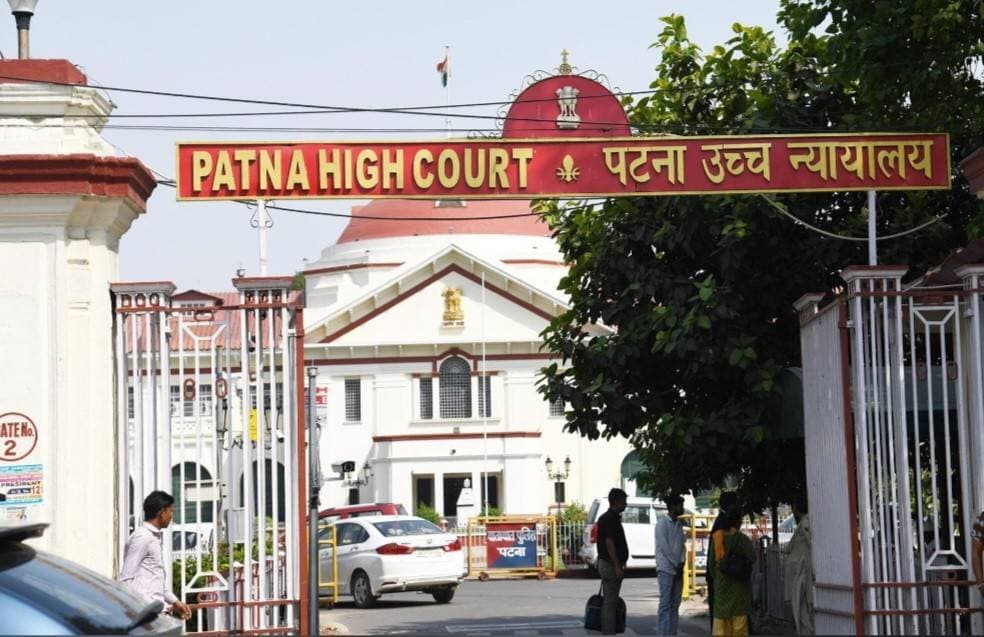
In the competitive world of political consulting, a unique, well-timed campaign strategy is worth millions in electoral dividends. When a strategist creates a blueprint that reshapes how a candidate connects with the electorate, the temptation to claim exclusive legal ownership over that concept is immense. However, a major ruling by the Patna High Court has drawn a firm legal boundary around intellectual property in public life. The court officially quashed a criminal complaint filed against prominent political strategist Prashant Kishor, declaring that abstract political campaign ideas, slogan frameworks, and grassroots mobilization strategies are not protected by copyright law.
The intense legal dispute began with a First Information Report filed at the Patliputra police station in Patna. A former associate accused Kishor of content plagiarism, intellectual property theft, and cheating, alleging that the strategist had unlawfully misappropriated a distinct political concept titled "Baat Bihar Ki." The complainant claimed that the conceptual framework, structural layout, and operational methodology of the campaign were his original creations, arguing that Kishor's subsequent utilization of a highly similar blueprint constituted a severe violation of the Copyright Act.
When the matter escalated to the High Court under Section 482 of the Code of Criminal Procedure, the judicial review focused directly on the foundational doctrines of intellectual property jurisprudence. The presiding bench emphasized a bedrock legal principle known as the idea-expression dichotomy. Under copyright law, legal protection extends exclusively to the specific, tangible form in which a thought is permanently expressed—such as written text, recorded audio, or physical artwork. The underlying, abstract concept itself can never be monopolized by a single individual, as doing so would effectively paralyze human creativity and public discourse.
The court observed that political campaigns, community outreach models, and voter engagement concepts inherently belong to the realm of ideas. A strategy to travel through villages, gather citizen feedback, or structure public debates around local development is an administrative method, not a concrete literary work. If the legal system permitted individuals to claim copyright over generalized methods of political organization, it would trigger a dangerous precedent where public figures and strategy firms could legally block rivals from utilizing standard democratic methods of public outreach.
Furthermore, the High Court noted that the criminal justice machinery cannot be weaponized to resolve what are fundamentally conceptual or civil disagreements. For an offense like cheating or criminal breach of trust to hold weight under the law, there must be a clear, prima facie showing of fraudulent intent and tangible property components. Because an unexpressed, generalized strategy fails to meet the legal definition of movable or immovable property, the allegation of theft or criminal misappropriation was deemed legally unsustainable, rendering the continued police investigation an abuse of the judicial process.
This ruling brings vital structural clarity to India’s fast-evolving political consulting market. It reminds practitioners that while final marketing materials, specific graphic designs, and exact video scripts are safely protected by intellectual property laws, the core strategic concepts behind them remain free for anyone to use. True competitive advantage in the political arena is not achieved by attempting to lock a conceptual theory inside a legal vault, but through superior, real-world execution on the ground.
Ultimately, the Patna High Court’s decision serves as an important safeguard for democratic engagement and free expression. By refusing to extend copyright protections to political concepts, the judiciary has ensured that the marketplace of political strategies remains open, competitive, and dynamic. The ruling establishes a clear standard for the legal landscape: while the specific words chosen to deliver a message belong entirely to the author, the foundational ideas on how to organize, inspire, and mobilize a populace belong firmly to the public domain.