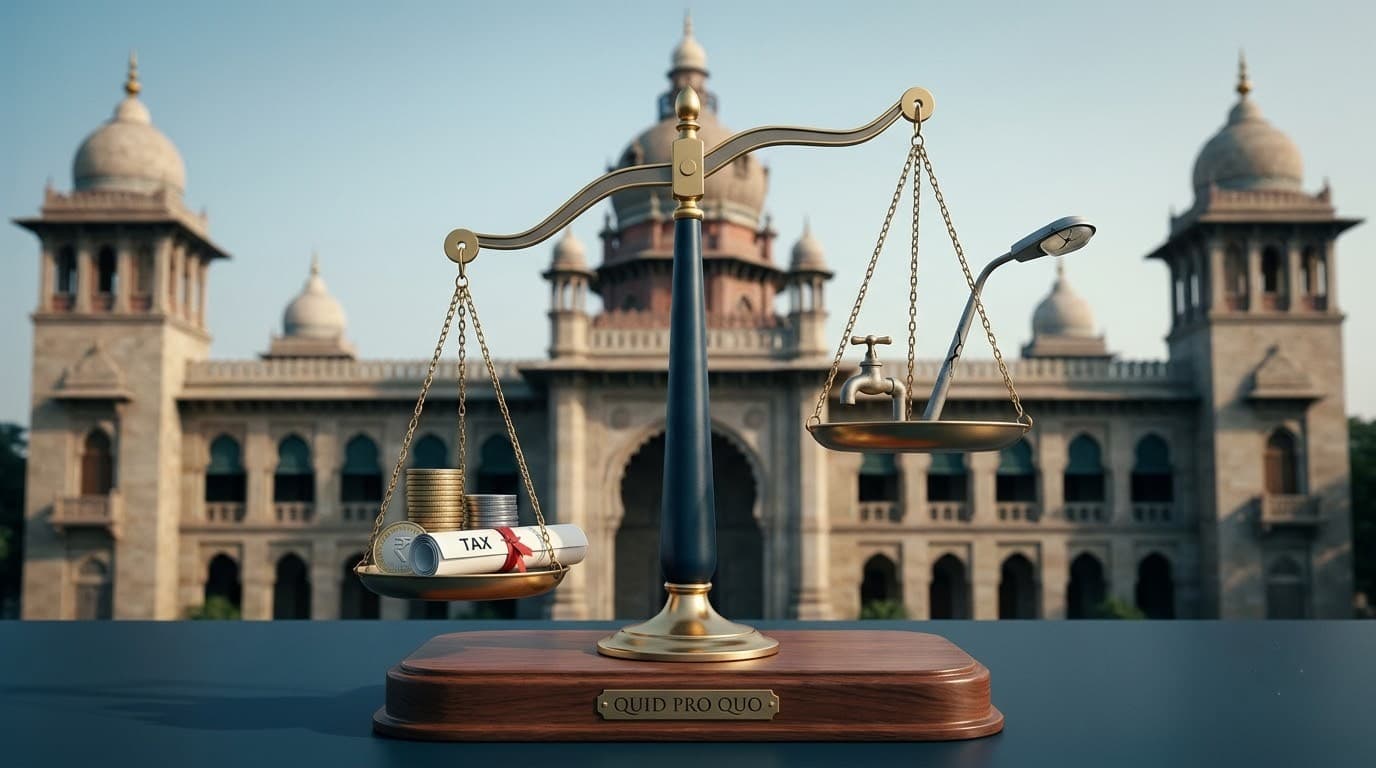
The Madras High Court has observed that while property taxes collected by the Greater Chennai Corporation have risen over the years, the corresponding improvement in basic civic infrastructure, particularly roads and footpaths, remains grossly inadequate.
The court made these remarks during the hearing of a petition highlighting the poor condition of streets and pedestrian pathways in various parts of Chennai. It noted that residents continue to face difficulties due to broken roads, missing footpaths, and poor drainage, even as they are required to pay higher property taxes annually.
The bench emphasized that the collection of taxes implies a reciprocal obligation on the part of the municipal body to provide essential public services. It stated that the Corporation cannot justify increasing tax demands while neglecting its core responsibilities related to urban maintenance and sanitation.
Referring to specific instances cited in the petition, the Court pointed out that several arterial roads and locality lanes in Chennai remain unrepaired for extended periods, forcing commuters and pedestrians to navigate hazardous conditions. It questioned whether the funds collected through property taxation were being utilised effectively for the purpose they were intended.
The Greater Chennai Corporation was directed to file a detailed affidavit explaining the utilisation of property tax revenue over the last three financial years, including allocations specifically earmarked for road repairs, footpath construction, and storm water drain maintenance.
The Court further observed that the absence of timely action on infrastructure development not only causes inconvenience but also poses safety risks, particularly for senior citizens, children, and persons with disabilities who rely on usable footpaths for mobility.
It stressed that urban local bodies derive their legitimacy from the delivery of basic services, and persistent failure in this regard undermines public trust in municipal governance.
The bench clarified that its observations were based on the material placed before it and did not constitute a final judgment on the matter. It indicated that it would continue to monitor the Corporation’s response and the steps taken to address the shortcomings highlighted in the petition.
The Court granted the Corporation four weeks to submit its compliance report and listed the matter for further hearing after that period. It made clear that any future directions would depend on the adequacy and sincerity of the Corporation’s explanation and proposed corrective measures.
The petitioners had argued that despite being among the highest tax-paying citizens in the state, Chennai residents receive disproportionately poor returns in terms of road quality, footpath availability, and overall street maintenance. They contended that this disparity amounted to a failure of duty under the Chennai City Municipal Corporation Act, 1919.
The Court acknowledged the petitioners’ grievances as being broadly reflective of widespread civic concerns across the city and affirmed that such issues warrant serious administrative attention, if not judicial intervention.
It concluded by reiterating that while taxation is a necessary function of local governance, it must be accompanied by visible and measurable improvements in public infrastructure to maintain the social contract between the State and its citizens.