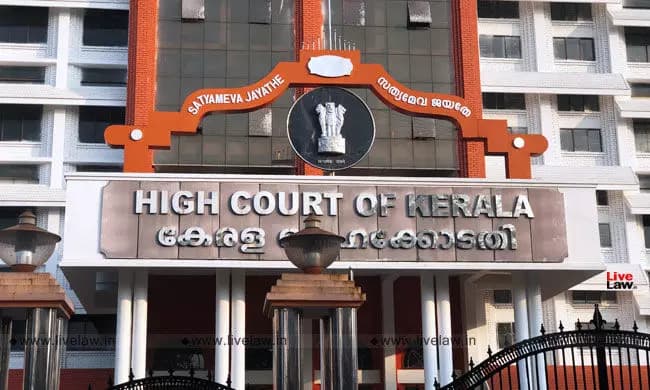
The Kerala High Court is hearing a contempt petition that arose from the State’s repeated refusal to grant sanction to the Central Bureau of Investigation for prosecuting two former officers of the State Cashew Development Corporation. The officers, identified as K.A. Ratheesh and R. Chandrasekharan, are alleged to have been involved in the Cashew Corp Scam. The contempt proceedings were initially directed against the Industries Principal Secretary, Mohammed Hanish, who later tendered an unconditional apology after the court warned him of contempt for non‑compliance with an earlier order to consider sanction. When K. Biju, IAS, assumed charge of the Forest and Cashew department, he was added as an additional respondent. Biju issued two sanction orders; one of them was subsequently cancelled on the advice of the Advocate General, who opined that the cancelled order contained contemptuous remarks. A copy of that cancelled order was given to one of the accused, who read the remarks at a press conference. Following this, the court issued a notice to Biju under the Contempt of Court Rules of the High Court.
Court’s Observations on the Sanction Order
During the hearing on 17 July 2026, Justice A. Badharudeen heard detailed arguments from counsel representing the IAS officer, the standing counsel for the CBI, and the special government pleader. After considering the submissions, the court observed that the sanction order issued by K. Biju, in his capacity as Secretary of the Forest and Cashew department, satisfied the legal requirements for granting sanction to the CBI. The judge stated that the order was in order and legally valid.
Nevertheless, the court orally questioned the absence of the Secretary’s signature on the copy of the order that had been forwarded to the CBI. The judge asked why the copy lacked the Secretary’s signature, who had signed it, and whether the signature on the last page belonged to the issuing authority. The court emphasized that a sanction order must be directly signed by the authority issuing it, either physically or through a digital signature verifiable via a QR code on the government website. The judge expressed doubt about the authenticity of the copy and directed that a properly signed version be produced.
Directions Issued by the Court
Taking into account the CBI’s standing counsel’s submission that the missing signature could create procedural impediments, the court issued a specific direction. K. Biju, as the second respondent, was ordered to send a physically signed or digitally signed copy of the government order granting sanction, signed by him, within two days from the date of the hearing. The court also instructed the standing counsel for the CBI to file a compliance report after the two‑day period, confirming whether the signed copy had been received.
Contempt Proceedings and Impleadment of the CBI
The court further noted that, according to the standing counsel for the CBI, the agency would act on the matter based on the sanction already granted. In the interest of justice and to keep the investigative agency updated on the proceedings, the court decided to implead the CBI as an additional respondent in the contempt petition. The impleadment is limited to the purpose of informing the CBI about the sanction details and any further directions the court may issue. The judge added that the CBI’s ACB branch in Cochin would be made a party for this limited role.
Current Status
After hearing the arguments and issuing the directions, the court reserved its verdict on whether to accept Biju’s tendered unconditional apology for the alleged contemptuous remarks or to proceed with the contempt proceedings. The matter remains pending for final orders.