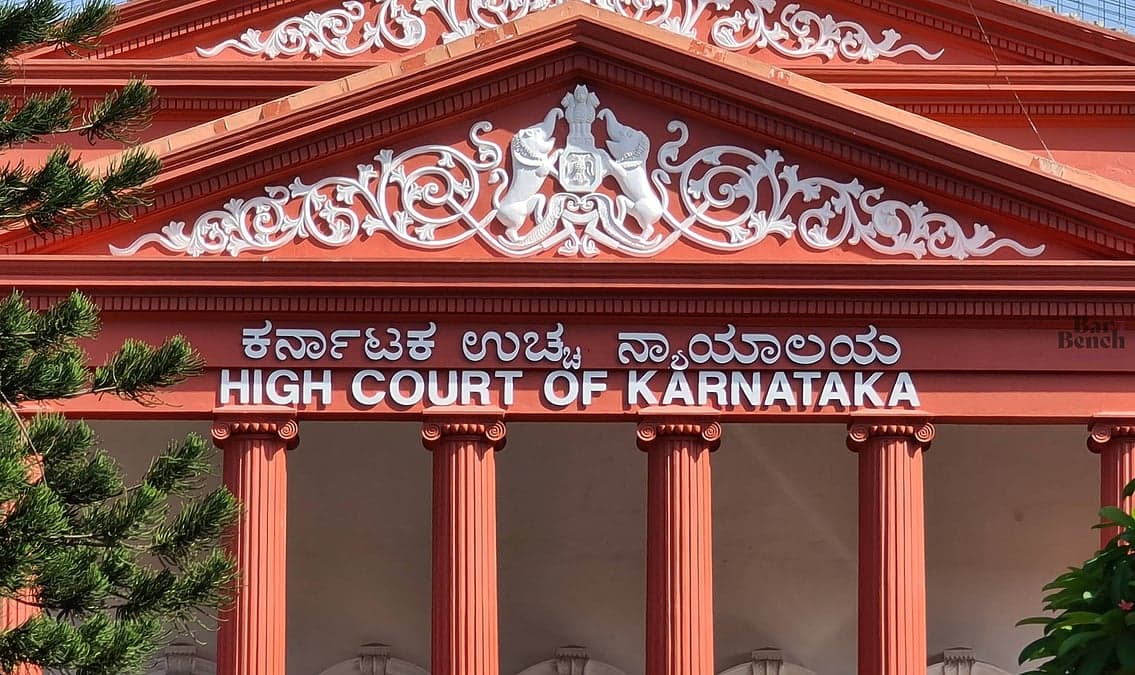
The Karnataka High Court, sitting as a Division Bench comprising Justice Anu Sivaraman and Justice Venkatesh Naik T, heard an appeal filed by the National Law School of India University challenging a single judge’s order that had directed the university to provide a 0.5 per cent reservation for transgender persons in its admissions process. During the hearing the Bench observed that nearly twelve years have passed since the Supreme Court’s landmark judgment in National Legal Services Authority v Union of India (2014), which recognised transgender persons as a third gender and directed both the central and state governments to extend reservation to them in educational institutions and public employment.
The Bench noted that Karnataka had been among the first states to implement reservation for transgender persons in public employment, yet no comparable measure had been adopted in the sphere of education. Justice Anu Sivaraman, speaking for the Bench, asked the State whether it could still be contemplating such a policy, given its pioneering role in the employment sector. The Bench further questioned the reason for any delay in notifying reservation for admissions, stating that there could be no justification for postponement when the apex court had issued a clear direction.
Emphasising the binding character of the NALSA ruling, the Bench observed that the Supreme Court’s judgment must prevail and that any policy delay was untenable. The Bench reiterated that if the Supreme Court had mandated reservation in education as well as in public employment, the State was obliged to comply without further postponement.
In response, the State Government informed the Court that, pursuant to earlier directions, a seat had been reserved for the petitioner in a law college affiliated to Karnataka State Law University. The university submitted that the admission notification would be issued only after the publication of degree results. The transgender student, who appeared in person, countered that the absence of a formal reservation policy and adequate procedural safeguards continued to prejudice transgender candidates seeking admission.
The student relied on Rules 5, 10 and 11 of the Transgender Persons (Protection of Rights) Rules, 2022, and submitted a memo seeking interim relief. The memo outlined ten measures, including the preservation of seats for transgender applicants, removal of age‑based restrictions, provision of hostels and toilet facilities of choice, a minimum fifty per cent fee concession, assurance of dignity and privacy, and simplification of documentation requirements. The student urged the Court to issue interim directions pending the formulation of a comprehensive reservation policy by the State, arguing that such safeguards should be implemented immediately if the State found no infirmities in the proposed points.
The Bench responded that nobody would object to the suggested measures, stating that they were in line with what the apex court had prescribed. The Court also commended the petitioner for conducting the case in person and expressed its concern that the student’s admission should not be further delayed. Justice Venkatesh Naik T remarked that the Court wished to ensure that the petitioner’s admission fructified and that he received the benefits envisaged in the NALSA judgment, noting his responsibility as a party‑in‑person conducting the case with diligence.
The observations made by the Bench underscore the judiciary’s insistence that the State must translate the NALSA directive into concrete action without further delay, particularly in the educational sector where transgender persons continue to face barriers to access and retention.