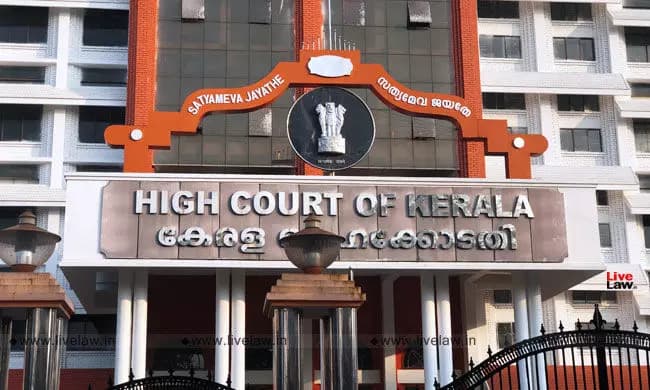
The Kerala High Court on Wednesday, 8 July 2026, issued a notice to K. Biju, an Indian Administrative Service officer holding charge of the Cashew Development department, requiring his personal appearance before the bench. The notice was passed pursuant to Rule 9 of the Contempt of Court (High Court of Kerala) Rules, after the court found that the officer had made observations in a government order that prima facie amounted to contempt of court.
The matter arose from a contempt petition filed by Kadakampally Manoj. The petitioner pointed out that the Principal Secretary of the Industries department, Mohammed Hanish, had repeatedly failed to comply with the court’s direction to reconsider sanction for prosecution against former officials of the State Cashew Development Corporation (KSCDC). While considering the petition, the Advocate General placed before the court two government orders dated 2 July 2026 and 6 July 2026, both of which granted sanction to the Central Bureau of Investigation to prosecute the alleged corrupt ex‑officers of KSCDC, namely A1 K. Ratheesh, former Managing Director, and A3 R. Chandrasekharan, former Chairman.
The earlier order, dated 2 July 2026 and marked as Annexure A9, was alleged to contain disparaging remarks against the judiciary. Upon the advice of the Advocate General, the government cancelled that order and issued a fresh order on 6 July 2026. The court observed that the Advocate General had correctly advised the government to withdraw the earlier order and to remove the portions that amounted to ex facie contempt of court.
During the hearing, Justice A. Badharudeen addressed the Advocate General, stating, “You are not at fault. You have done your duty. On seeing the order as something which could not be produced, you didn’t produce it. I fully appreciate that attitude. But the officer could not be spared. He must be proceeded against. Disciplinary action as well as contempt. For issuing this first order. How can an IAS officer say so? How can he blame the entire judiciary?…If he has any grievances, his forum is before the appellate court, not before this court for an order.” The bench made it clear that the officer’s conduct warranted both contempt and disciplinary proceedings.
The court further clarified the limited use of the cancelled order. It held that, even though the government order dated 6 July 2026 had cancelled the earlier Annexure A9, the use or operation of the cancelled order for any purpose other than initiating contempt proceedings or disciplinary action against the second respondent, K. Biju, shall remain stayed until further orders of the court.
Prior to the issuance of the contempt notice, the court had dealt with the failure of Mohammed Hanish to comply with its direction to reconsider sanction. Hanish had tendered an unconditional apology before the bench and was informed that he was no longer in charge of the cashew department. Subsequently, K. Biju was impleaded as a respondent and directed to issue sanction in accordance with the court’s directions. The Advocate General had earlier informed the court of the state’s decision to grant sanction and had sought time to verify and produce the order granting sanction.
The contempt petitioner, Kadakampally Manoj, produced the prior sanction order dated 2 July 2026 and pointed out that it contained disparaging comments against the judiciary. He sought a direction to initiate contempt proceedings against K. Biju for having passed that order. According to the affidavit filed by the petitioner, the prior sanction order was passed even before the Advocate General’s submission seeking verification of the government’s decision to grant sanction, and it stated that sanction was forced to be given because of the court’s orders.
The bench, after hearing the parties and perusing the government orders, concluded that the Advocate General had rightly advised the cancellation of the earlier order and that the officer’s remarks could not be overlooked. The court directed K. Biju to appear personally to answer the contempt notice and indicated that further proceedings would follow in accordance with the law.