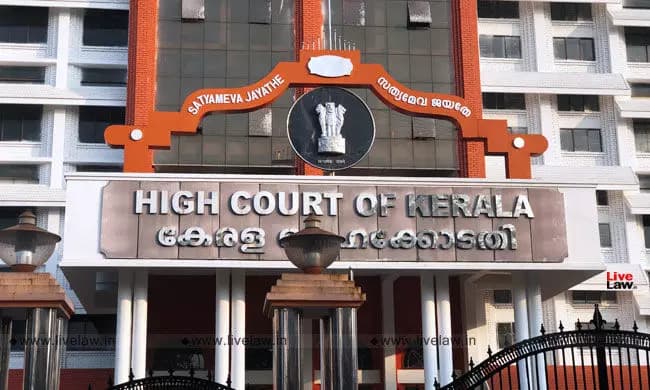
The Kerala High Court recently disposed of two second appeals preferred by a police officer who had been ordered to pay compensation to a lawyer whom he assaulted in the year 2010. The bench, comprising Justice Easwaran S., observed that the appeals did not raise any substantial question of law and were wholly lacking in merit.
According to the record, the underlying dispute originated in 2010 when the police officer, while performing his duties, assaulted the lawyer. Following a trial, the court awarded compensation to the lawyer for the injuries sustained. The police officer, however, failed to discharge the compensation liability and evaded payment for a period of sixteen years.
Aggrieved by the compensation order, the police officer filed regular second appeals under the Code of Civil Procedure, 1908, challenging the award on various grounds. The appeals were numbered RSA Nos. 254 and 256 of 2026 and were titled Sukumaran P.N. v. Vimal K. Charles and Ors.
Justice Easwaran S., while delivering the judgment, noted that the appellant had not pointed out any error of jurisdiction, any misinterpretation of substantive law, or any material irregularity in the proceedings that would warrant interference by the High Court in its appellate jurisdiction. The bench emphasized that a regular second appeal is maintainable only when a substantial question of law is involved, and the mere dissatisfaction with the quantum of compensation or the factual findings does not satisfy that threshold.
The court further observed that the appellant’s contention that he had evaded payment due to financial constraints did not constitute a legal ground for overturning the compensation award. The bench held that the obligation to pay compensation arises independently of the judgment debtor’s financial capacity and that delay in payment does not extinguish the liability.
In dismissing the appeals, the Kerala High Court affirmed the lower court’s award and directed the police officer to comply with the compensation order forthwith. The judgment underscores the principle that statutory compensation awards, once attained finality, are enforceable and that evasion of payment over an extended period does not constitute a valid defence in appellate grounds.
The decision also serves as a reminder to public servants that personal misconduct resulting in civil liability cannot be avoided through prolonged non‑payment, and that the judiciary will not entertain second appeals that lack a substantial question of law. The ruling reinforces the efficacy of the compensatory mechanism under the Code of Civil Procedure and signals that delays in satisfying such awards will not be tolerated by the High Court.