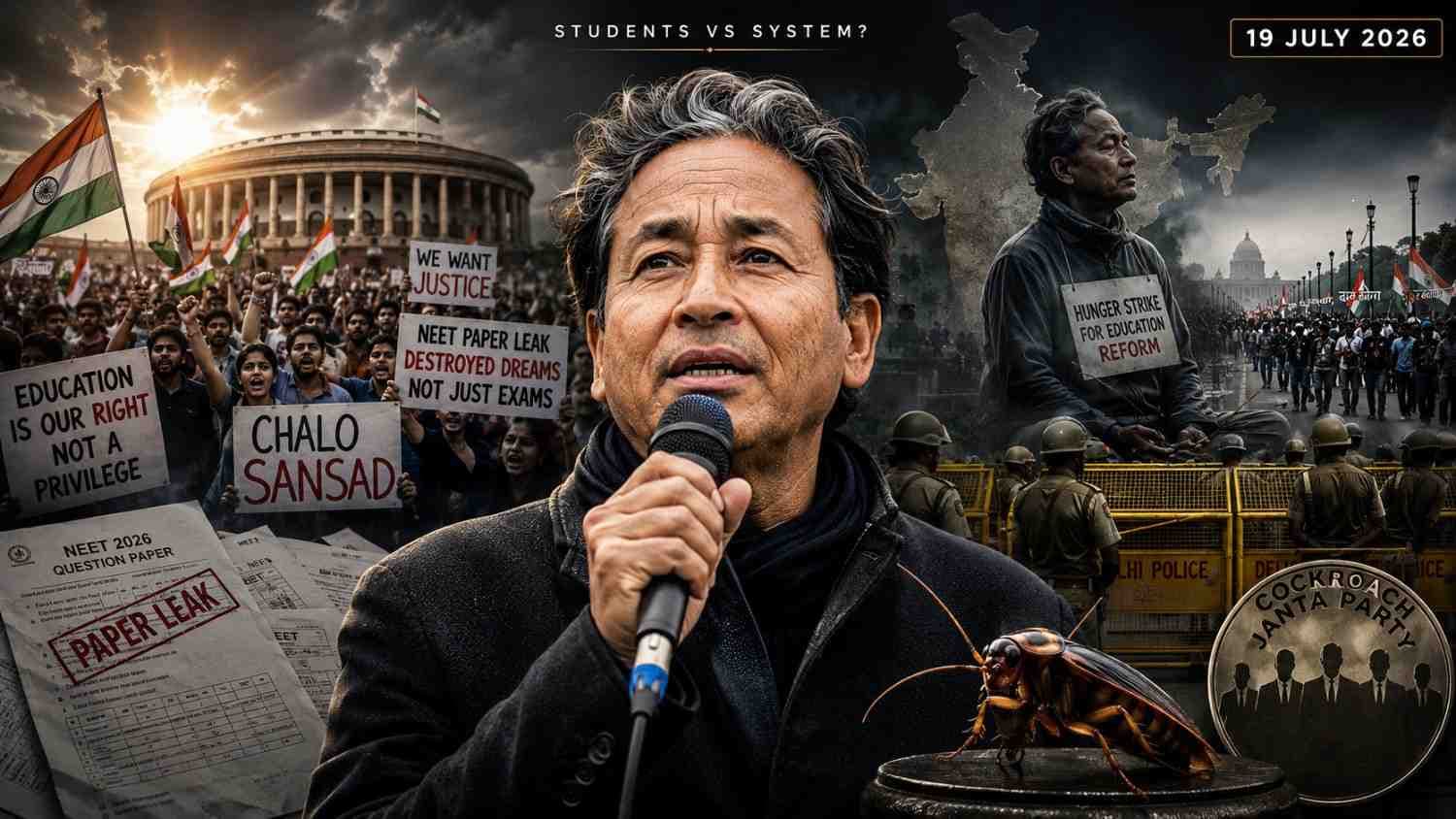
The heart of New Delhi is currently witnessing a significant wave of public sentiment. At Jantar Mantar, a movement that began as a satirical digital response to harsh remarks about the youth has transformed into a serious, ground-level campaign. What started with the "Cockroach Janta Party"—a name reclaimed from a courtroom insult—is now a rallying point for thousands demanding transparency in India’s national examination system.
At the center of this gathering are students, activists, and concerned citizens who are united by a common frustration: the recurring integrity issues in exams like NEET and CBSE. They are not merely asking for answers; they are demanding institutional accountability and the resignation of the Union Education Minister. For many, this is a fight for the future of millions of students whose dreams have been jeopardized by systemic failures.
The movement gained significant momentum when environmentalist and education reformer Sonam Wangchuk joined the protest, initiating an indefinite hunger strike. His presence brought the cause into the national spotlight, drawing in senior citizens, social organizations, and support from across the country. As his health declined, the Delhi Police eventually moved him to a hospital, but the resolve of the protesters remains unshaken.
This is more than just a sit-in; it is a display of civic engagement that has been building for weeks. With the "Chalo Sansad" (March to Parliament) scheduled for July 20, the movement is entering a critical phase. Supporters from various walks of life are gathering, viewing this not just as a protest against paper leaks, but as a broader quest for "freedom from injustice" within the nation’s educational framework.
Is this a revival of a larger national spirit? It is certainly a rare moment where a diverse group of people—united by their belief in merit and fairness—are putting pressure on the system to listen. The energy at the site, characterized by night vigils and massive poster displays, reflects a deep-seated desire for change. It highlights a generation that is no longer content with staying silent when they see the system faltering.
As the monsoon session of Parliament begins, the eyes of the nation are fixed on these demonstrators. Whether this movement will lead to the concrete reforms they seek remains to be seen, but the scale of the mobilization is undeniable. It serves as a reminder that when the youth and civil society find a common cause, they can command the attention of the entire country.
For those watching from the outside, the message is clear: this is a movement about accountability, dignity, and the future of India’s youth. As the march toward the Parliament approaches, the atmosphere in Delhi is tense yet focused. It is a defining moment for public discourse in 2026, showing that the spirit of peaceful, determined protest is very much alive.