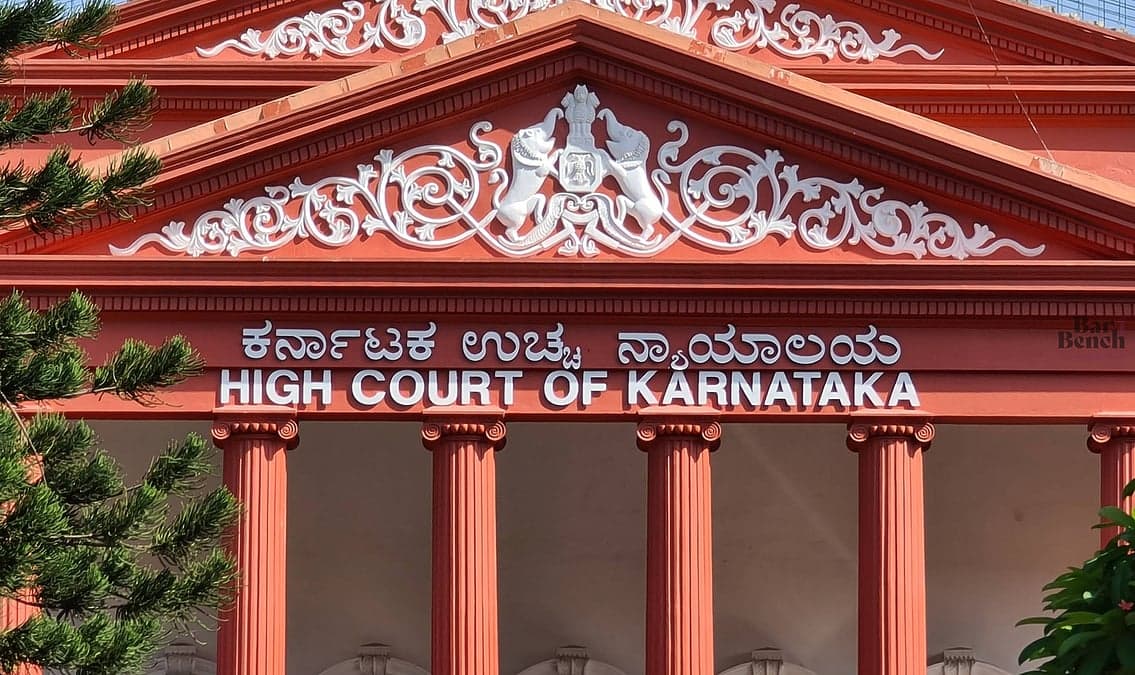
The single‑judge bench of Justice M Nagaprasanna considered a petition seeking to quash the First Information Report registered in 2017 under the Lokayukta Act. The FIR alleges that Chowda Reddy, while serving as a legislator, together with the then municipal commissioner, illegally occupied government land classified as ‘B Kharab’ under the Karnataka Land Revenue Rules, 1964. The court examined whether the allegations disclose a cognizable offence warranting investigation.
Justice Nagaprasanna observed that land grabbing by ordinary citizens is a serious illegality, but when those clothed with political power are implicated, the conduct strikes at the core of public trust. The bench stated that such actions erode public faith in governance itself, and that custodians of public trust becoming beneficiaries of alleged public wrongs cannot be allowed to throttle investigation at its inception. The court emphasized that interdicting investigation at this stage would amount to shutting the door on truth before it has entered the room, and therefore investigation is not merely warranted but indispensable.
The bench further noted that the material on record prima facie shows that the sons of the former minister, M.C. Sudhakar, who at the time served as the Higher Education Minister, and M.C. Balaji, are direct beneficiaries of the alleged land transactions. Despite this, neither son appears in the list of accused. The court expressed serious concern over how beneficiaries of allegedly grabbed government land remain outside the dragnet of criminal proceedings, and directed the Lokayukta to explain why no action has been initiated against them. The judge clarified that, as the matter is still at the investigative stage, the court refrains from making any definitive findings on culpability.
Regarding the nature of the land, the court referred to Rule 21 of the Karnataka Land Revenue Rules, 1964, which designates ‘B Kharab’ land as government property reserved for specified public purposes. The bench stressed that such land cannot be transformed into a private commodity merely because power, influence, or administrative silence facilitated the transformation. It reiterated that even a single gunta of government plot cannot be appropriated by private citizens.
The Lokayukta’s investigation revealed that 37 sites were carved out of the government land in Survey No. 11 of Kannampalli village, Chintamani Taluk. After a family partition, the sons of Chowda Reddy allegedly received seven sites each from the Kharab parcel. The court observed that the conclusion is difficult to avoid: government land appears to have been treated as ancestral property, partitioned among family members and dealt with as a private commodity. What could not legally be owned appears to have been privately divided, and what could never be alienated appears to have been bartered within the family.
Further, the Lokayukta reported that many of these sites were subsequently sold to the Government Employees House Building Cooperative Society through an unregistered General Power of Attorney. The court noted that this created third‑party interests and resulted in the government land disappearing beneath concrete and private possession.
In disposing of the petition, the bench held that the allegations disclose commission of cognizable offences that warrant investigation. Consequently, the FIR against Chowda Reddy and B.H. Narayanappa stands, and the investigation must proceed. The court’s remarks underscore the judiciary’s stance that allegations of land grabbing by persons holding public office demand rigorous scrutiny to preserve public confidence in governmental institutions.