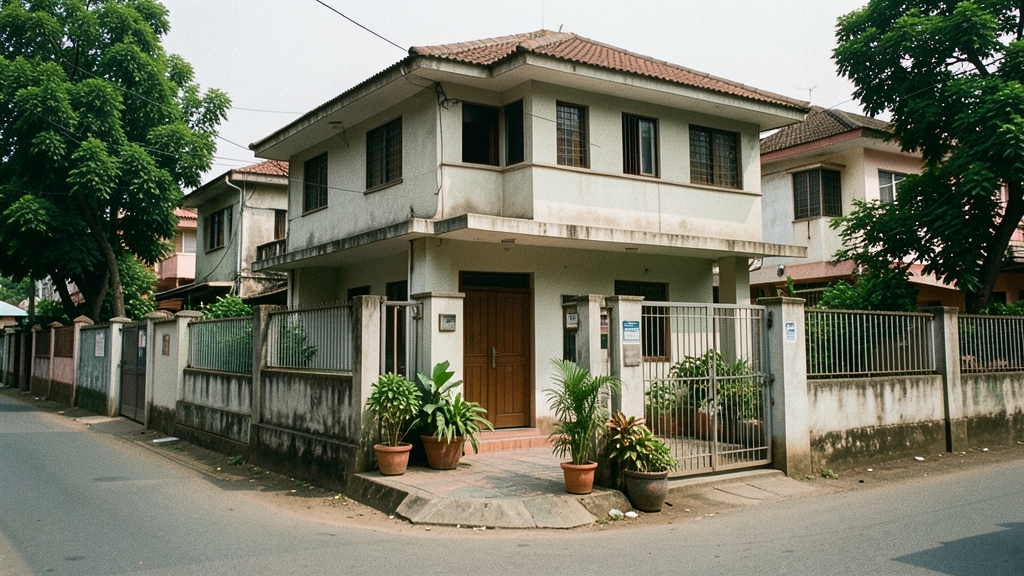
The Karnataka High Court recently set aside a 2009 trial court decree that had recognised certain property in Bengaluru as a joint family asset, thereby upholding the sale of the property to Rajesh Exports. The bench comprising Justices Jayant Banerji and Tara Vitasta Ganju delivered the judgment on August 29, 2026, in the matter of Rajesh Exports v B Devaraj.
The dispute originated from the sale of a property in Bengaluru by S Balasubramanya to Rajesh Exports in 2004. Balasubramanya had inherited the property from his mother, Lalithamma. Following his disappearance shortly after the sale, his two sons and wife filed a suit before a civil court, asserting that the property was a joint family asset and that they were entitled to a share therein. They contended that Balasubramanya could not have unilaterally alienated the property without their consent.
The trial court, in its 2009 decree, had held that the property constituted a joint family asset and awarded the plaintiffs a one-fourth share. The trial court’s reasoning was premised on the fact that Lalithamma, in whose name the property stood prior to Balasubramanya’s inheritance, was an unemployed housewife with no independent source of income. On this basis, the trial court inferred that the property must have been purchased using joint family funds and therefore formed part of the Hindu joint family’s property.
Rajesh Exports challenged this finding before the High Court. The High Court rejected the trial court’s assumption, observing that the mere fact of a woman being unemployed and lacking an independent income does not justify the inference that her property was acquired from joint family funds. Justices Banerji and Ganju emphasized that such an assumption would be legally untenable and contrary to statutory provisions.
The High Court relied on Section 14 of the Hindu Succession Act, 1956, which provides that any property possessed by a Hindu female, whether acquired before or after the commencement of the Act, shall be held by her as her absolute property. The Court reiterated that this presumption of absolute ownership can only be displaced by clear and cogent evidence showing that the property was acquired using joint family funds or that it was impressed with the character of joint family property.
In the present case, the Court noted that the plaintiffs, who bore the burden of proving that the property was purchased out of joint family funds, had failed to discharge this obligation. There was no evidence on record to indicate that Lalithamma was not the absolute owner of the property or that the purchase consideration was sourced from the joint family. The Court expressly stated that it was unable to accept the plaintiffs’ contention that the property, though registered in Lalithamma’s name, was in fact acquired by her husband out of joint family funds.
Consequently, the High Court allowed the appeal filed by Rajesh Exports, set aside the trial court’s decree, and affirmed that the property in question was the absolute and self-acquired property of Lalithamma. The Court held that being a housewife without an income does not disentitle a woman from owning property in her individual capacity, nor does it automatically convert her personal assets into joint family property.
The judgment underscores the principle that unemployment or lack of independent income cannot serve as a basis for disregarding the statutory protection afforded to Hindu women’s property under Section 14 of the Hindu Succession Act. The Court’s observation reinforces the need for concrete evidence before treating property standing in a woman’s name as joint family property.
Advocate Rohan Kothari represented the appellant, Rajesh Exports, while Advocates C Shankara Reddy, P Usman, and KR Ashok Kumar appeared for the respondents. The High Court’s decision restores the primacy of documentary title and statutory presumptions over speculative inferences based on social or economic status.