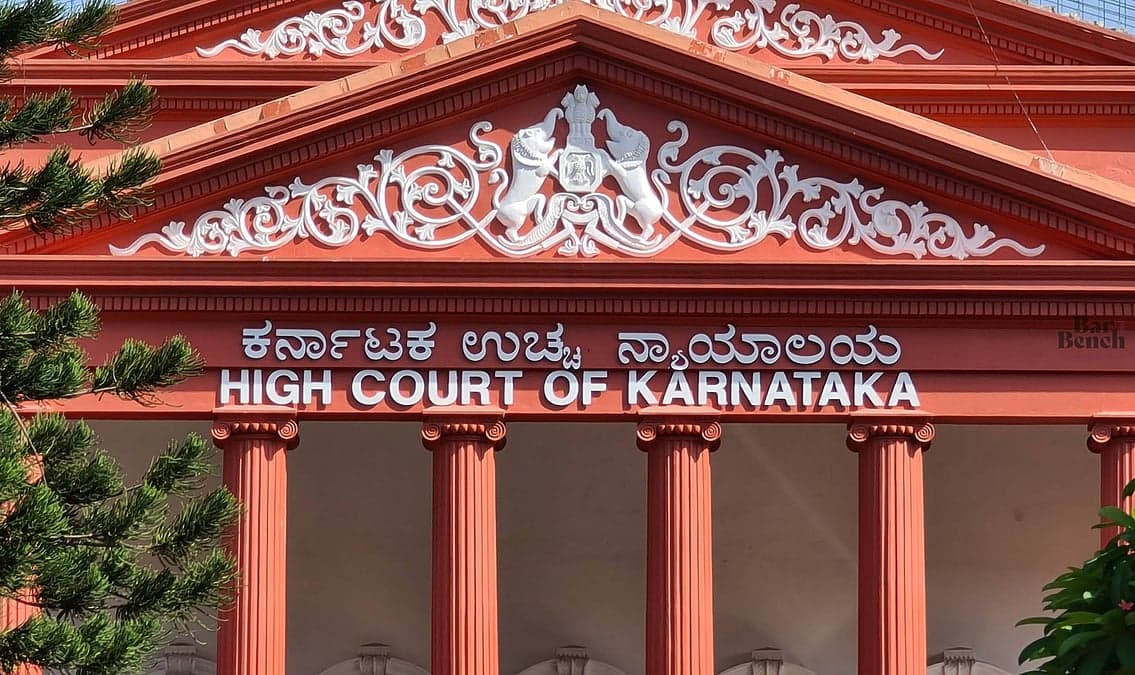
The Free Speech and Religious Sensitivities debate came before the Karnataka High Court when an FIR was registered against social activist Girish Mattenavar. The First Information Report alleged that Mattenavar had made objectionable posts on social media platforms concerning the administration of Shree Kshetra Dharmasthala temple. The posts were said to contain remarks that could be construed as disparaging the religious institution and its management, thereby attracting penal provisions under the Bharatiya Nyaya Sanhita.
The temple town of Dharmasthala, known for its charitable activities and interfaith outreach, had recently attracted public attention after certain online commentaries questioned the transparency of its administrative functions. The police, acting on a complaint lodged by representatives of the temple administration, invoked Section 353(2) of the Bharatiya Nyaya Sanhita, which deals with statements creating or promoting enmity, hatred or ill‑will between different groups on grounds of religion, race, place of birth, residence, language, caste or community.
Charge and Legal Provision Invoked
The FIR charged Mattenavar with making statements that were likely to cause disharmony among persons belonging to different religious affiliations. Section 353(2) BNS prescribes punishment for whoever, with intent to promote or which is likely to promote feelings of enmity or hatred between different groups, utters words, makes signs or visible representations, or publishes or transmits any matter in any form. The prosecution contended that the activist’s social media updates fell within the ambit of this provision.
Proceedings Before the High Court
Mattenavar approached the Karnataka High Court seeking relief from the criminal proceeding. He filed an affidavit undertaking that he would refrain from posting any material that could be perceived as objectionable with respect to the Dharmasthala temple administration and that he would maintain harmony in his future online communications. The undertaking was presented as a voluntary assurance aimed at addressing the concerns raised by the temple authorities.
The matter was heard by a Single Bench presided over by Justice M. Nagaprasanna. During the hearing, the court examined the nature of the allegations, the content of the impugned posts, and the affidavit filed by the petitioner. The bench noted that the undertaking was specific, unambiguous and directly related to the subject matter of the FIR.
Court’s Reasoning and Observations
The High Court observed that the primary object of the criminal proceeding was to prevent any breach of communal harmony and to protect the reputation of the religious institution. In view of the petitioner’s unequivocal assurance to abstain from posting objectionable content and to uphold harmony, the court found that the continued prosecution was unnecessary for achieving the stated objective.
Justice Nagaprasanna emphasised that the undertaking was not a mere formality but a binding commitment. The court made it clear that any breach of the undertaking would be viewed with seriousness and could lead to the revival of criminal proceedings or the initiation of fresh action under the relevant legal provisions.
Operative Outcome
Accordingly, the Karnataka High Court quashed the FIR registered against Girish Mattenavar. The order expressly recorded that the quashing was contingent upon the petitioner’s adherence to the undertaking given in his affidavit. The bench directed that the undertaking be placed on record and that the authorities concerned monitor compliance.
Implications of the Decision
The decision underscores the judiciary’s willingness to consider alternative dispute resolution mechanisms in cases involving alleged online speech that touches upon religious sensitivities. By accepting a voluntary undertaking, the court balanced the protection of free expression with the duty to preserve communal harmony. The ruling also serves as a caution to individuals who engage in discourse on religious matters: any deviation from a given assurance may attract stringent judicial scrutiny.
Legal commentators note that the judgment may influence future proceedings where parties offer similar assurances, potentially reducing the burden on criminal courts while ensuring that the underlying concerns of the complainants are addressed. The High Court’s approach reflects a pragmatic application of Section 353(2) BNS, focusing on the preventive purpose of the provision rather than punitive enforcement when satisfactory safeguards are in place.