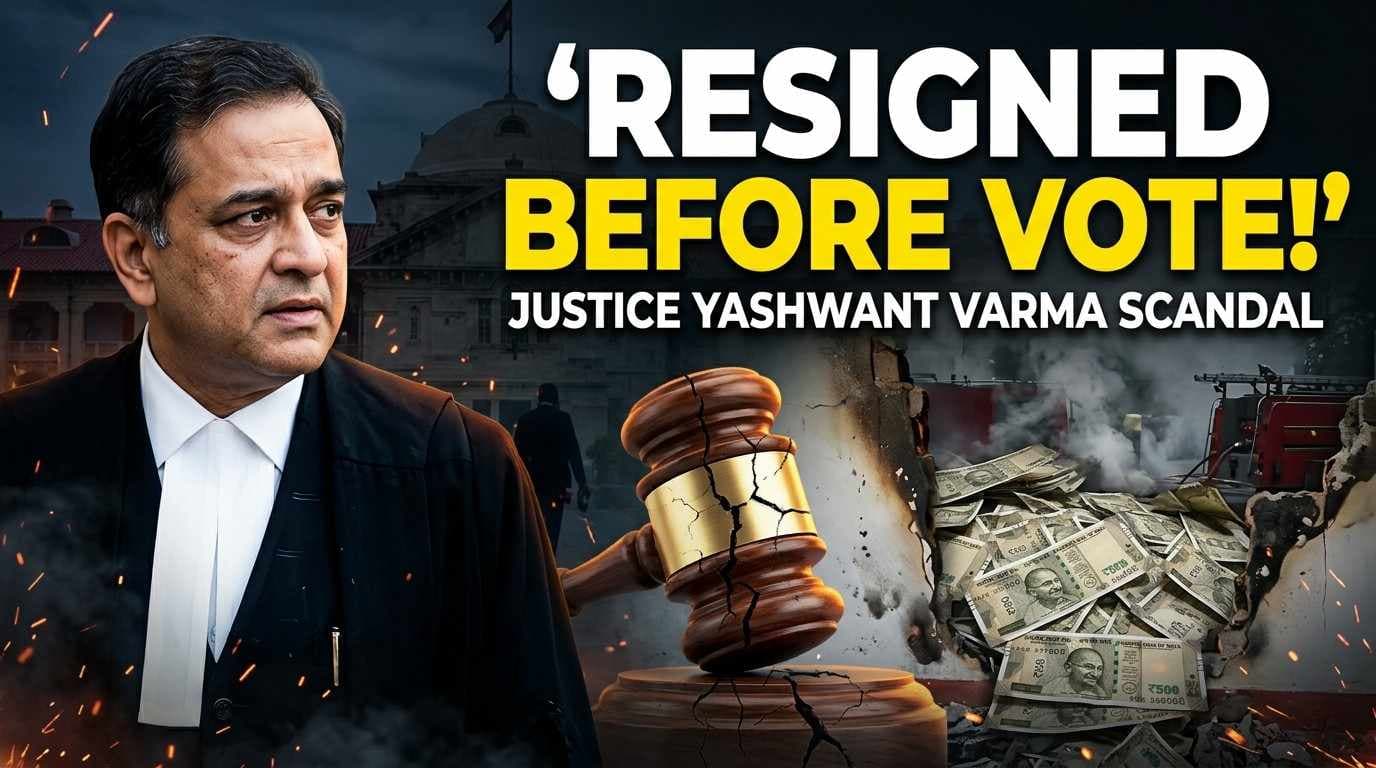
Justice Yashwant Varma’s recent resignation from the Allahabad High Court marks only the third instance in India’s post-independence history where a sitting judge has stepped down while facing active impeachment proceedings. This rare constitutional event follows a precedent set by Justice Soumitra Sen of the Calcutta High Court in 2011 and Justice P.D. Dinakaran of the Sikkim High Court shortly thereafter. By resigning before the parliamentary motion could reach a final vote, Justice Varma effectively renders the impeachment process infructuous, as the legislative mechanism for removal only applies to sitting judicial officers.
The controversy surrounding Justice Varma dates back to March 2025, when a fire-fighting operation at his official residence in Delhi led to the accidental discovery of a massive stash of unaccounted cash. Despite the judge's consistent denials—claiming he was not present and that no such recovery occurred—an in-house inquiry led by the Supreme Court found prima facie evidence of culpability. This culminated in an impeachment motion signed by 146 members of the Lok Sabha, triggering the formation of a judicial inquiry committee under the Judges (Inquiry) Act, 1968.
Historically, the impeachment process in India is designed with high thresholds to protect judicial independence, requiring a two-thirds majority in both Houses of Parliament. In the case of Justice Soumitra Sen, the Rajya Sabha had already passed the removal motion, and he resigned only days before the Lok Sabha was set to vote. Similarly, Justice Dinakaran resigned citing a lack of faith in the inquiry panel. Justice Varma’s case mirrors these trajectories, where the momentum of parliamentary action leads to a voluntary exit rather than a formal removal.
One significant implication of resigning rather than being impeached is the retention of post-retirement benefits. Under current legal frameworks, a judge who is formally removed from office through impeachment loses certain perks and pensions, whereas a resignation preserves these entitlements. Justice Varma’s departure letter to the President, while expressing "deep anguish," did not explicitly detail his reasons, but it occurred immediately after he withdrew from the parliamentary committee's inquiry, citing a lack of basic fairness in the proceedings.
The "cash-at-home" row has sparked a broader debate about the transparency of judicial oversight. Critics of the current system point out that when a judge resigns mid-impeachment, the findings of the inquiry committee are often left in a state of legal limbo without a definitive resolution. This "third instance" in Indian history highlights the limitations of the current accountability mechanisms, where the high stakes of a public trial in Parliament often lead to an administrative conclusion via resignation rather than a legislative one.
As Justice Varma vacates his office at the Allahabad High Court, the focus shifts to the legacy of this episode on judicial appointments and the "in-house" inquiry procedure. The case serves as a stark reminder of the challenges the Indian judiciary faces in balancing the protection of its members from political pressure with the need for a rigorous and transparent process to address allegations of serious misconduct. With the resignation now accepted, a significant chapter in recent Indian legal history closes, albeit with many of the underlying questions of the cash recovery remaining unsettled in the public domain.