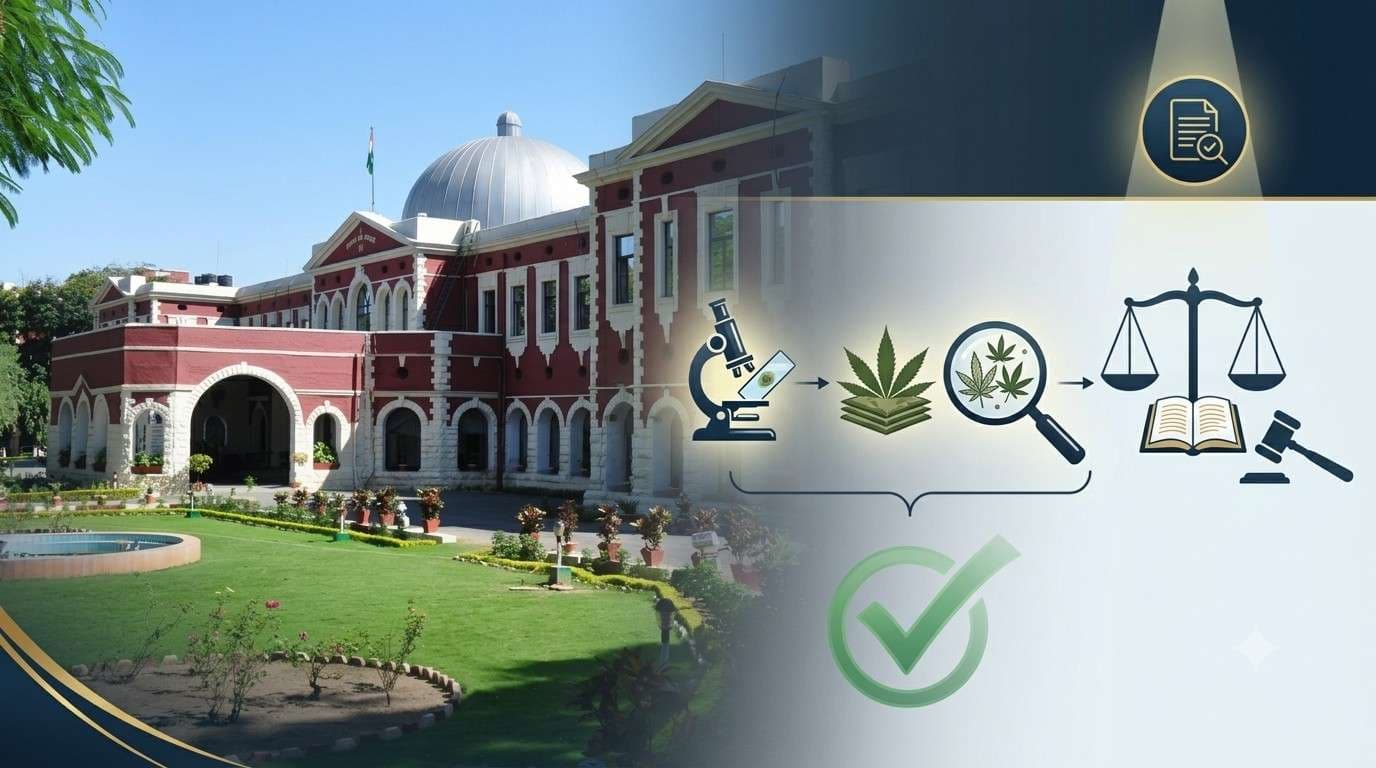
The Jharkhand High Court, presided over by Justice Pradeep Kumar Srivastava, has set aside the conviction of an appellant under the Narcotic Drugs and Psychotropic Substances Act, 1985, after determining that the substance in the material in question—identified as bhang—does not fall within the definition of cannabis (hemp) prescribed by the statute.
The court examined the forensic report prepared by the Forensic Science Laboratory, which concluded that the seized substance was bhang, a preparation derived from the leaves and seeds of the cannabis plant. The prosecution had charged the appellant under the NDPS Act on the basis that the material constituted cannabis (hemp) as defined in Section 2(iii) of the Act.
Section 2(iii) of the NDPS Act defines cannabis (hemp) as the flowering or fruiting tops of the cannabis plant (excluding seeds and leaves when not accompanied by the tops), the resin obtained from such tops, and any preparation containing such resin or tops. The court observed that bhang, which is traditionally prepared from the leaves and, at times, the seeds of the plant, does not include the flowering or fruiting tops or the resin. Consequently, the substance does not satisfy the statutory criteria for cannabis (hemp).
The bench emphasized that the legislative intent behind the NDPS Act was to regulate specific parts of the cannabis plant that possess psychoactive properties, namely the tops and resin. By excluding leaves and seeds from the definition, Parliament deliberately left preparations such as bhang outside the purview of the Act. The court held that, absent any evidence showing that the seized material contained the tops or resin, the prosecution could not prove that the offence under the NDPS Act was made out.
In its reasoning, the court noted that the burden of proving that the substance falls within the defined category rests on the prosecution. The forensic analysis did not detect the presence of tops or resin, and the prosecution did not adduce any additional evidence to bridge this gap. Accordingly, the benefit of doubt was extended to the appellant, leading to the setting aside of the conviction and the sentence imposed thereunder.
The ruling clarifies that mere possession of bhang, without any admixture of the flowering tops or resin, does not attract penal liability under the NDPS Act. Law‑enforcement agencies must therefore ensure that forensic examinations specifically identify whether the seized material contains the prohibited parts of the cannabis plant before initiating proceedings under the Act.
The decision also underscores the need for precise identification of cannabis derivatives in criminal cases. Where the material consists solely of leaves or seeds, the appropriate legal framework, if any, would be determined by other statutes governing agricultural produce or food items, rather than the NDPS Act.
By affirming that bhang is excluded from the definition of cannabis (hemp) under Section 2(iii), the Jharkhand High Court contributes to the judicial interpretation of the NDPS Act and provides guidance for lower courts and investigating authorities on the scope of the legislation in relation to various cannabis preparations.