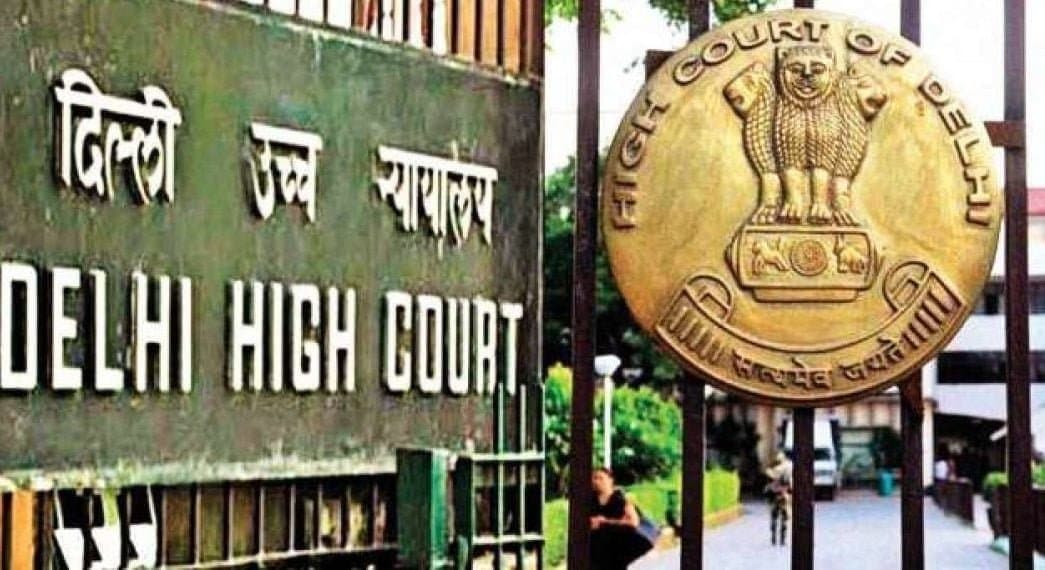
The matter originated from a suo motu petition filed by the Delhi High Court registered as W.P.(C) 3903/2017, titled Court on its own motion of the Delhi High Court concerning healthcare infrastructure and public health facilities in the National Capital Territory. A division bench comprising Justice Prathiba M Singh and Justice Manmeet Pritam Singh Arora was hearing the batch of matters when the Amicus Curiae brought to the notice of the Court an incident involving a seventy‑year‑old woman who suffered from breathing difficulty.
The Amicus Curiae submitted that the woman’s family approached Lok Nayak Jai Prakash (LNJP) Hospital after noticing that the Delhi ICU Beds Saarthi application and the NextGen e‑Hospital Management Information System (HMIS) portal displayed two ICU beds as vacant. Despite the reflected availability, the patient was turned away at the hospital’s emergency desk.
The family further stated that repeated attempts to obtain clarification through the hospital’s helpline numbers yielded no substantive response. On one occasion a security guard answered the call and was unable to confirm whether any ICU bed was actually available. The bench described the episode as “unfortunate” and noted that it raised serious concerns about the reliability of the ICU bed management system.
Observations of the Bench
The bench observed that the discrepancy between the portal’s display and the actual allocation of beds indicated a failure in the implementation of the HMIS platform. It remarked that the situation showed that despite the ICU beds being shown to be available on the website, the patient was not provided the same.
The Court found a lack of uniformity in the manner in which the HMIS platform had been rolled out across the thirty‑eight Delhi government hospitals where the system had been introduced. This non‑uniformity, according to the bench, undermined the purpose of the digital initiative, which was to provide real‑time, accurate information on ICU bed availability to facilitate timely patient care.
Directions Issued by the Court
In view of the findings, the bench directed the National Informatics Centre (NIC), under the leadership of Joint Director Aarti Garg, to conduct surprise inspections and audits of all thirty‑eight hospitals. The audit is to be completed by 31 July 2026 and must address three specific aspects: (i) whether the ICU bed availability reflected on the portal is being updated accurately and in real time; (ii) whether emergency telephone enquiries regarding ICU beds are being attended to promptly and effectively; and (iii) whether the HMIS platform is being implemented uniformly and consistently across all participating hospitals.
The Court also asked the Delhi Government to consider establishing a toll‑free helpline with a minimum of ten to twenty dedicated lines capable of providing real‑time information on ICU bed availability and hospital specialties. Additionally, the bench sought clarification on whether a nodal officer exists to ensure that patients referred from one hospital to another are actually admitted. If no such mechanism is in place, the Delhi Government was directed to place before the Court the steps it proposes to create one.
Considering the urgency of the situation, the bench ordered that the patient be immediately referred to Dr Amit Gupta at LNJP Hospital for allocation of an ICU bed and receipt of necessary treatment. It further required the authorities to file a status report on compliance with the directions by the next date of hearing.
Implications and Next Steps
The directions underscore the Court’s emphasis on accountability in public health service delivery, particularly where digital tools are entrusted with critical functions such as bed management. By mandating surprise audits, the bench aims to verify whether the technological infrastructure translates into reliable on‑ground service.
The order also highlights the judiciary’s role in prompting administrative reforms, including the creation of robust helpline services and clear referral pathways, to prevent recurrence of similar incidents. The matter has been listed for further hearing on 7 August 2026, at which time the Court will review the audit report and the government’s response regarding the helpline and nodal officer mechanisms.