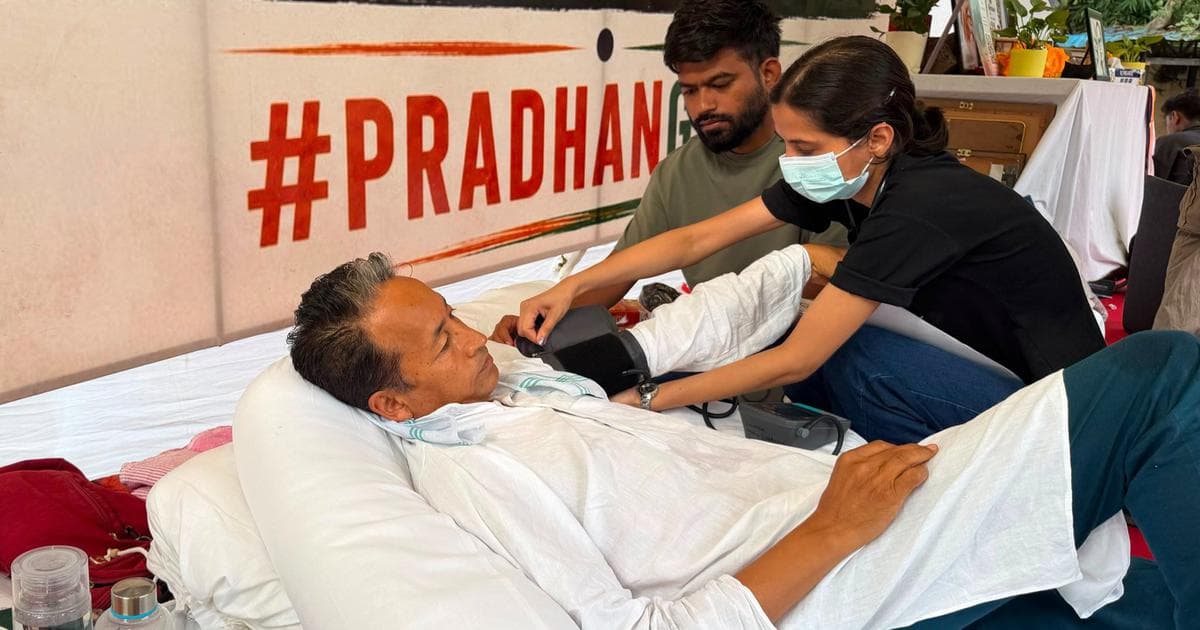
The ongoing hunger strike at Jantar Mantar has taken a significant legal turn. Climate activist and education reformer Sonam Wangchuk, currently protesting against alleged systemic failures and question paper leaks, has become the focus of a urgent Public Interest Litigation (PIL) filed before the Delhi High Court. The petition calls for immediate judicial intervention to ensure his survival as his health condition reportedly hits a critical stage.
Filed by activist-lawyer Rakesh Kumar Saini, the plea highlights a deep concern regarding the activist's rapid physical decline. According to the petition, Wangchuk has lost significant weight since the beginning of his indefinite protest, and experts suggest that his condition could reach a point of no return within days. The petitioner argues that the current state of inaction by the authorities is unacceptable and that the government bears a moral responsibility to preserve his life.
The central demand of the litigation is for the Delhi and Central governments to move the activist to a government hospital immediately. The plea goes a step further, requesting that the court authorize medical professionals to administer necessary nutrients through a liquid diet, even if it requires force-feeding. The argument presented is that, regardless of the political nature of the protest, the state must prioritize human life over the deadlock of the ongoing demonstration.
In his submission, the lawyer behind the plea noted that while public sentiment regarding the issue is growing, there is a clear hope that the judiciary will step in where other channels have failed. The petition explicitly states that if the activist were to pass away under these circumstances, it would be a "matter of great shame" for the nation. It highlights a perception that the authorities have been indifferent, treating the protest as a law-and-order issue rather than a humanitarian one.
Sonam Wangchuk’s protest, which began in late June, is tied to broader demands for accountability within India's education system. His call for the resignation of the Union Education Minister over exam irregularities has drawn significant support from student groups and activists, creating a standoff between the protesters and the administration. The hunger strike has become a symbolic focal point for those frustrated with the current state of national examinations.
As the matter reaches the Delhi High Court, the legal system now faces the delicate task of balancing the rights of an individual to protest with the state’s duty to prevent a loss of life. The court’s potential intervention could change the trajectory of the protest entirely, potentially forcing a dialogue between the government and the demonstrators.
The coming days will be critical, not only for the activist himself but for the larger questions of accountability and governance that his protest has brought to the forefront. Observers across the country are watching closely to see how the judiciary interprets the intersection of personal conviction and state obligation in this high-stakes situation.