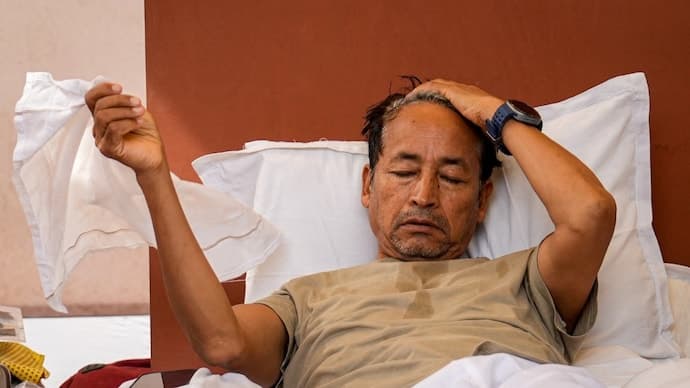
The Delhi High Court, sitting as a Division Bench comprising Chief Justice Devendra Kumar Upadhyaya and Justice Tejas Karia, passed an order on 16 July 2026 directing the Central Government to undertake daily clinical monitoring of Sonam Wangchuk and to provide any medical intervention that may be required to address his deteriorating health. The order was issued while hearing a public interest litigation filed by advocate Rakesh Kumar Saini, who sought urgent directions to shift Wangchuk to a government hospital and to administer necessary medical treatment, including force‑feeding, in order to protect his life and health.
The Bench observed that the life of any citizen is precious and that all efforts ought to be made by government authorities to preserve it. This observation formed the basis of the direction that Wangchuk’s medical condition be assessed on a daily basis by government doctors and experts, and that appropriate treatment be administered as and when the medical assessment indicates a need. The Court expressly appreciated the stand taken by the learned Solicitor General, Tushar Mehta, who appeared for the Centre and submitted that Wangchuk’s health was already being monitored by government medical personnel.
Solicitor General Mehta assured the Court that the Centre would continue to provide regular medical check‑ups and that, depending on the doctors’ reports, any required medication or intervention would be forthcoming. The Bench accordingly directed that Wangchuk’s medical condition be clinically monitored on a daily basis and that whatever medical intervention is deemed necessary by the treating doctors shall be taken without delay.
The public interest litigation had highlighted that Wangchuk began an indefinite hunger strike on 28 June 2026 at Jantar Mantar, demanding the resignation of Union Education Minister Dharmendra Pradhan over alleged irregularities in the conduct of the National Eligibility cum Entrance Test (NEET), including claims of a paper leak. The protest is organised in solidarity with the Cockroach Janta Party, a youth‑centric political movement. By the third week of the fast, reports indicated that Wangchuk had lost more than eight kilograms and was experiencing declining blood sugar levels, prompting concerns about his health.
Advocate Saini’s plea had specifically requested that the Central and Delhi Governments take Wangchuk to a government hospital and administer a liquid diet containing necessary nutrients, vitamins and minerals, which, according to the plea, are essential for sustaining a human body. The plea also sought a direction to the authorities to protect the life and health of the activist.
After hearing the submissions, the Division Bench noted the Centre’s assurance regarding ongoing medical monitoring and, in light of its observation that every life is precious, issued the direction for daily clinical assessment and necessary treatment. The Court then disposed of the PIL, recording that the relief sought had been addressed through the issued directions.
The order underscores the constitutional obligation of the State to safeguard the right to life under Article 21 of the Constitution, as reflected in the Bench’s emphasis on the preciousness of life and the duty of government authorities to act to preserve it. The direction for daily monitoring ensures that any medical deterioration is promptly identified and addressed, while leaving the final determination of treatment to the treating medical professionals, thereby respecting medical autonomy.
Thus, the Delhi High Court’s intervention seeks to balance the activist’s right to protest with the State’s duty to protect life, ensuring that Wangchuk receives appropriate medical oversight without pre‑emptively directing specific medical measures such as forced feeding, which were not ordered by the Bench.