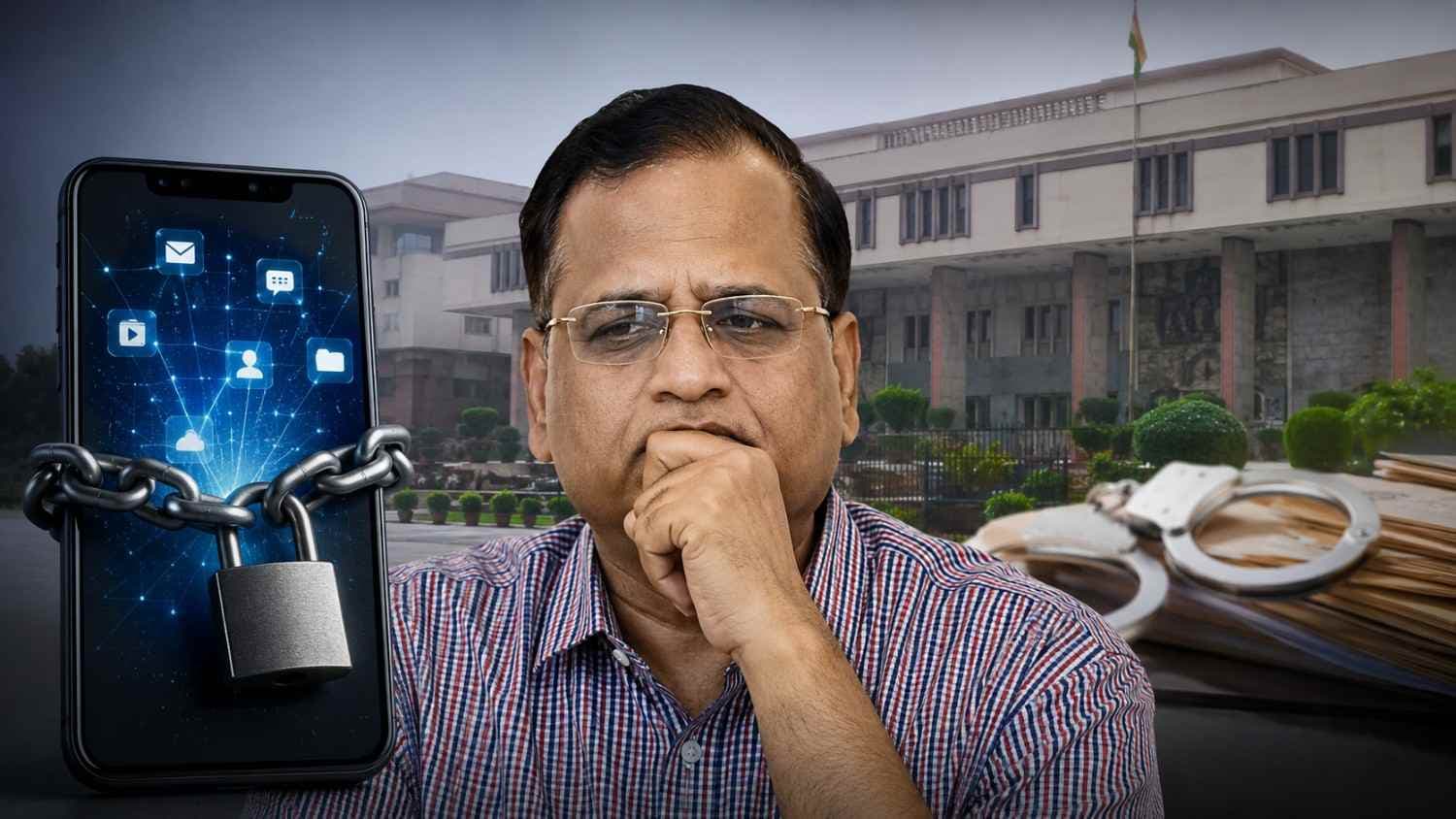
Special Judge Dig Vinay Singh of the Rouse Avenue Court granted bail to former Delhi minister Satyendar Jain in a case relating to alleged irregularities in the tendering process for sewage treatment plant projects of the Delhi Jal Board. The court observed that the Anti-Corruption Branch had rushed to arrest Jain without conducting a thorough investigation or gathering sufficient evidence prima facie linking him to the alleged kickbacks or hawala transactions.
The judge noted that none of the WhatsApp chats flagged by the ACB implicated Jain, and there were no phone records or SMS messages connecting him to the financial transactions involving other co-accused. This formed part of the prima facie finding returned by the court while considering the bail application.
The court further highlighted that it was an admitted fact that the contracts in question were awarded in July 2022, after Jain had already been arrested on May 30, 2022, in a separate money laundering case and remained in custody at the time. Therefore, he could not have influenced or been involved in the tendering process for those contracts while incarcerated.
Regarding the execution of the projects, the court recorded that no objection had been received from any quarter concerning the quality of work performed or the treatment standards achieved at the sewage treatment plants. The Delhi Pollution Control Committee regularly monitored the effluent standards of these plants and had not raised any concerns, indicating satisfactory performance.
The judge acknowledged that certain decisions taken by Jain during his tenure raised eyebrows and that he may not be innocent. However, the court emphasised that such suspicions, without concrete evidentiary support, were insufficient to deny bail at this stage of the proceedings.
The court criticised the timing of the arrest, noting a 27-month gap between the registration of the FIR on May 11, 2024, and Jain’s arrest on August 18, 2026. This delay was described as unexplained and extraordinary, suggesting that the investigating agency did not consider his physical custody necessary for over two years. The prosecution failed to identify any new or sudden circumstance that justified the arrest at such a late stage.
The court observed that when an investigating agency conducts an inquiry for years without arresting an accused, and the accused cooperates with the process, a sudden arrest at the end without strong reasons or a change in circumstances risks appearing arbitrary. In this case, the investigation had largely involved collecting replies and documents over the extended period, with no significant breakthroughs prompting the arrest.
Jain was arrested by the ACB on August 18, 2026, and booked under the Prevention of Corruption Act and the Indian Penal Code. The case originated from a complaint by the Directorate of Vigilance and alleges manipulation of tender conditions, criminal conspiracy, and suspected bribe payments linked to DJB sewage treatment plant upgrades. Jain has maintained that no money trail leads to him and that he merely approved technical files vetted by senior DJB officials, including the CEO and Chief Engineer.
Appearing for Jain were Senior Advocate N Hariharan along with advocates Vivek Jain, Mohd Irsha, and Sadiq Noor. The State was represented by Additional Public Prosecutor Manish Rawat. After hearing the arguments and evaluating the material on record, the court concluded that bail should be granted, given the lack of direct digital evidence connecting Jain to the alleged kickbacks and the unreasonable delay in effecting the arrest despite the absence of urgent grounds for custody.