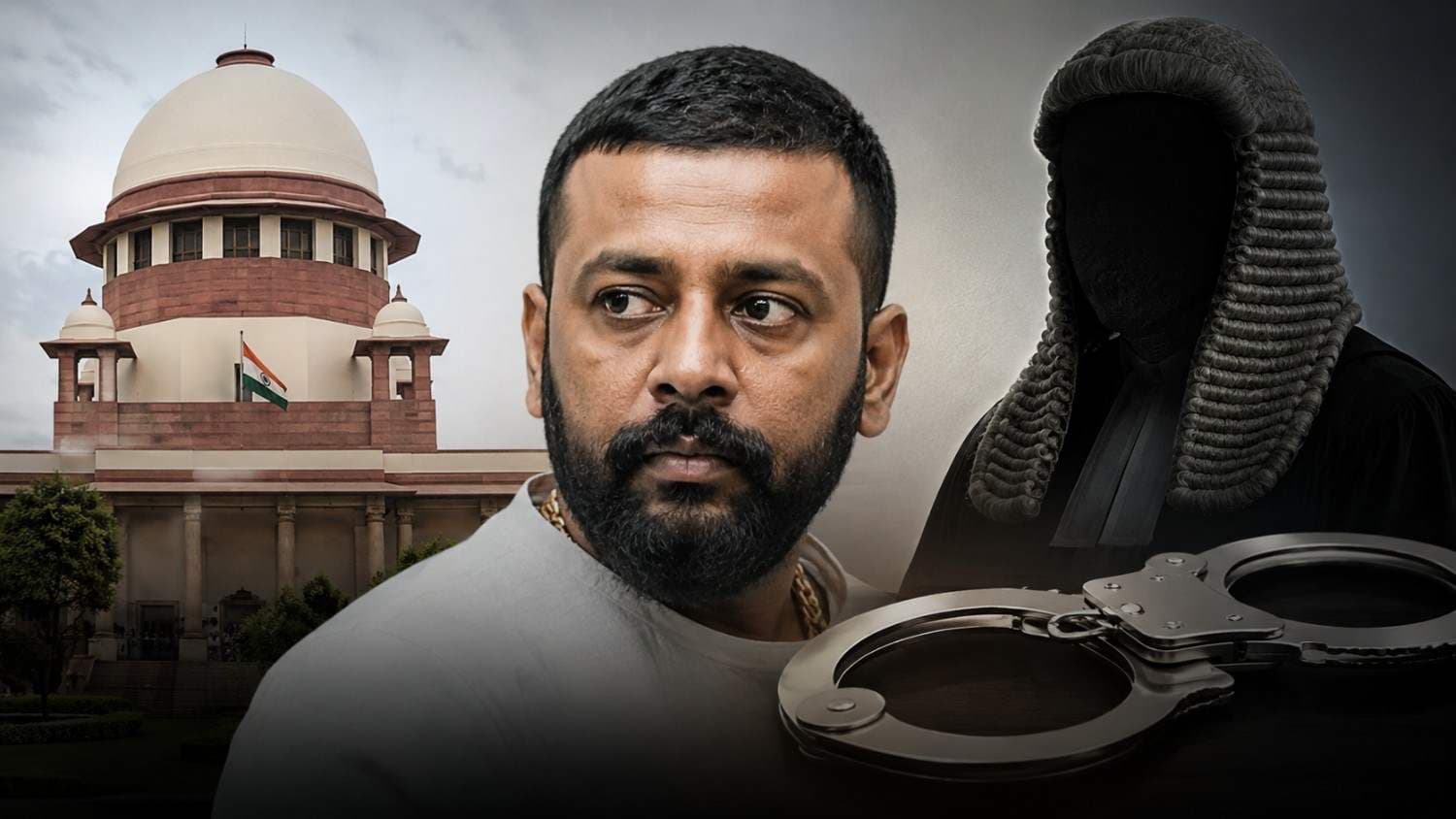
Chief Judicial Magistrate Harshita Mishra of the Tis Hazari Courts in Delhi has convicted conman Sukesh Chandrasekhar of impersonating a sitting Supreme Court judge and attempting to pressure a judicial officer to secure bail in an ongoing corruption case. The judgment, delivered on 26 August 2026, found Chandrasekhar guilty under Sections 170 (personating a public servant), 189 (threat of injury to a public servant), and 507 (criminal intimidation through anonymous communication) of the Indian Penal Code.
The court described the incident as an absurd theatrical production in which Chandrasekhar attempted to manipulate judicial proceedings. It stated that in this most absurd theatrical production of his, where he impersonated a sitting Judge of the Honble Supreme Court of India to manipulate an ongoing proceeding, he did not merely cross the line; he leapt over it into the realm of fatal institutional overreach.
According to the prosecution, in April 2017, Chandrasekhar was in police custody in connection with a corruption case pending before Special Judge Poonam Chaudhary. He obtained access to the mobile phone of Constable Manjeet and used it to call the judges official landline and personal mobile number. The caller first introduced himself as the personal secretary to a Supreme Court judge, identified only by the initials KJ in the judgment. Another person then came on the line, claimed to be the judge, and said he was calling on behalf of the Union Home Ministry and the Supreme Court Collegium. The caller directed the judicial officer to release Chandrasekhar on bail or interim bail immediately and allegedly threatened her with serious professional repercussions if she failed to comply.
The judge subsequently contacted the Supreme Court and spoke to the actual private secretary of the judge concerned. She was informed that no such call had been made and that the person named by the caller as the judges secretary did not work in the office. The trial court found her testimony consistent and corroborated by call detail records and evidence showing that Chandrasekhar had access to the constables phone.
The court emphasised that orders are passed in courtrooms, not dictated over clandestine telephone calls, and that judicial discretion is exercised on the basis of the judicial record, not on the basis of the callers designation. It observed that Chandrasekhar appeared to have fallen victim to his own propaganda after allegedly spending years spoofing caller IDs and impersonating persons in authority. The court stated that he operated under the dangerous belief that if a lie is only grand enough and uttered with sufficient audacity, the rule of law will simply bow its head and step aside. It added that he forgot that impersonating a bureaucrat or a political broker is a transactional crime born of greed but impersonating a Supreme Court Judge or his Secretary is an act of institutional defiance.
The court further noted that Chandrasekhar wrongly believed that the authority of the Supreme Court could be hijacked through a telephone call. It said he assumed the judiciary would respond with the same quiet compliance as his other corporate targets. What Sukesh failed to calculate in his risk assessment is that the judiciary does not negotiate its authority with shadow callers. In attempting to flex non-existent judicial muscles from behind a phone screen, he overplayed his hand so completely that he collapsed his own house of cards.
However, the court strongly criticised the Delhi Police investigation. It described the investigation as superficial, shoddy, and marked by apathy. Investigators failed to recover the mobile phone, secure CCTV footage from the Crime Branch premises, collect important call records, or promptly examine material witnesses. They also failed to probe how Chandrasekhar gained access to an apparently secured smartphone while in police custody. The court stated that while a seasoned conman has gone to extraordinary lengths to subvert the judicial process by weaponizing modern technology to impersonate a constitutional authority to get a favourable verdict, the Delhi Police has investigated the matter with utter indifference, investigative naivete, and apathy.
The court said the circumstances raised the possibility that Constable Manjeet was not merely a victim whose phone had been misused but may have facilitated Chandrasekhars access to it. It clarified that this was not a finding of guilt but a point requiring further examination. The court ordered a fresh examination of the police constables possible role in enabling Chandrasekhar to make the calls.