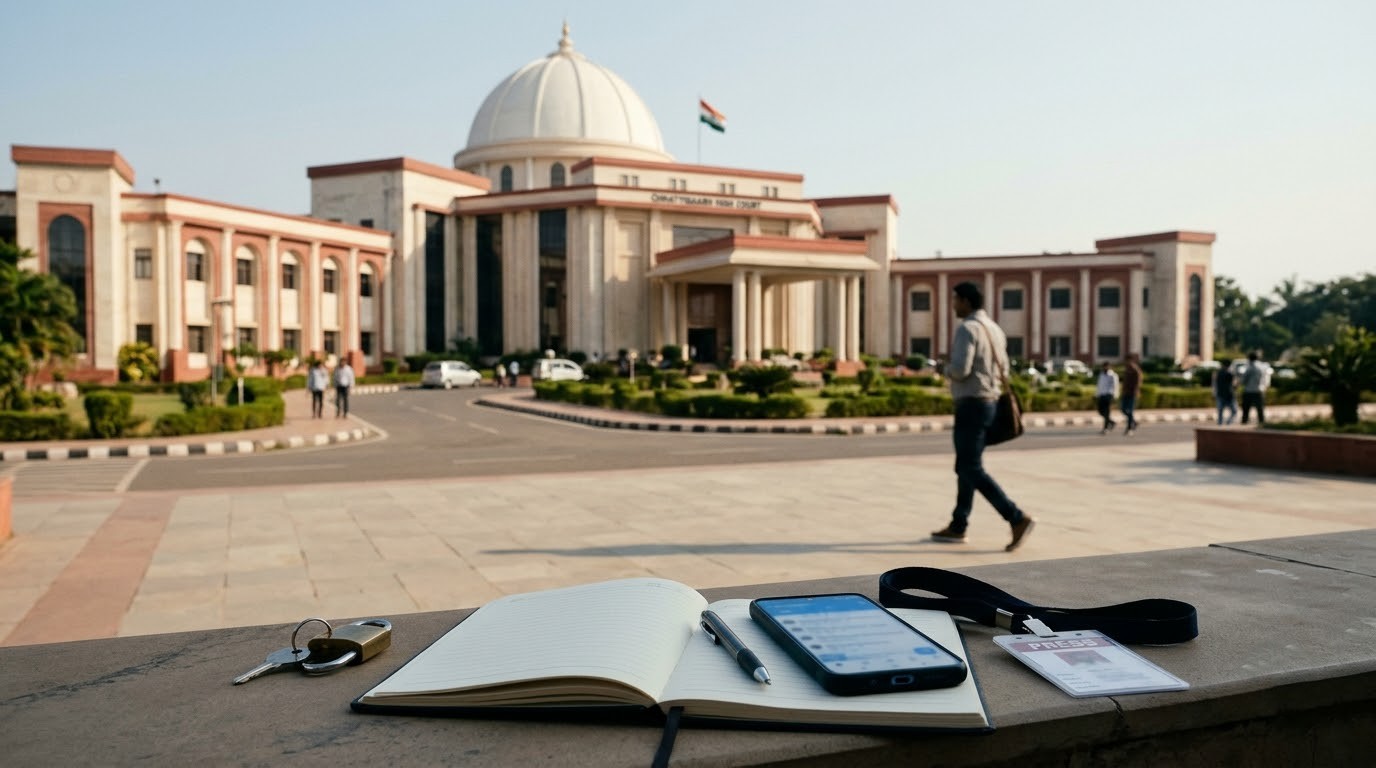
Chhattisgarh High Court Grants Anticipatory Bail to Journalist Booked Under SC/ST Act
The Chhattisgarh High Court has allowed a criminal appeal and granted anticipatory bail to a journalist facing prosecution under the Scheduled Castes and Scheduled Tribes Prevention of Atrocities Act, 1989, arising from social media posts directed at a former legislator. Justice Rakesh Mohan Pandey delivered the ruling while setting aside a previous order of the Special Court that had rejected the pre-arrest bail plea. The appellant, identified as Amit Pandey also known as Amit Kumar Pandey, approached the High Court through Section 14-A(2) of the special statute after local law enforcement registered an institutional complaint against him.
When Does the Statutory Bar Against Anticipatory Bail Under the SC/ST Act Not Apply?
The statutory bar on anticipatory bail under Sections 18 and 18A of the SC/ST Act does not apply when the material forming the basis of the first information report fails to disclose a prima facie offense related to the caste or community of the complainant, as determined through judicial scrutiny of the disputed statements.
The criminal proceedings originated from a formal complaint lodged by Uttamdan Minj, who serves as the District Congress Committee President in Jashpur and previously held office as a Member of the Legislative Assembly representing the Kunkuri constituency. The complainant, belonging to a Scheduled Tribe community, asserted that the journalist utilized his personal Facebook account to publish malicious remarks directed at him and a distinct political party. Following a preliminary inquiry, the police registered offences under Sections 196(1) and 353(2) of the Bharatiya Nyaya Sanhita, alongside specific penal provisions under Sections 3(1)(u) and 3(2)(va) of the SC/ST Act.
During the appellate proceedings, counsel representing the journalist argued that the social media commentary carried no derogatory or contemptuous connotations against any individual's identity, nor did it incorporate any caste-specific vocabulary. The defense submitted that the criminal machinery was activated with an ulterior motive and that the appropriate legal recourse for any perceived grievance regarding reputation would involve a standard defamation complaint rather than invocation of the stringent atrocities legislation. Furthermore, the court examined procedural compliance concerning Section 15A of the SC/ST Act, which mandates notice to the complainant regarding bail hearings. The bench observed that while the informant must be informed of the proceedings, the appearance of the complainant remains optional. The court noted that if an informant chooses not to participate after receiving notice and relies entirely on the public prosecutor, the judicial authority retains the jurisdiction to hear and decide the bail application in the absence of the informant.
Legal Provision | Statute / Source | Judicial Observation by Chhattisgarh High Court |
|---|---|---|
Sections 18 and 18A | SC/ST Act, 1989 | Bar on anticipatory bail is inapplicable if the disputed statements lack a prima facie caste nexus. |
Section 14-A(2) | SC/ST Act, 1989 | Provides appellate remedy to challenge the rejection of pre-arrest bail by a Special Court. |
Sections 196(1) and 353(2) | Bharatiya Nyaya Sanhita | Invoked alongside atrocities provisions following a preliminary police inquiry into Facebook posts. |
Upon reviewing the English translations of the disputed Facebook posts, the High Court observed that the published statements did not reference any caste or community associated with the complainant. Consequently, the bench concluded that the foundational elements required to establish a prima facie case under the special enactment were absent, thereby removing the statutory restriction against granting pre-arrest relief under Sections 18 and 18A of the legislation. The court also highlighted that the appellant possessed no prior criminal record. In conclusion, the appeal was allowed with specific directions that the appellant shall be released on anticipatory bail in the event of his arrest, subject to furnishing a personal bond of fifty thousand rupees along with a surety of the same amount.