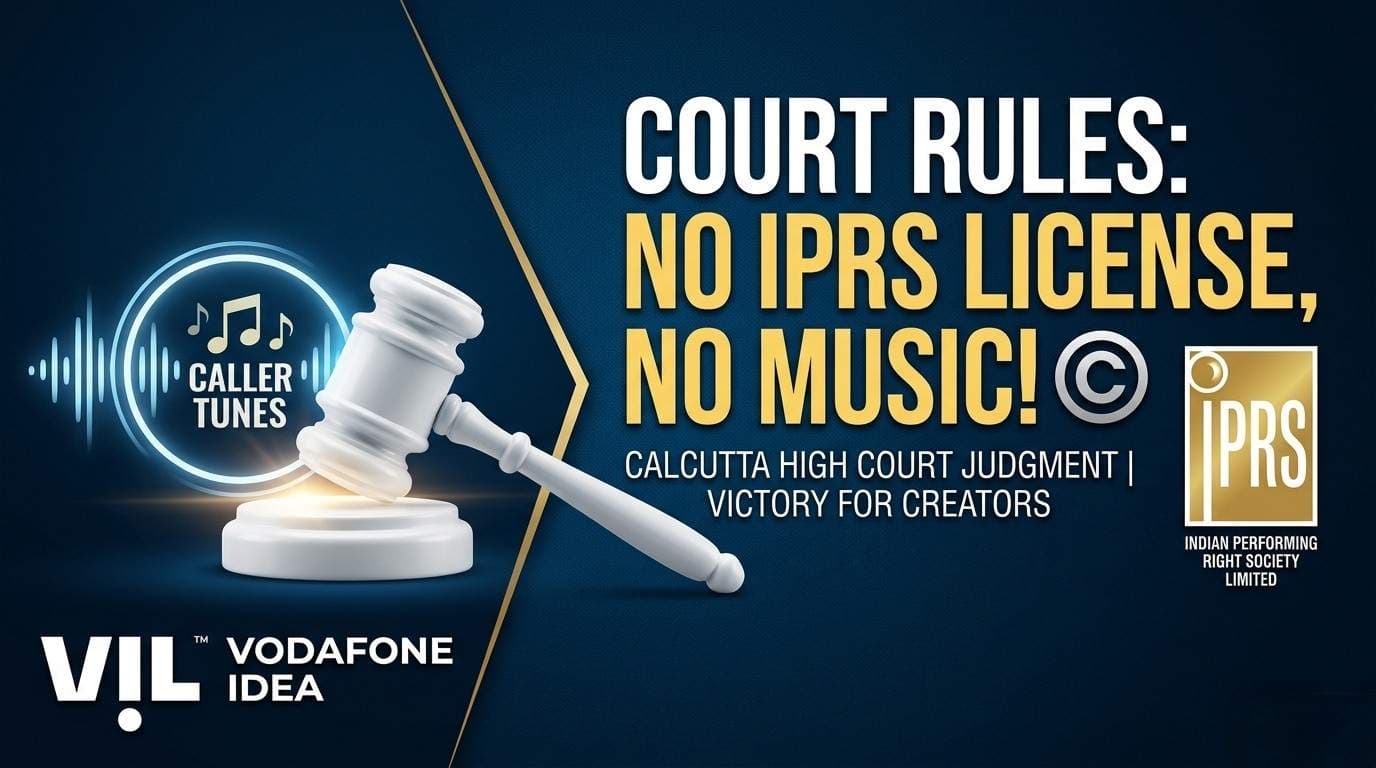
In a significant reinforcement of intellectual property rights, a Division Bench of the Calcutta High Court has ruled that Vodafone Idea Limited (VIL) cannot commercially exploit songs as caller tunes or ringtones without obtaining a specific license from the Indian Performing Right Society Limited (IPRS). The judgment, delivered on May 8, 2026, clarifies that telecom operators must secure separate permissions for the "underlying" literary and musical works (lyrics and compositions) even if they already possess a license for the "sound recording" from labels like Saregama.
The dispute centered on the interpretation of the 2012 amendments to the Copyright Act. Vodafone argued that its existing agreements with music labels—who own the rights to the final sound recordings—were sufficient to cover its value-added services (VAS). However, the court rejected this stance, holding that literary and musical works are distinct classes of copyright that do not merge into the sound recording. The ruling establishes that the authors and composers of these works retain an inalienable right to royalties whenever their creations are communicated to the public in digital formats.
The Bench, comprising Justices Debangsu Basak and Md. Shabbar Rashidi, emphasized that sound recording companies do not have the legal competence to grant licenses for the underlying lyrics and music on behalf of the original authors. "Saregama does not have any legal authority to grant a license in respect of underlying musical and literary works incorporated in the sound recording for commercial exploitation," the court observed. Consequently, any use of such content without an express IPRS license constitutes copyright infringement.
This decision marks the culmination of a legal battle that began in 2018. During the proceedings, the court had previously directed Vodafone to deposit significant sums with the court registry. With this final judgment, the High Court has ordered that these deposits be handed over to the IPRS, subject to an undertaking. This move ensures that the creators of the music—the lyricists and composers—finally receive the commercial benefits derived from their work in the telecommunications sector.
From an expert legal perspective, the judgment aligns with the legislative intent of the 2012 Copyright Amendment, which sought to protect creators with less bargaining power. By shielding authors from being coerced into relinquishing their rights via lopsided contracts with producers, the court has upheld the "personality of the author" principle. The ruling leaves only one narrow exception for royalty-free use: when a cinematograph film is exhibited as a whole in a cinema hall. Any other use, such as caller tunes, triggers a mandatory royalty obligation.
The institutional impact on the telecom and digital streaming industries is profound. Service providers can no longer rely on "bundled" licenses from music labels to bypass copyright societies. This "dual licensing" requirement is likely to increase operational costs for telecom firms but ensures a more equitable distribution of wealth within the creative economy. It solidifies the role of the IPRS as a mandatory intermediary for the commercial exploitation of music in India.
Furthermore, the court’s refusal to stay its own judgment indicates a firm judicial stance on the immediate enforcement of these rights. It signals to all digital platforms that compliance with copyright law is not a secondary administrative hurdle but a primary legal prerequisite. The ruling effectively closes a major loophole that telecom giants have utilized for years to monetize musical content while bypassing the actual creators.
Ultimately, the Calcutta High Court’s decision is a milestone for "green constitutionalism" in intellectual property law. It affirms that in the digital age, the rights of the original creator remain paramount. By ensuring that "tradition" or "standard industry practice" does not override statutory protections, the court has set a precedent that will likely govern the relationship between technology firms and content creators for the foreseeable future.