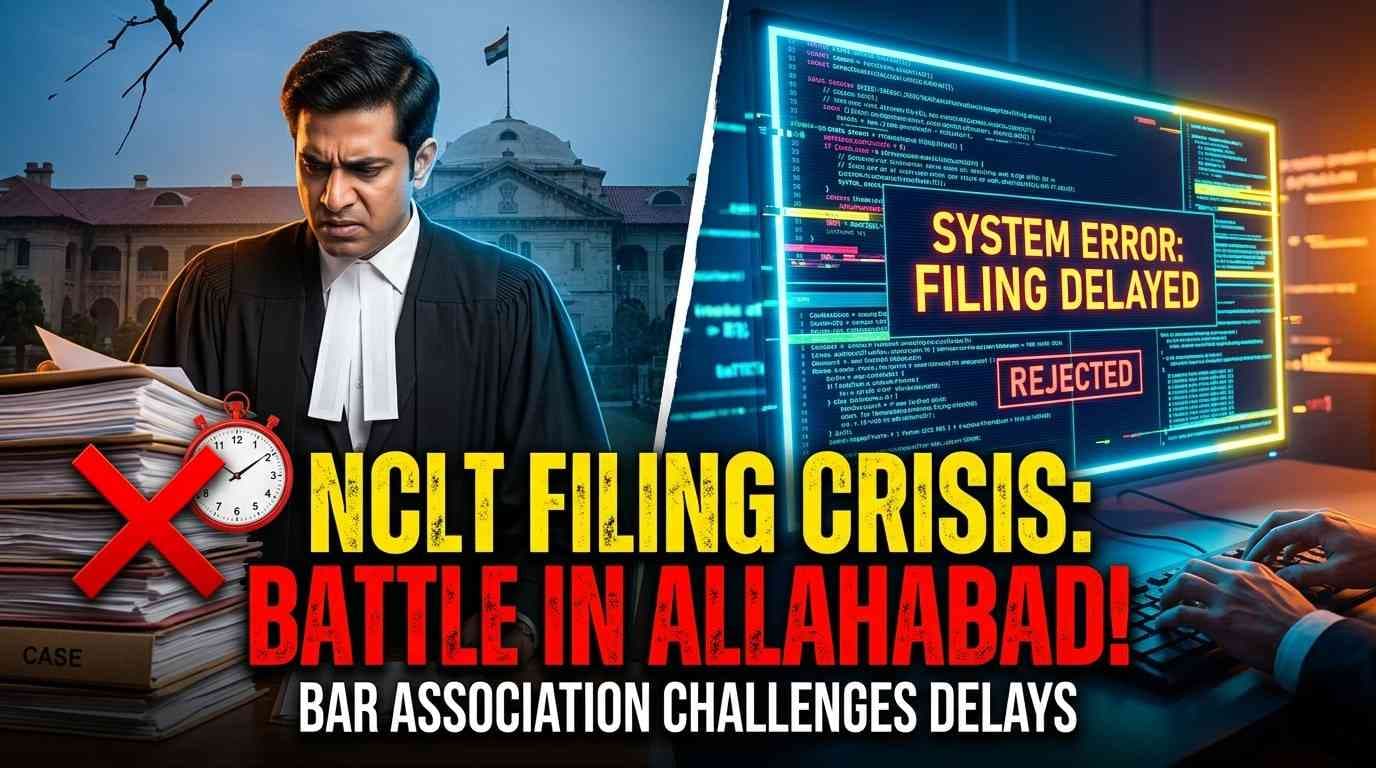
The NCLT Allahabad Bar Association has moved the Allahabad High Court to challenge a new filing framework implemented by the National Company Law Tribunal (NCLT) Allahabad, arguing that the revised procedures are causing significant delays and practical hardships for advocates. A Bench comprising Justices Mahesh Chandra Tripathi and Prashant Kumar has issued a notice to the NCLT and the Ministry of Corporate Affairs (MCA), seeking their response to the petition which alleges that the new system is "arbitrary" and "counter-productive" to the goal of speedy adjudication in insolvency and corporate matters.
The core grievance of the Bar body centers on the mandatory transition to a new electronic filing and physical scrutiny regime. According to the petition, the framework has introduced several redundant layers of verification that have led to a massive backlog of cases waiting to be "numbered." The advocates contend that even minor clerical discrepancies are now resulting in the summary rejection of petitions, forcing lawyers to restart the entire process and causing a "procedural nightmare" that defeats the summary nature of the Insolvency and Bankruptcy Code (IBC).
The petitioners highlighted that the Allahabad Bench of the NCLT, which covers a vast geographical area including the entire state of Uttar Pradesh, is already burdened with a high volume of cases. They argue that the new framework was implemented without adequate training for the registry staff or the Bar, leading to a situation where fresh cases are not being listed for weeks. The Bar Association has requested the High Court to direct the NCLT to revert to the previous hybrid system or simplify the current digital interface until the technical and administrative glitches are resolved.
Beyond the technical complaints, the petition raises a broader constitutional question regarding the "right to access justice." The Bar argues that if procedural hurdles become so insurmountable that a litigant cannot approach the tribunal in a time-bound manner, it constitutes a violation of the fundamental right to legal recourse. The High Court has noted the urgency of the matter, observing that the NCLT is a specialized body where "time is of the essence," and any systemic delay could have a cascading effect on the corporate credit market and the resolution of stressed assets.
This legal battle underscores the friction often encountered during the digitalization of the Indian judiciary. While the central government and the NCLT management aim to create a paperless, transparent filing system, the "ground-level reality" of infrastructure and training remains a hurdle. The Allahabad High Court’s intervention will be crucial in determining whether the new framework requires a complete overhaul or if a middle ground can be found to ensure that technology serves as an enabler rather than a barrier to the courtroom.
The matter is scheduled for further hearing in the coming weeks, by which time the NCLT administration is expected to provide a status report on the number of pending filings and the steps taken to alleviate the Bar's concerns. For now, the legal community in Allahabad remains in a state of protest, awaiting a judicial directive that can restore efficiency to the state's primary corporate dispute resolution forum.