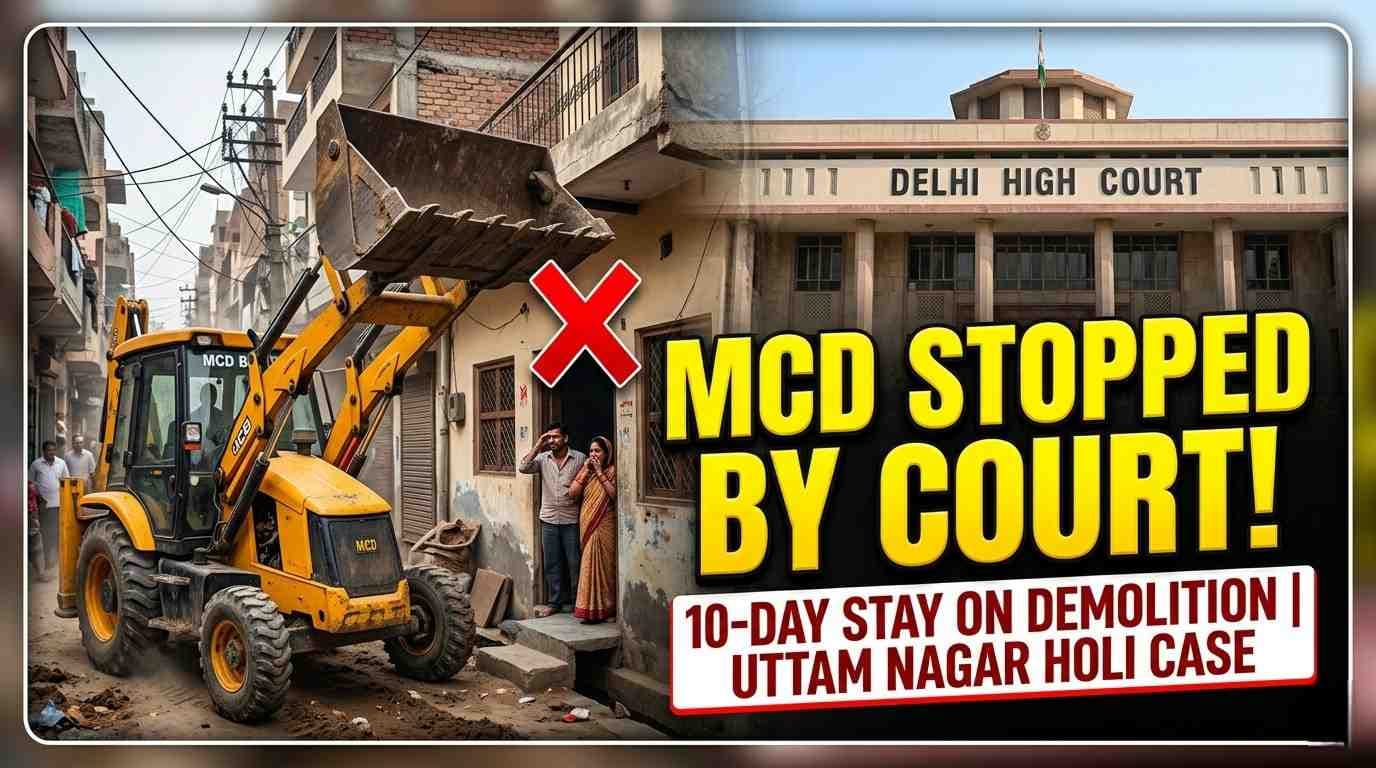
The Delhi High Court has temporarily restrained the Municipal Corporation of Delhi (MCD) from taking any coercive action against the property of a man accused in the killing of a 26-year-old in Uttam Nagar during recent Holi celebrations. Justice Amit Bansal granted a 10-day stay on the demolition, providing the family time to approach the MCD's Appellate Tribunal (ATMCD) to challenge the municipal order.
The petition was filed by Shahnaz on behalf of her father, Ismail, who is currently in Tihar Jail. She alleged that the MCD intended to carry out a "selective" demolition under the guise of removing unauthorized construction without granting the family a fair opportunity to be heard. This follows an earlier incident on March 8, where the MCD demolished portions of another house linked to an accused in the same murder case, claiming it encroached upon a public drain.
The underlying case involves the death of Tarun Bhutolia, who was allegedly lynched during a clash on March 4. The incident has taken on communal undertones, as the victim and the accused belong to different communities. The High Court's intervention highlights the judiciary's role in ensuring that administrative bodies follow "due process of law," even in high-profile criminal matters. Justice Bansal emphasized that while the MCD has the authority to act against illegal structures, such actions must comply with statutory requirements, including providing a minimum notice period and allowing for legal appeals.
Legal experts view this stay as a reinforcement of the principles laid down by the Supreme Court regarding "bulldozer justice," where it was held that demolition cannot be used as a punitive measure for criminal allegations. By granting Ismail's family one week to file an appeal and a 10-day buffer of protection, the Court has ensured that the merits of the "unauthorized construction" claim are separated from the criminal investigation. The MCD, during the hearing, maintained that its drive was not selective and was aimed at clearing public land, a claim that will now be scrutinized by the Appellate Tribunal.