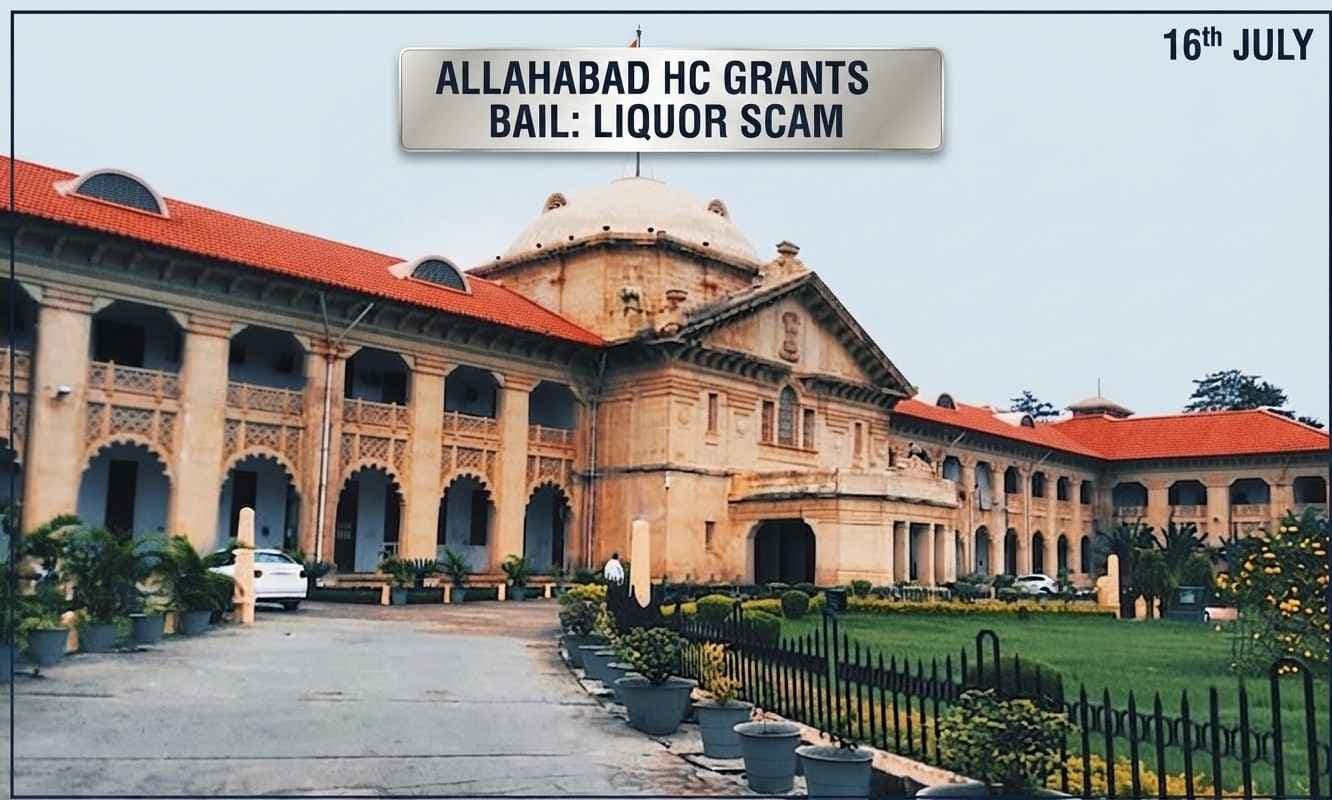
The case originates from an FIR registered by the State Economic Offences Wing and Anti‑Corruption Bureau, Raipur, Chhattisgarh, under Sections 420, 467, 468, 471 and 120‑B of the Indian Penal Code. The FIR names more than seventy persons, including the applicant Niranjan Das, in connection with the alleged ₹2,161 crore liquor scam. According to the prosecution, Das, while serving as Excise Commissioner of Chhattisgarh, was involved in drafting the state’s excise policy and the tender procedure for liquor contracts. It is alleged that the policy drafted by him unduly favoured M/s Prizm Holography Security Films Private Limited, a Noida‑based hologram manufacturer.
The applicant submitted that the Supreme Court had already granted him bail in May 2026 in the principal Chhattisgarh matter. Subsequently, the Directorate of Enforcement informed the Uttar Pradesh authorities about the alleged manufacture of holograms at Noida, which led to the registration of the present UP FIR. The defence also pointed out that other co‑accused in the scam had already been enlarged on bail and that the chargesheet in the UP case lists twenty‑two witnesses, indicating that the trial is unlikely to conclude in the near future.
Arguments Advanced by the Parties
Counsel for the applicant, Raghuvansh Misra along with Harsh Srivastava and Saksham Srivastava, urged the Court to grant bail on the ground that the applicant had already been afforded bail by the Supreme Court in the main case, that there was no material showing any attempt to evade the process of law, and that the investigation in the UP FIR was complete. They further argued that denying bail solely because of the applicant’s criminal antecedents would be contrary to settled legal principles.
Representing the State, Kartikeya Saran, Additional Advocate General, assisted by Sanjay Kumar Singh, AGA, contended that the seriousness of the offence and the applicant’s role in the alleged scam warranted continued custody. The State relied on the antecedents of the applicant and the magnitude of the alleged fraud to oppose bail.
Court’s Observations and Reasoning
Justice Vikram D. Chauhan noted that the object of bail is to secure the attendance of the accused at trial and that bail cannot be refused merely on the ground of criminal history unless exceptional circumstances are shown. The Court observed that the State had not placed any material on record to demonstrate that the applicant had ever attempted to evade the process of law, nor had it shown any likelihood of the applicant tampering with evidence, intimidating witnesses or misusing the liberty of bail.
The Bench further held that the principle that bail should not be denied based solely on criminal antecedents is well settled. It emphasized that no particulars or circumstances suggestive of the applicant fleeing from justice, thwarting the course of justice, repeating offences or intimidating witnesses had been demonstrated by the learned Advocate General for the State. Taking into account that the principal offence allegedly occurred in Chhattisgarh, that the applicant had already been granted bail by the Supreme Court in the main case, that the investigation in the UP FIR was complete and that the chargesheet names twenty‑two witnesses, the Court concluded that the applicant was entitled to bail.
Operative Outcome
Accordingly, the Allahabad High Court granted bail to Niranjan Das on furnishing a personal bond in the amount determined by the Court, along with sureties satisfactory to the trial court. The order directs the applicant to appear before the concerned trial court as and when required and to refrain from any act that could obstruct the investigation or trial.
Implications
The decision reinforces the jurisprudential stance that antecedents alone cannot be a ground for denying bail when there is no concrete evidence of a risk of flight or interference with the judicial process. It also highlights the interplay between proceedings in different jurisdictions, where bail granted in one case can influence the consideration of bail in another linked FIR. The order is likely to be cited in future applications where the accused seeks relief on the basis of prior bail granted in a related matter and where the prosecution fails to demonstrate specific apprehensions justifying continued detention.