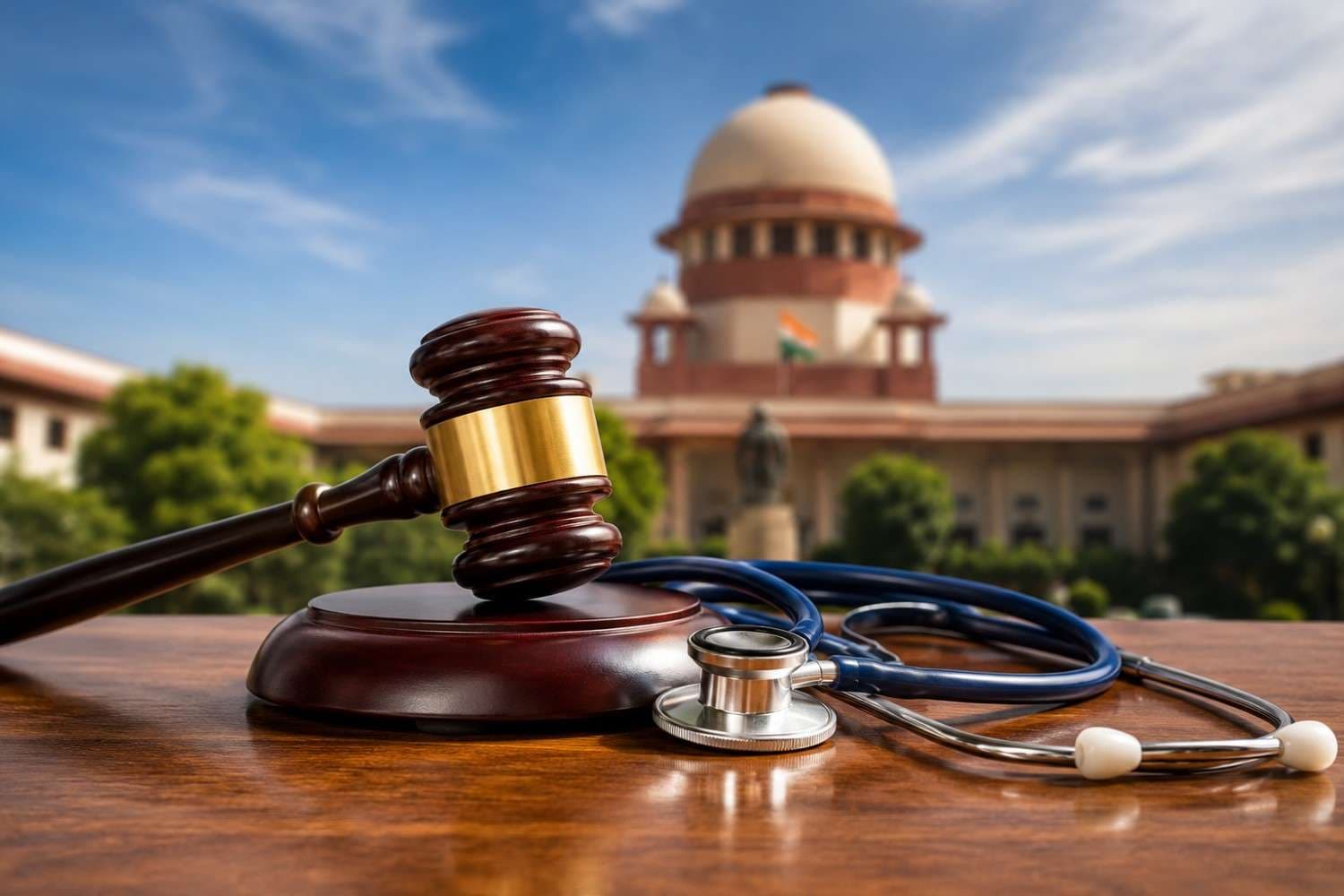
In a significant legal development following the cancellation of the NEET-UG 2026 examination, a new petition has been moved before the Supreme Court of India. The plea, filed by the Federation of All India Medical Association (FAIMA), challenges the "systemic failure" of the National Testing Agency (NTA) and seeks the creation of a more robust, autonomous body to conduct high-stakes medical entrance exams.
The petition comes just days after the NTA took the unprecedented step of cancelling the NEET-UG 2026 exam, which was held on May 3, following serious allegations of paper leaks. The investigation into the leak has since been handed over to the Central Bureau of Investigation (CBI).
The core of the petition, filed through Advocate Tanvi Dubey, argues that the NTA has failed in its primary duty to conduct fair and transparent examinations. It urges the Union Government to replace the NTA with a "technologically advanced and autonomous body" capable of handling the complexities of national-level entrance tests.
FAIMA has proposed the formation of a National Examination Infrastructure Committee (NEIC) or a similar entity that operates with greater independence and less vulnerability to security breaches.
With lakhs of students facing uncertainty, the plea emphasizes that any fresh attempt to conduct NEET-UG 2026 must be done under strict judicial scrutiny. Specifically, the petitioners have asked for:
- A High-Powered Monitoring Committee: Chaired by a retired Supreme Court judge and including cybersecurity experts and forensic scientists to oversee the re-conduct of the exam.
- Transition to Computer-Based Testing (CBT): To eliminate the risks associated with the physical handling and "chain-of-custody" of paper question sets.
- Digital Locking: Implementing advanced digital locks on question papers to prevent unauthorized access before the exam start time.
The crisis deepened when reports surfaced that "guess papers" circulating on social media platforms like WhatsApp and Telegram allegedly matched more than 100 questions from the actual examination paper. The petition highlights these reports as evidence of a deep-rooted security failure within the current system.
The medical association has also requested the Supreme Court to direct the CBI to submit a detailed status report within four weeks. This report would include information on the identified networks, arrests made, and the progress of the prosecution against those involved in the leak.
To prevent future anomalies, the plea further seeks a direction for the publication of "centre-wise results." The petitioners argue that making centre-specific data available would help in the transparent detection of unusual scoring patterns or localized malpractices, ensuring that merit remains the sole criteria for medical admissions in India.
The Supreme Court is expected to hear the matter soon, given the urgency and the impact on the careers of nearly 24 lakh aspirants. As the CBI continues its probe into the paper leak network, the medical fraternity and students across the country are looking toward the apex court for a solution that restores the integrity of the medical entrance process.
For now, the future of medical admissions for the 2026-27 academic year hangs in the balance, awaiting a structural overhaul of India's testing mechanism.