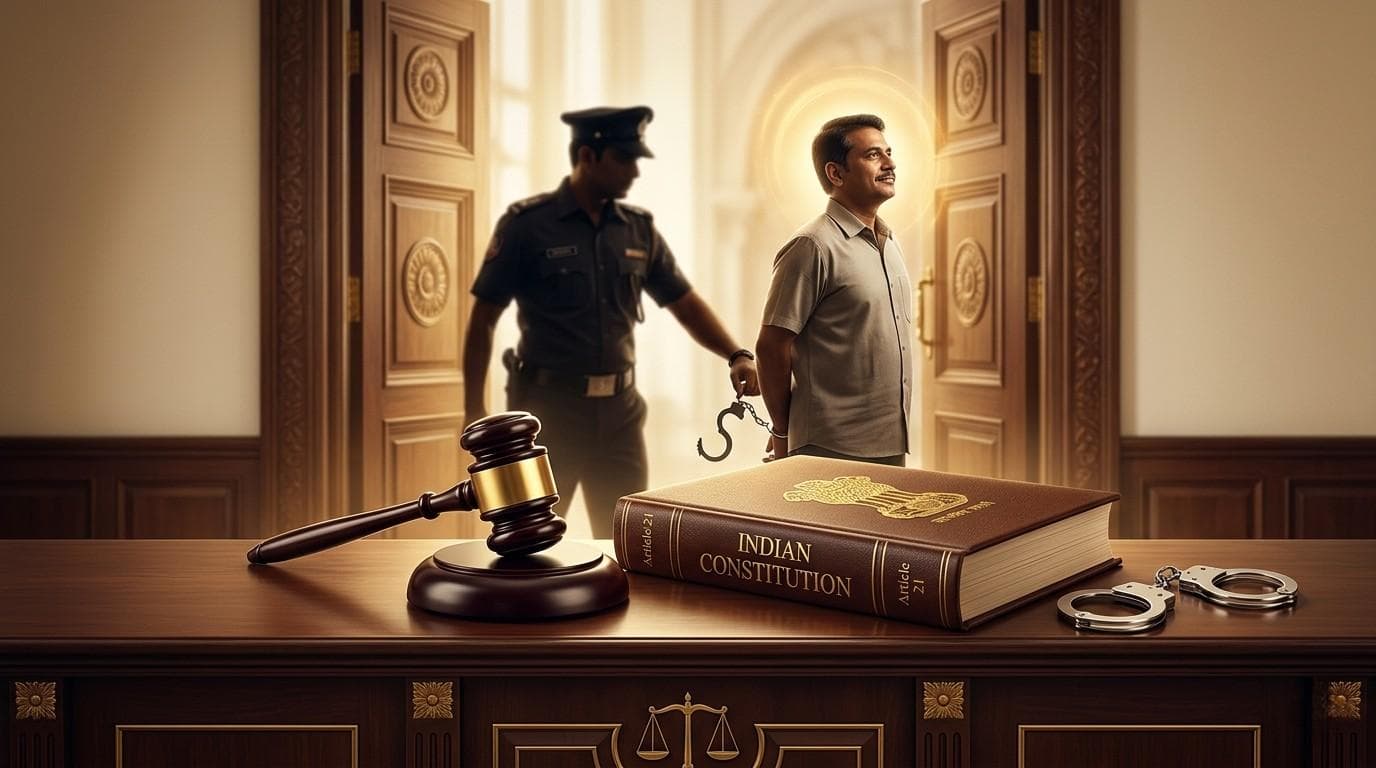
In a significant judicial intervention, the Madhya Pradesh High Court has reaffirmed that the Right to Life and Personal Liberty under Article 21 of the Indian Constitution is not a fair-weather friend. The court observed that the dignity of an individual is an inalienable part of their existence, regardless of whether they are an accused or a convict. By taking a stern view of the public shaming of individuals by law enforcement, the judiciary has sent a clear message that the law does not permit "trial by street" or the intentional humiliation of citizens.
The ruling comes in response to a disturbing incident where police officers allegedly paraded an accused person in public view. The court characterized such actions as "deliberate and malicious," noting that they serve no legitimate investigative purpose. Instead, these acts are seen as an attempt to bypass the judicial process to inflict immediate social punishment. The Bench emphasized that the police's duty is to uphold the law, not to act as judge, jury, and executioner of a person's reputation before a trial even begins.
A central theme of this judgment is the protection of human dignity, which the court described as a "quintessential" part of Article 21. Even when an individual is in state custody, they do not shed their fundamental rights at the gates of the police station. Public parading is viewed by the court as a barbaric practice that harkens back to an era of "mob justice," which has no place in a modern constitutional democracy governed by the rule of law.
Furthermore, the High Court has ordered a formal inquiry into the conduct of the officers involved. This move highlights the court's refusal to let administrative high-handedness go unnoticed. By demanding accountability, the judiciary is ensuring that police officers understand the boundaries of their authority. The order makes it clear that "policing" is not synonymous with "harassment," and that any deviation from legal protocols will result in departmental and legal consequences for the perpetrators.
The psychological impact of public shaming was also a point of concern. The court noted that parading a person in handcuffs through their community creates a lasting social stigma that can never be fully erased, even if the person is later acquitted of all charges. This "pre-emptive punishment" destroys families and social standings, effectively punishing the individual twice—once through the public gaze and once through the legal process—which is a gross violation of fair procedure.
This judgment serves as a vital reminder to law enforcement agencies across the country that the ends do not justify the means. While the police have a mandate to maintain order and solve crimes, they must do so within the framework of human rights. The court’s stance suggests that sensationalizing arrests for public approval or "heroic" optics is a dangerous trend that undermines the integrity of the criminal justice system and the sanctity of the Indian Constitution.
Moreover, the court’s intervention acts as a shield for the common man against potential police brutality and ego-driven actions. It reinforces the idea that the power of the uniform is derived from the law and must be used to protect the rights of all, including those accused of crimes. By calling for a strict inquiry, the court is attempting to root out a culture of impunity that often thrives in local police departments when dealing with the defenseless.
Ultimately, this ruling is a victory for constitutional morality over populist tactics. It reaffirms that the "Right to Dignity" is not a hollow phrase but a living protection that ensures every human being is treated with a baseline of respect. As the inquiry unfolds, it will likely serve as a benchmark for future cases involving police excesses, ensuring that the walk to the courtroom is one of legal process, not one of public humiliation and shame.