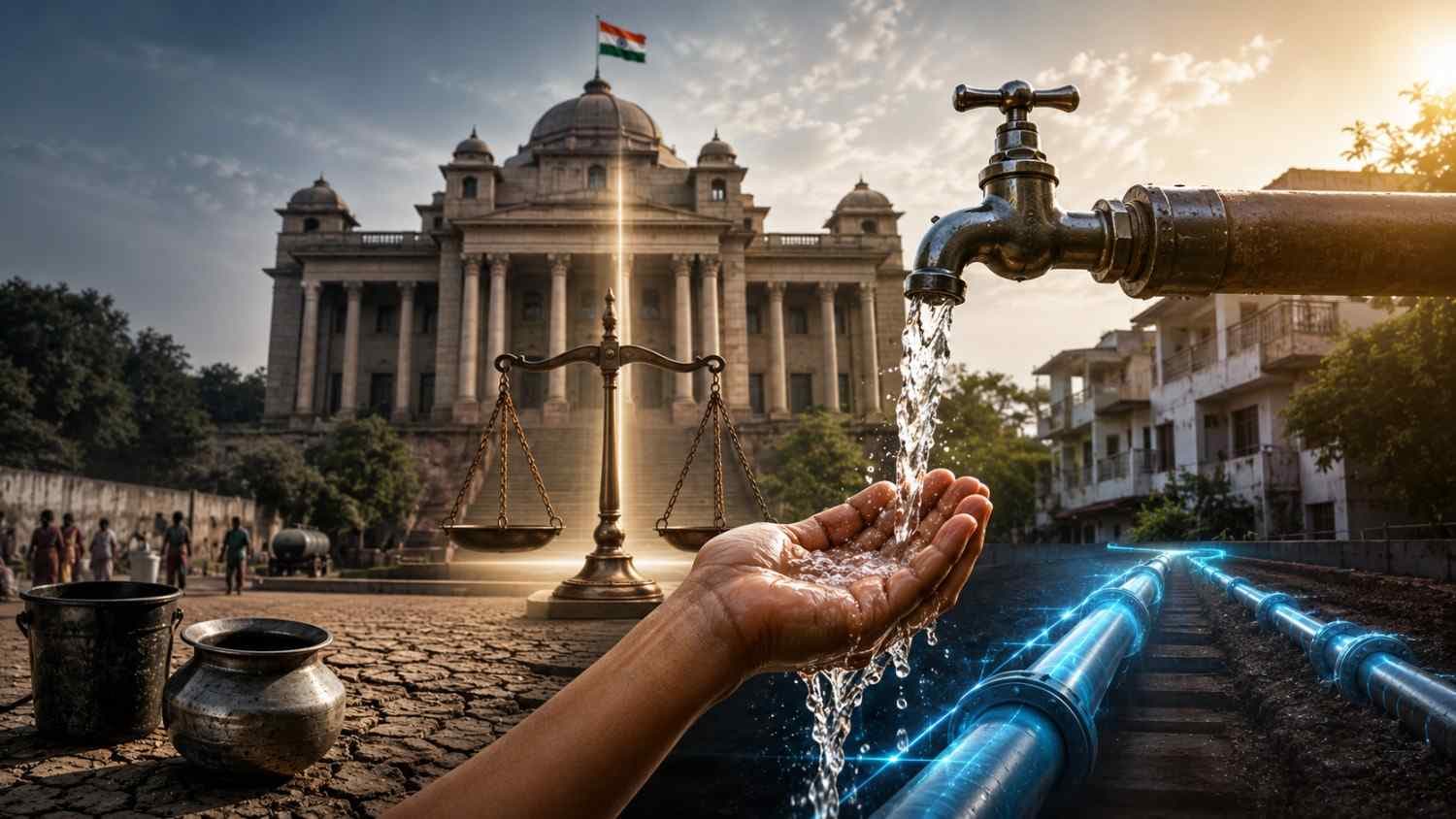
In a landmark observation that reinforces the sanctity of human life, the Madhya Pradesh High Court has reiterated that the right to clean drinking water is not a luxury or a mere service—it is a fundamental right. Under the expansive umbrella of Article 21 of the Indian Constitution, the court has clarified that "life" means more than mere existence; it means living with dignity, which is impossible without access to safe and potable water.
The Gwalior Connection
The ruling came during a significant hearing concerning a residential colony in Gwalior. Residents had been struggling with a lack of proper pipeline connectivity, forced to rely on inadequate or potentially unsafe sources. By bringing this issue to the bench, the case highlighted a systemic gap where urban expansion often outpaces the development of essential civic infrastructure, leaving citizens in a lurch.
State Cannot Evade Responsibility
One of the most powerful takeaways from this judgment is the court's stance on administrative accountability. The High Court firmly noted that State authorities, including the MP Jal Nigam and local municipal bodies, cannot evade their responsibilities by shifting the burden of duty amongst themselves. When it comes to basic civic amenities, the "blame game" between departments must end where the citizen’s right begins.
A Direct Order for Action
The court didn't just stop at philosophy; it issued clear directives for pipeline connectivity. By ordering the authorities to ensure the Gwalior colony is linked to the main water supply network, the judiciary has acted as a bridge between policy and reality. This ensures that the promises of "Jal Jeevan" reach the doorsteps of those who need it most, rather than remaining locked in bureaucratic files.
Article 21: A Shield for the Common Man
Article 21 has long been the "heart" of the Indian Constitution, protecting the right to life and personal liberty. Over the years, the judiciary has interpreted this to include clean air, a healthy environment, and now, with renewed vigor, the right to piped, potable water. This case serves as a reminder that the law is a living organism, evolving to protect the basic needs of every Indian.
Addressing the Public Health Emergency
Beyond individual convenience, the court recognized that water scarcity and contamination are public health emergencies. In a world where waterborne diseases remain a threat, the provision of clean water is the first line of defense. By enforcing pipeline connectivity, the court is essentially safeguarding the health of the community and preventing future medical crises.
A Precedent for Progress
This judgment sets a vital precedent for other colonies and cities across Madhya Pradesh and India. It empowers residents to demand what is constitutionally theirs. It sends a loud message to urban planners and state corporations: infrastructure development is not just about roads and bridges; it is about the pipes that carry the very essence of survival to the kitchen taps of the common man.
Conclusion: A Thirst for Justice Quenched
As Gwalior moves toward better connectivity, this ruling stands as a victory for constitutional morality. It reaffirms that in the eyes of the law, every citizen—regardless of their colony or status—deserves the basic necessities that sustain a dignified life. The pipes may be made of metal and plastic, but the promise they carry is one of justice, health, and a better tomorrow.