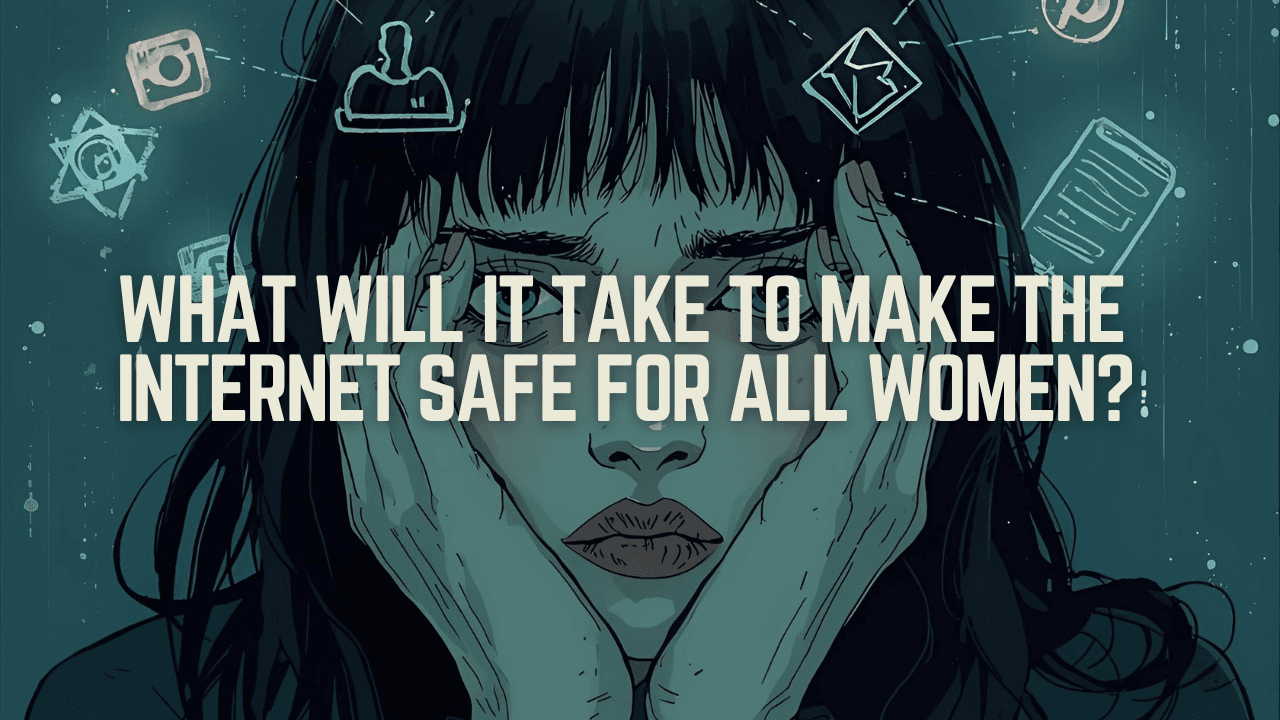
“Silencing women in digital spaces is the new censorship.”
— Nighat Dad, Digital Rights Foundation
Introduction-
The Internet was once a symbol of hope, a space to learn, connect, and grow. But over time, it has also become a place where women face harassment, hate, and humiliation. What was meant to empower has, in many cases, turned into a tool of control and abuse.
Social media platforms like Instagram, Snapchat, and X (Twitter) were built to help people share and express themselves. Yet, for many women, they’ve become spaces of fear filled with trolling, stalking, vulgar messages, and the non-consensual sharing of private photos. The anonymity that comes with technology has only made things worse.
The Digital Face of Harassment-
Online abuse takes many forms just like cyberstalking, doxing, morphing of images, revenge porn, and even deepfakes. For victims, the impact is not just digital; it’s deeply personal. Many experience anxiety, depression, or even post-traumatic stress. The constant fear of being watched or exposed takes away their freedom to simply exist online.
What’s worse is how society reacts. Instead of supporting victims, people often question what she was wearing, what she posted, or why she was online at all. This victim-blaming attitude discourages women from speaking out, letting abusers go unpunished.
What the Law Says-
India’s Information Technology (IT) Act, 2000 deals with online offenses like sharing obscene or explicit content (Sections 67 and 67A). The Bharatiya Nyaya Sanhita (BNS) also recognizes online stalking (Section 78) and acts that insult a woman’s modesty (Section 79). The POCSO Act, 2012 further protects children from online sexual abuse.
The courts have also taken a stand. In Shreya Singhal v. Union of India (2015), the Supreme Court struck down Section 66A for restricting free speech but acknowledged the importance of curbing online harassment. In State of West Bengal v. Animesh Boxi (2019), a man was convicted for sharing private images without consent — a big step toward recognizing women’s digital rights.
So, What Can Be Done?
Creating a safer Internet for women requires more than punishment. It needs prevention, education, and accountability.
Following things can be done-
Promote digital literacy: Teach people, especially young users, how to recognize and report online abuse.
Faster content removal: Platforms must act swiftly to delete abusive or morphed content.
Support victims: Provide mental health and legal support for survivors of online harassment.
Stronger accountability: Social media companies must take responsibility for what happens on their platforms.
Conclusion-
The Internet should empower women, not endanger them. Every woman deserves to feel safe — both offline and online. Making the digital world safer isn’t just a legal duty; it’s a collective responsibility