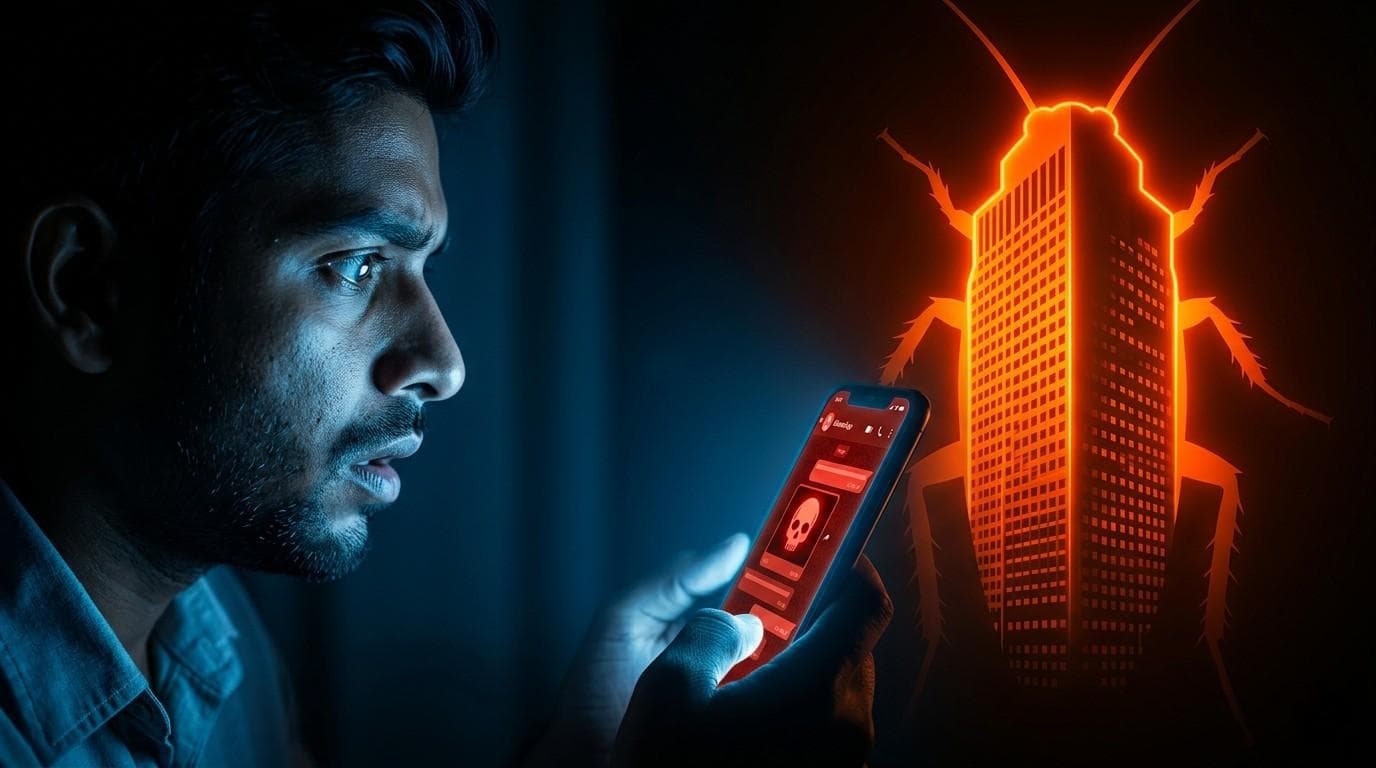
What began as a hyper-viral, satirical digital movement has taken a dark and incredibly dangerous turn, exposing the high stakes of modern political dissent in India. Abhijeet Dipke, the 30-year-old Boston University student who founded the phenomenally popular "Cockroach Janta Party" (CJP), has gone public with chilling, explicit death threats delivered directly to his phone. The sudden escalation from internet comedy to an international safety crisis highlights a disturbing reality: in the digital age, a massive social media following can transform a student activist into an immediate target for highly organized, cross-border intimidation.
The alarming details came to light after Dipke shared verified screenshots of anonymous WhatsApp messages on his social media feeds, simply captioned: “Receiving death threats now.” Sent predominantly in Hindi from an unknown number, the text messages laid out a terrifying, unambiguous ultimatum demanding the immediate shutdown of his platform’s viral accounts. The most striking and ominous message explicitly warned the young creator that physical distance would offer absolutely no protection, stating directly: "Listen, you will get paid to close the account. Otherwise, we can get you killed even in America."
The intimidation campaign did not stop at vague warnings of violence; it featured elements of targeted financial coercion and raw political extortion. The anonymous handlers openly offered a payout if Dipke voluntarily dismantled his digital movement, which recently made national headlines by crossing 19 million followers on Instagram—surpassing the official handle of the ruling party. When the financial incentive was ignored, the messages shifted to intense political intimidation, aggressively demanding that Dipke abandon his satirical stance, shut down his independent operation, and formally align his massive audience with the Bharatiya Janata Party (BJP) or face lethal consequences.
This high-stakes security threat unfolds while Dipke is physically residing in Boston, having recently completed his graduation ceremony in public relations. The timing of the threats is particularly calculated, as the young creator was actively finalizing his plans to return home to India. In recent interviews with independent media channels, Dipke had already voiced intense personal anxiety about his impending arrival, stating openly that he fears being immediately detained or arrested at the Delhi airport due to the sheer magnitude of the political wave his satirical platform has generated across the country.
The sudden danger has sent shockwaves through Dipke’s family home in Chhatrapati Sambhajinagar, Maharashtra, where his parents are living in a state of absolute panic. Speaking to regional news channels just hours before the death threats went public, his mother and father confessed to losing consecutive nights of sleep, expressing immense regret over their son's accidental entry into the volatile arena of national politics. His mother, Anita Dipke, issued an emotional public plea, stating that the family has absolutely no political background or ambitions, and that she simply wants her son to focus on securing a regular corporate job and returning home safely without facing state backlash or physical harm.
The severe backlash against the CJP follows a week of immense institutional pressure, where the movement has routinely collided with state regulations. Just a day prior to the death threats, the party’s primary account on X (formerly Twitter) was officially withheld within India following a formal legal demand by the central government. The digital crackdown, however, completely backfired; Dipke immediately launched a backup handle titled "Cockroach Is Back" and mockingly pointed out that while the state could attempt to block specific servers, it could not successfully censor millions of decentralized memes driving youth frustration over unemployment and systemic exam leaks.
Ultimately, the chilling threat to "get you killed even in America" has completely shifted the narrative surrounding the Cockroach Janta Party, transforming it from a lighthearted student rebellion into a serious conversation about civil liberties and digital safety. As prominent journalists, social activists, and cyber-security experts aggressively petition law enforcement to trace the digital footprint of the extortionists, the global youth community has rallied fiercely around the creator. By attempting to violently silence a movement born out of internet satire, the anonymous entities have inadvertently proved the CJP's core message: the establishment is deeply terrified of a generation that uses laughter as its primary weapon.