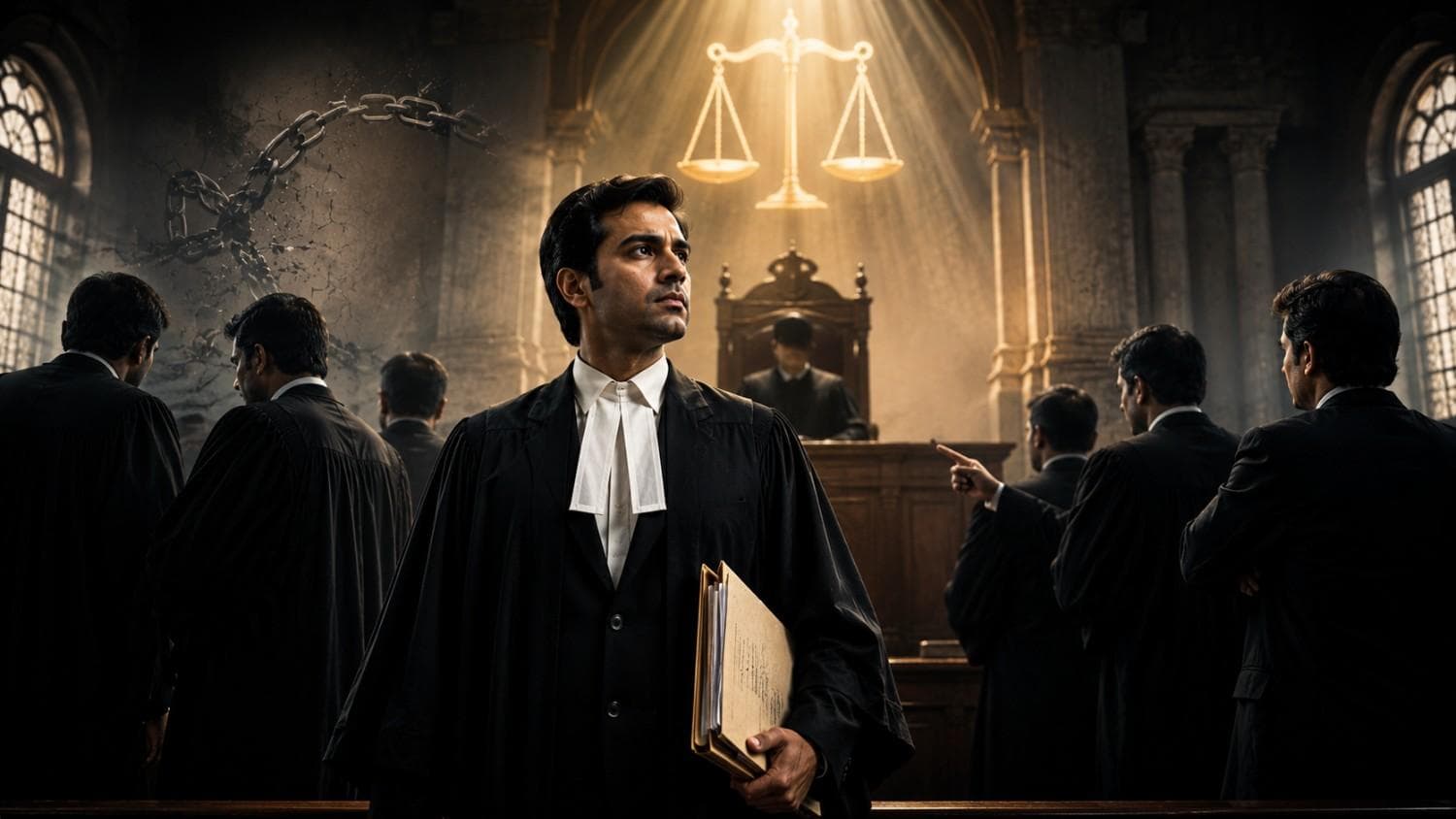
The recent ruling by the Tripura High Court in Sampad Choudhury v. State of Tripura & Ors. (delivered on May 11, 2026) offers a critical examination of the limits of a bar association’s disciplinary authority over its members. In an impactful judgment, Justice T. Amarnath Goud granted interim relief to a junior advocate who was suspended by the Tripura Bar Association for appearing before a consumer forum despite a collective boycott call. This decision reinforces the principle that a lawyer's primary, statutory obligation to their client and the court cannot be compromised by internal organizational resolutions.
The dispute arose after the Tripura Bar Association passed a resolution on January 19, directing its members to abstain from appearing before the District Consumer Disputes Redressal Commission in Agartala. Choosing to uphold his professional commitments, the petitioner appeared before the forum on February 6, prompting the association to issue a show-cause notice and subsequently suspend him for willfully defying the collective mandate. While the Bar Council of Tripura initially stayed these internal proceedings, the association continued its punitive actions, ultimately compelling the advocate to seek constitutional recourse before the High Court.
In staying the operation of the suspension and the underlying resolution, the High Court observed that no internal rule, regulation, or by-law of a bar body possesses the legal authority to override an advocate's statutory duties under the Advocates Act. The court emphasized that the primary responsibility of a legal professional is to represent their clients and assist the administration of justice. Consequently, any attempt by an association's office bearers to penalize a member for fulfilling these core professional obligations is inherently arbitrary, extraneous, and legally unsustainable.
Furthermore, the ruling aligns with the well-settled constitutional precedent established by the Supreme Court of India in Ex-Capt. Harish Uppal v. Union of India, which categorically held that lawyers have no right to go on strike or boycott courts. Justice Goud reiterated that such collective disruptions are wholly unjustified and impermissible in law. By explicitly noting that no Bar Council or Bar Association regulation demands or justifies the boycotting of judicial proceedings, the court dismantled the institutional backing often claimed by local bar bodies during strikes.
A particularly concerning aspect of this case was the bar association’s defiance of the state Bar Council's authority. The High Court took strong exception to the manner in which the local association attempted to bypass the regulatory oversight of the apex state body. The judgment frames the High Court’s intervention as a necessary judicial measure to protect the majesty, dignity, and independence of individual practitioners—particularly junior advocates—from institutional overreach by their own fraternity.
This verdict serves as a vital reminder of the hierarchy governing the legal profession in India. While bar associations play an important role in welfare and collective representation, they cannot function as parallel regulatory bodies that obstruct the functioning of the courts. By prioritizing the advocate's duty to the litigant over peer-enforced compliance, the Tripura High Court has safeguarded the fundamental right of citizens to uninterrupted legal representation.