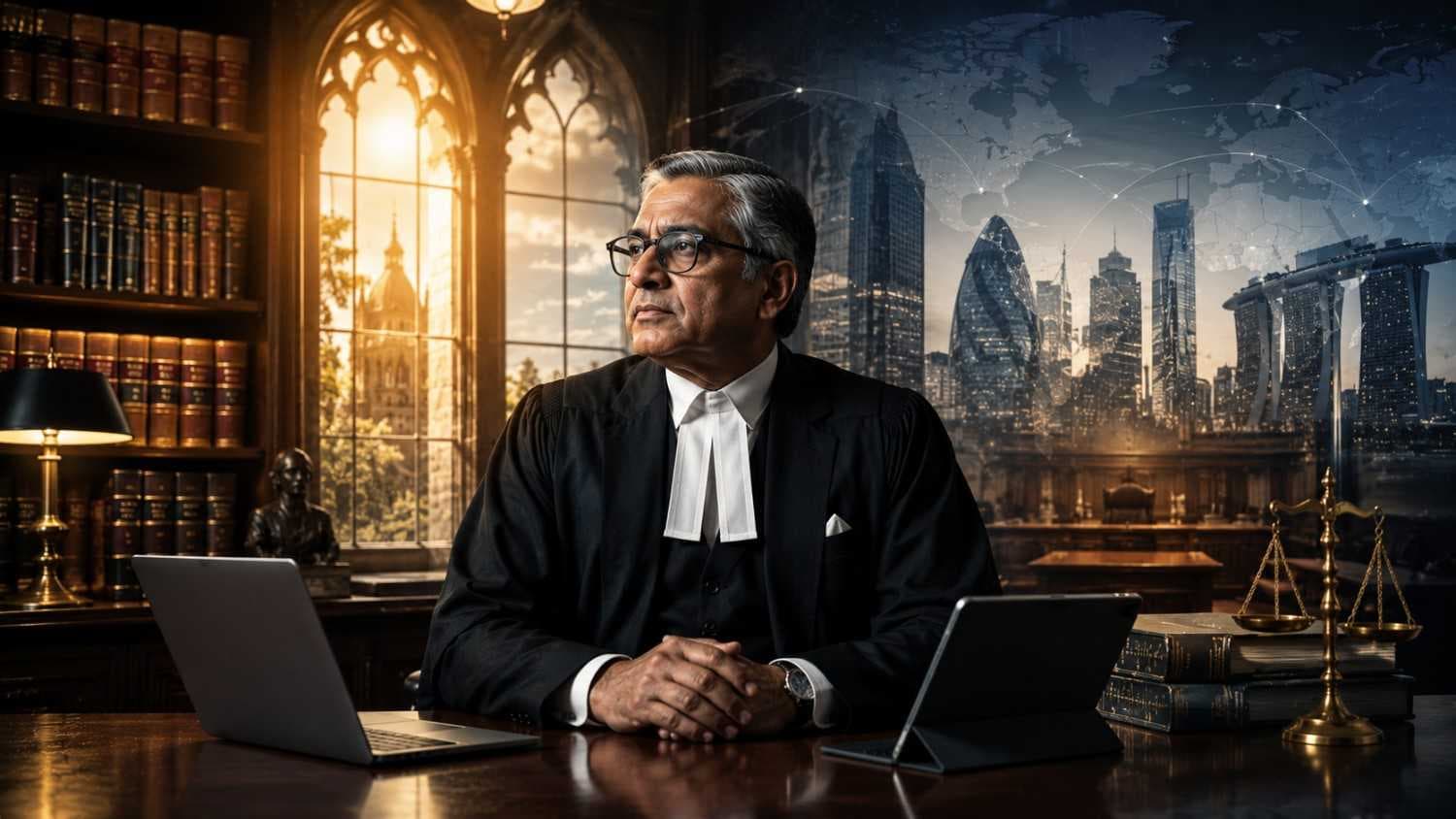
A visit to one of the oldest legal chambers in Bombay presents a striking juxtaposition: an office carrying a familiar old-world charm, yet deliberately modernized to meet the demands of contemporary practice. At a desk lined with digital screens and remarkably little physical paper, Senior Advocate Zal Andhyarujina balances the weight of legal history with a forward-looking vision. Designated as a Senior Advocate in 2020, his practice spans commercial litigation, international arbitration, banking, and insolvency. His perspective is uniquely global, shaped by his time as a Rhodes Scholar at Oxford and his role as a door tenant at Fountain Court, a prominent set of barristers’ chambers in London.
Reflecting on the unique ecosystem of the Bombay Bar, there is an underlying excellence that often goes unrecognized by its own practitioners. Bombay lawyers possess a distinct caliber and work ethic, yet they frequently underestimate how competitive they are on a global scale. This lack of self-awareness regarding their own high standards might stem from the insular nature of local practice, where professionals are so deeply immersed in the demanding daily grind of the courts that they rarely pause to benchmark themselves against international peers.
The traditional chamber model, long the bedrock of the Indian legal profession, is undergoing a necessary evolution. While maintaining the core values of mentorship and rigorous legal analysis, the modern chamber must embrace technological infrastructure to stay relevant. Transitioning to a paperless environment and utilizing advanced digital tools is not merely about convenience; it is about efficiency and speed in commercial dispute resolution. The integration of modern technology within historic chambers shows that legacy and progress do not have to be mutually exclusive.
India’s positioning in the international arbitration landscape remains a subject of critical evaluation. Despite significant legislative reforms and a growing corporate demand for alternative dispute resolution, the country still faces structural hurdles in becoming a preferred global hub. For international arbitration to truly thrive, there needs to be a cultural shift toward minimizing judicial intervention in arbitral awards and ensuring absolute predictability in enforcement. Indian practitioners have the talent, but the ecosystem requires systemic consistency to compete with established hubs like London or Singapore.
The dual experience of practicing within the Indian courts and interacting with the English bar as a door tenant highlights important cross-border lessons. The English barrister system emphasizes extreme specialization and structured written advocacy, which streamlines court proceedings. While the Indian system is uniquely vibrant and handles a staggering volume of litigation, adopting a more disciplined approach to brief-writing and oral submissions could drastically optimize court time and elevate the standard of advocacy.
The responsibilities that come with a senior designation involve a conscious effort to mentor the next generation of the bar. The transition from a junior practitioner to a leader in the courtroom requires not just a deep understanding of the law, but the development of a distinct professional integrity. Mentorship in a modern chamber should focus on guiding young lawyers to find their independent voice, encouraging them to look beyond domestic boundaries and view themselves as global legal professionals.
Ultimately, the true strength of the Bombay Bar lies in its resilience and its deep intellectual roots. By bridging the gap between historical legacy and global standards, local practitioners can unlock immense potential. Recognizing their own worth on the international stage is the first step toward transforming India from a consumer of global legal standards into a major contributor to international commercial jurisprudence.