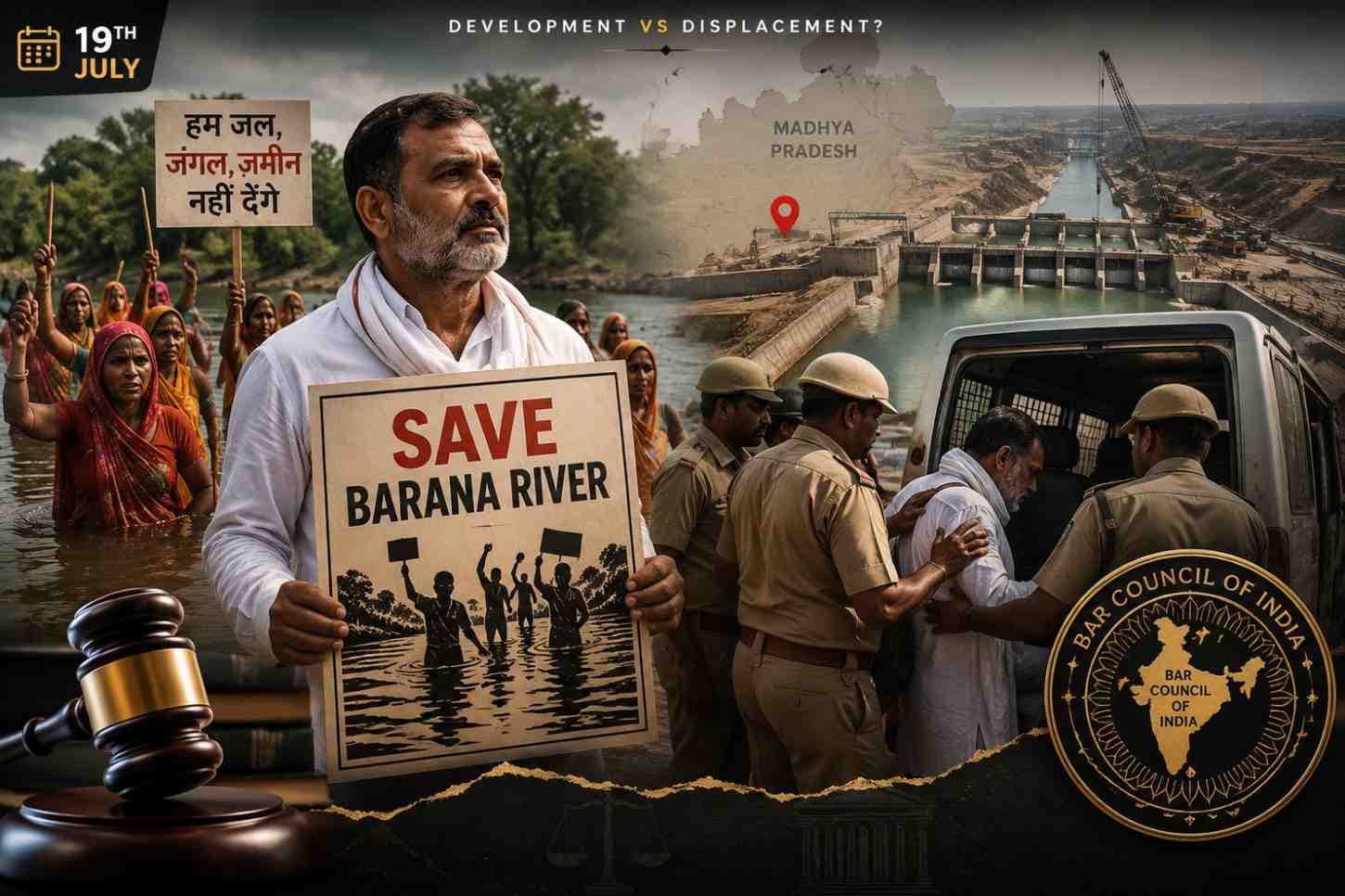
The banks of the Barana River in Madhya Pradesh, which served as a site of quiet, persistent resistance for over two weeks, saw a dramatic shift today. For 17 days, a group led largely by local tribal women stood their ground, opposing the Ken-Betwa Link Project—a massive infrastructure initiative that they fear will displace families and devastate local forests and wildlife.
What made this protest particularly striking was the determination of its participants. Engaging in symbolic acts like jal satyagraha (standing in water) and chita satyagraha (funeral pyre protest), the demonstrators sought to highlight the human cost of the country's first major river interlinking project. Their leader, Amit Bhatnagar, had been on a fast for 11 days, transforming a local grievance into a poignant symbol of regional struggle.
On the morning of July 19, the authorities intervened. Citing safety risks due to the rising water levels of the Barana River, police moved in to clear the site and transport the fasting leader to a hospital as his health deteriorated. While the administration framed the action as a necessary measure for the protesters' safety, the participants saw it as a silencing of their legitimate concerns regarding rehabilitation and environmental impact.
The Ken-Betwa Link Project is a significant undertaking designed to bring water to the drought-prone regions of Bundelkhand. However, as this protest has highlighted, such grand development plans often come with a heavy burden for those living on the land being repurposed. The opposition from families in Chhatarpur district reflects a growing national conversation about who "development" serves and who pays the price for it.
Though the physical camp on the riverbank has been cleared, the issues raised by these tribal communities remain. They are not merely protesting a construction project; they are fighting for their identity, their homes, and the protection of the Panna Tiger Reserve and its surrounding ecosystem. The end of this specific sit-in does not necessarily mean the end of their struggle.
Across India, we are seeing a trend where local movements are becoming increasingly vocal about the impact of large-scale projects on their lives. From education reforms in the capital to environmental concerns in the heart of Madhya Pradesh, citizens are finding new ways to demand that their voices be heard at the highest levels of governance.
As the dust settles in Chhatarpur, the core questions remain unanswered. How can India balance its need for water security and infrastructure with the rights of the indigenous populations who have called these riverbanks home for generations? This story of resilience is a reminder that the path toward modern development is often complicated by the voices of those who know the land best.