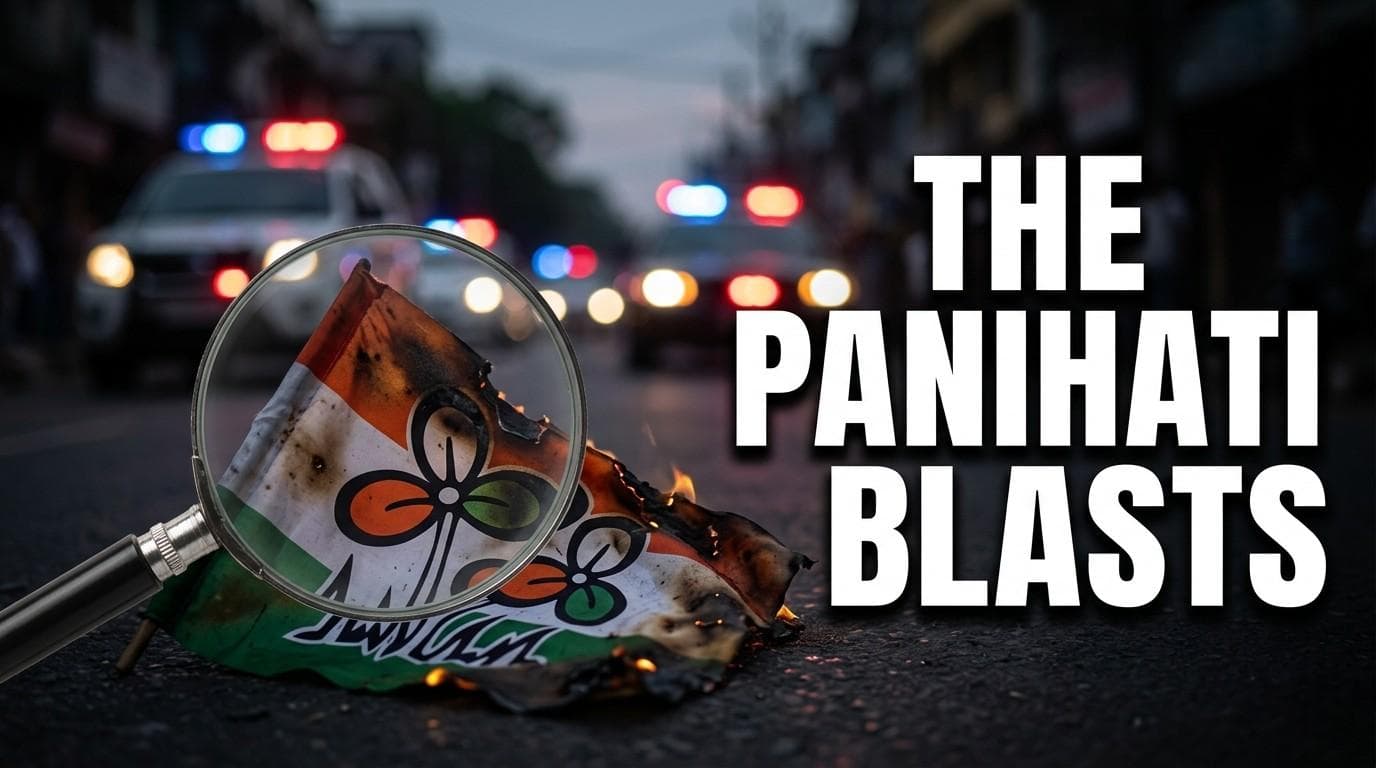
The air in North 24 Parganas, heavy with the humidity of early May, has been further thickened by the acrid scent of gunpowder. The recent detonation of crude bombs in Panihati, which left five BJP workers injured, is not merely a localized criminal act; it is a violent punctuation mark at the end of a high-stakes electoral chapter. These blasts, occurring in the shadow of a significant political transition, serve as a grim reminder that in West Bengal, the democratic mandate often carries a heavy price, paid in the currency of civil order and human safety.
The geography of this violence is particularly telling. Panihati, a densely packed urban landscape, became the theater for a calculated strike near the residence of a newly elected representative. This choice of venue suggests a deliberate attempt to intimidate the nascent leadership and signal that the transition of power will be met with resistance on the streets. For a district that has historically been a pressure cooker of political rivalry, these explosions represent a boiling over of frustrations that the ballot box has failed to neutralize.
The timing of the blasts suggests a cycle of retaliatory aggression. Coming just hours after the fatal shooting of a high-profile aide to Suvendu Adhikari, the violence indicates a breakdown in the informal "truces" that usually govern post-poll environments. It appears as if the state is trapped in a reactive loop—where a bullet in one suburb is answered by a bomb in another. This "tit-for-tat" escalation challenges the very foundation of the rule of law, placing the burden of peace squarely on an overstretched police force.
Strategically, the use of crude bombs—a signature of local political friction in the region—speaks to a logistical ease that is deeply concerning. These devices, though primitive in construction, are sophisticated in their psychological impact, turning public spaces into zones of uncertainty. The attack near a prominent educational institution further amplifies the sense of vulnerability, reminding the citizenry that the "political battlefield" knows no boundaries, even as the government formation process begins in the state capital.
The institutional response has been a mix of heavy deployment and sharp rhetoric. While the police have initiated raids and are scouring CCTV footage, the political narrative has already been set. The "saffron camp" views this as an orchestrated attempt at suppression, while the incumbent administration dismisses it as localized law-and-order lapses. This polarization of the narrative is as dangerous as the blasts themselves, as it prevents a unified administrative front against the elements that thrive in the chaos of political transitions.
Behind the immediate casualties lies a deeper systemic crisis: the normalization of violence as a tool of political messaging. When five workers are injured in a public square, it acts as a deterrent for future political engagement for thousands of ordinary citizens. The objective of such strikes is often "voter fatigue" or "cadre demoralization," aiming to ensure that the political geography remains hostile to the victor. Breaking this cycle requires more than just arrests; it requires a structural overhaul of how local "strongmen" are managed during the sensitive period of government formation.
As the injured receive treatment in Kolkata's RG Kar Medical College, the focus must shift to the "zero tolerance" mandate issued by the constitutional authorities. The presence of central forces remains the only thin line between a fragile peace and a total collapse of order in the sensitive pockets of North 24 Parganas. To stay "hooked" to this story is to monitor the survival of the democratic process in one of India’s most politically vibrant yet volatile states.
In the final analysis, the Panihati blasts are a test of the state’s ability to protect its own mandate. A government that cannot secure its workers or its citizens in the wake of an election risks losing the moral authority that the vote provides. The coming days will reveal if the "shadow of the bulldozer" and the "echo of the blast" will define the next five years, or if the law can finally reclaim the streets of North 24 Parganas from the grip of political vendetta.