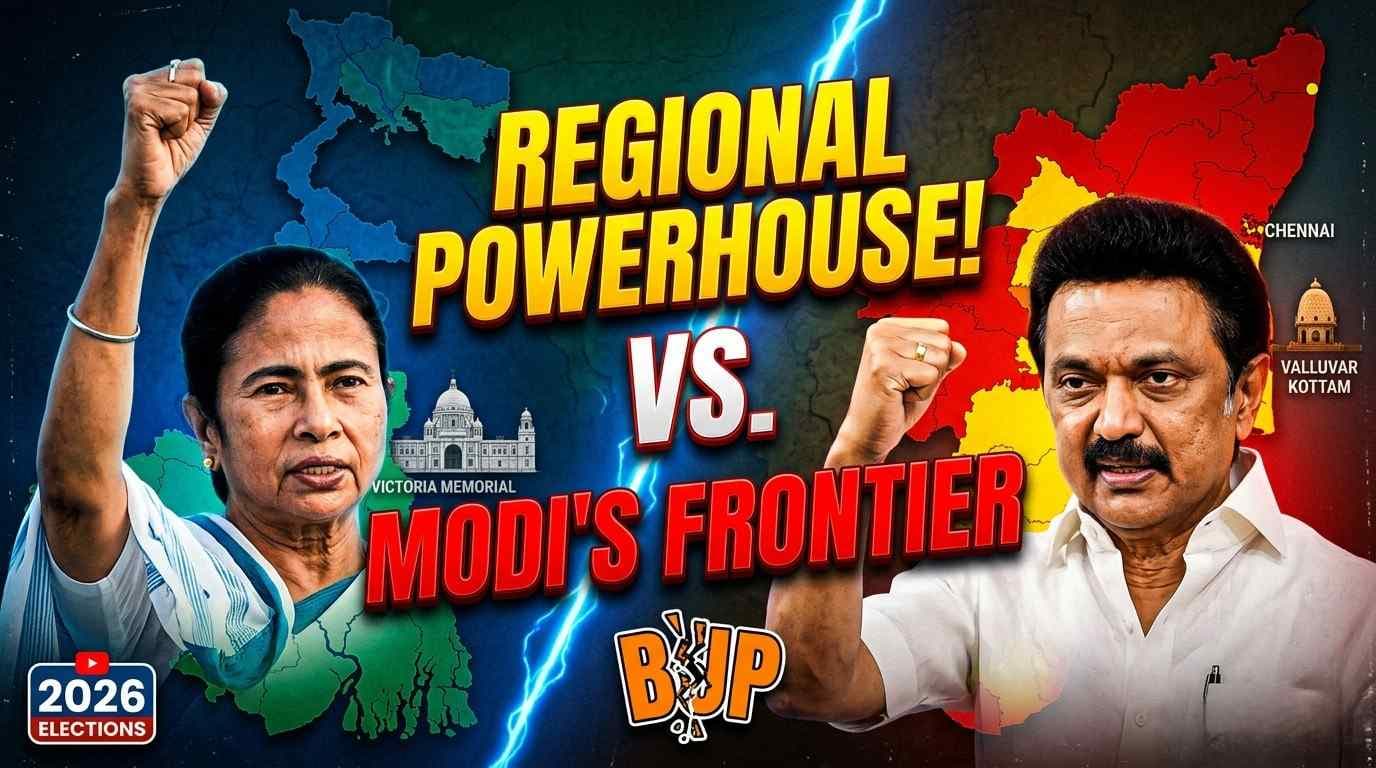
The 2026 Assembly elections have concluded with results that underscore the complex interplay between national narratives and regional pride. In two of India’s most culturally distinct states—Tamil Nadu and West Bengal—the electorate has delivered a mandate that largely preserves the status quo, even as the Bharatiya Janata Party (BJP) poured unprecedented resources into these "frontier" territories. For Prime Minister Narendra Modi’s party, these polls were a litmus test for its ability to transcend linguistic and cultural barriers in the South and East.
In Tamil Nadu, the DMK-led alliance under Chief Minister M.K. Stalin appears to have successfully fended off a resurgent opposition. The campaign in the state was fought largely on the plank of "Dravidian Identity" versus the BJP’s "Nationalism" and developmental promises. Despite an aggressive push by the BJP to establish itself as the primary challenger to the DMK—often bypassing the traditional AIADMK—the voting patterns suggest that the state's voters continue to favor parties that emphasize social justice and regional autonomy.
The results in West Bengal tell an even more dramatic story. After a grueling multi-phase election marked by intense legal battles over voter rolls and the deployment of central forces, Mamata Banerjee’s Trinamool Congress (TMC) has managed to hold its "third-term bastion." While the BJP has significantly increased its seat count and consolidated its position as the principal opposition, the TMC’s grip on the rural heartlands and its appeal to the female electorate through various welfare schemes proved to be a formidable barrier.
From a strategic perspective, these elections reveal a "clash of styles." The BJP’s centralized campaign, led by national figures, faced off against the highly localized, personality-driven campaigns of Stalin and Banerjee. In both states, the incumbent regional leaders successfully framed the contest as an "outsider versus insider" battle, a narrative that resonated deeply with voters concerned about the erosion of state-level powers in a federal setup.
The logistical conduct of the polls was also a point of legal scrutiny. The use of Section 163 of the BNSS to secure counting centers and the Supreme Court's refusal to stay administrative decisions regarding counting personnel ensured that the process remained orderly. However, the high-stakes nature of the contest led to several post-poll petitions in various High Courts, particularly regarding the Special Intensive Revision of electoral rolls in Bengal, which will likely keep the legal fraternity busy in the coming months.
For the national ruling party, while the lack of a clear victory in these states may seem like a setback, the increased vote shares indicate a growing footprint in traditionally "no-go" zones. The BJP has successfully transitioned from a marginal player to a central pole of the political discourse in both Chennai and Kolkata. This suggests that the 2026 results are not an end, but rather a realignment that sets the stage for a more polarized and competitive federal structure in the years to lead up to the 2029 national elections.
In conclusion, the 2026 mandate is a testament to the resilience of regional politics in India. It highlights that while national issues like the economy and infrastructure matter, they are often filtered through the lens of local language, heritage, and social history. As the newly elected representatives take their seats, the focus will shift from the heat of the campaign to the challenges of governance in a diverse and demanding democracy.