The controversy centres on a Government Order (GO) issued on 9 March 2024 by the Backward Classes, Most Backward Classes and Minorities Welfare Department of Tamil Nadu. The order allowed individuals who originally belonged to Backward Classes, Most Backward Classes, Denotified Communities or Scheduled Castes and who subsequently converted to Islam to be issued a community certificate identifying them as belonging to one of seven notified Muslim sects – Ansar, Dekkani Muslims, Dubekula, Labbais (including Rowthar and Marakayar), Mapilla, Sheik and Syed. Possession of such a certificate would enable the holder to claim reservation in educational institutions and public employment under the Tamil Nadu Backward Classes, Scheduled Castes and Scheduled Tribes (Reservation of Seats in Educational Institutions and of Appointments or Posts in the Services under the State) Act, 1993.
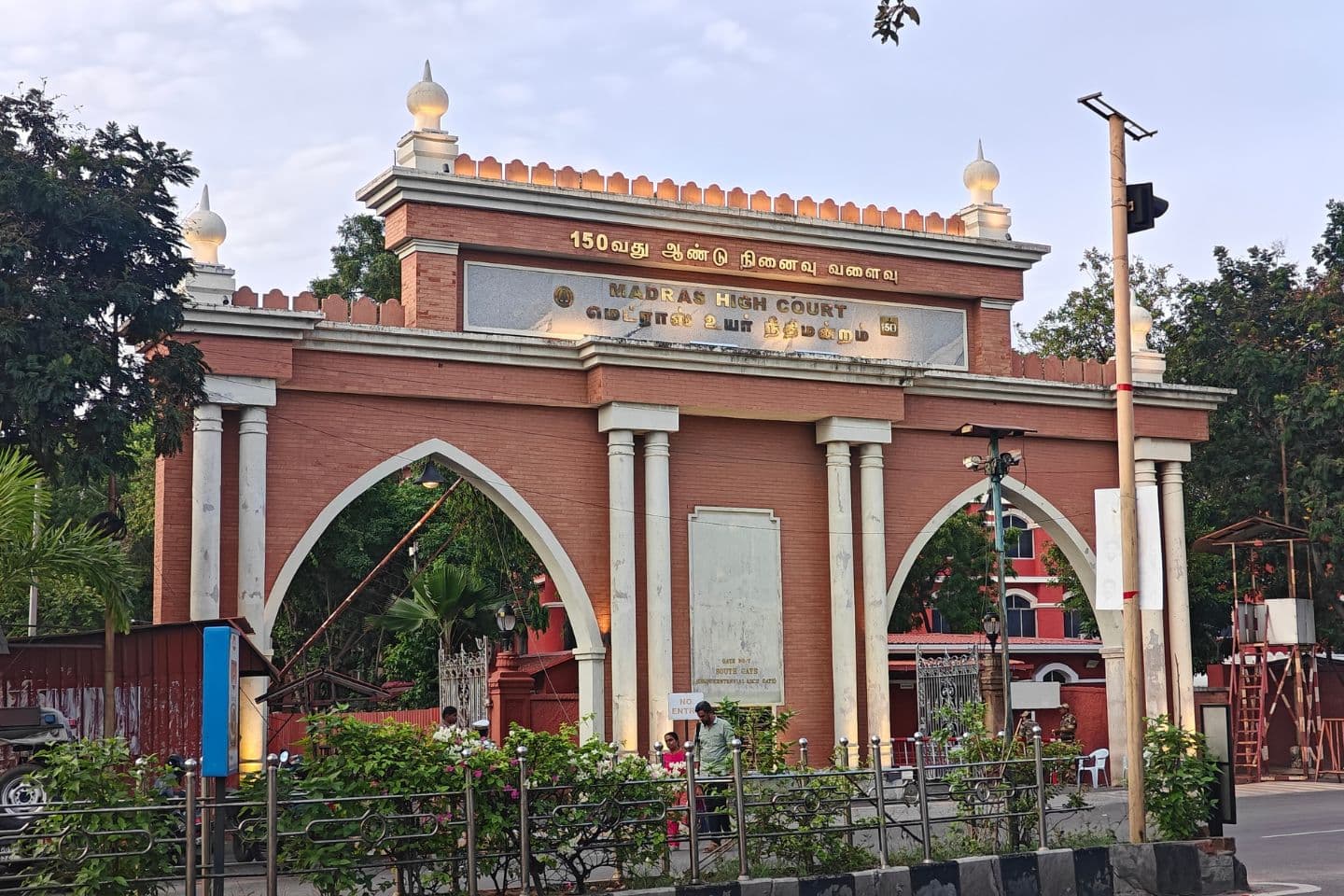
The High Court of Madras, comprising Justice GR Swaminathan and Justice PB Balaji, examined the validity of this GO while hearing a writ petition filed by Sameer Ahamed. Ahamed, who converted from Hinduism to Islam in 2015 and whose conversion was gazetted in 2016, applied for a certificate describing him as a member of the ‘Muslim Lebbai’ community. The Tahsildar rejected the application, prompting Ahamed to approach the High Court.
High Court’s Reasoning
The Division Bench held that the GO was unconstitutional. It observed that the order conflicted with prior judicial pronouncements of both the Madras High Court and the Supreme Court, which have consistently held that a person who converts to Islam must be treated solely as a Muslim for the purpose of caste‑based benefits. The Bench concluded that the GO could not withstand judicial scrutiny and therefore impleaded the State of Tamil Nadu as a respondent to test the validity of the order.
In its judgment, the Court emphasized that the State’s attempt to extend reservation benefits to converts via a notified list of Muslim sects was not supported by existing law. It reasoned that allowing such a mechanism would alter the character of the reservation framework, which is intended to address historical social and educational backwardness of specific Hindu‑origin communities, and would thereby undermine the principle that conversion to Islam severs the link with the original backward‑class status for the purpose of affirmative action.
State’s Defence and Arguments
The State countered the High Court’s findings by asserting that the GO was not issued arbitrarily. It relied on a recommendation dated 6 February 2024 from the Tamil Nadu Backward Classes Commission, which advised the Government to extend community‑certificate facilities to persons from backward‑class backgrounds who convert to any of the seven identified Muslim groups. The State argued that the GO emerged after detailed deliberation and was designed to protect the existing reservation benefits of individuals who, having already availed of such benefits, would otherwise lose them solely on account of religious conversion.
Further, the Government contended that granting reservation to these converts would not disturb the social balance, as the beneficiaries would continue to belong to the same socio‑economic strata they occupied prior to conversion. The State maintained that the measure was a protective step rather than an expansion of the reservation quota.
Proceedings in the Supreme Court
Aggrieved by the Madras High Court’s decision, the State of Tamil Nadu filed a Special Leave Petition before the Supreme Court on 6 July 2026. The petition, bearing Diary No. 39624/2026, is titled The Secretary to Government v Sameer Ahamed and is being handled by Advocate B Karunakaran, Advocate‑on‑Record. The State seeks to overturn the High Court’s declaration of the GO as unconstitutional and to secure a ruling that permits backward‑class converts to Islam to retain their eligibility for reservation benefits.
Implications
The outcome of this appeal will have significant bearing on the interplay between religious conversion and caste‑based affirmative action in Tamil Nadu. A ruling in favour of the State could affirm the legitimacy of using notified sects as a conduit for preserving reservation benefits post‑conversion, potentially influencing similar policies in other states. Conversely, an affirmation of the High Court’s view would reinforce the judicial stance that conversion to Islam severs eligibility for backward‑class reservations, preserving the existing doctrinal boundary between religion and caste‑based entitlements.
The Supreme Court’s deliberation will thus clarify the extent to which the State may accommodate religious conversion within the framework of reservation without contravening constitutional principles of equality and non‑discrimination.