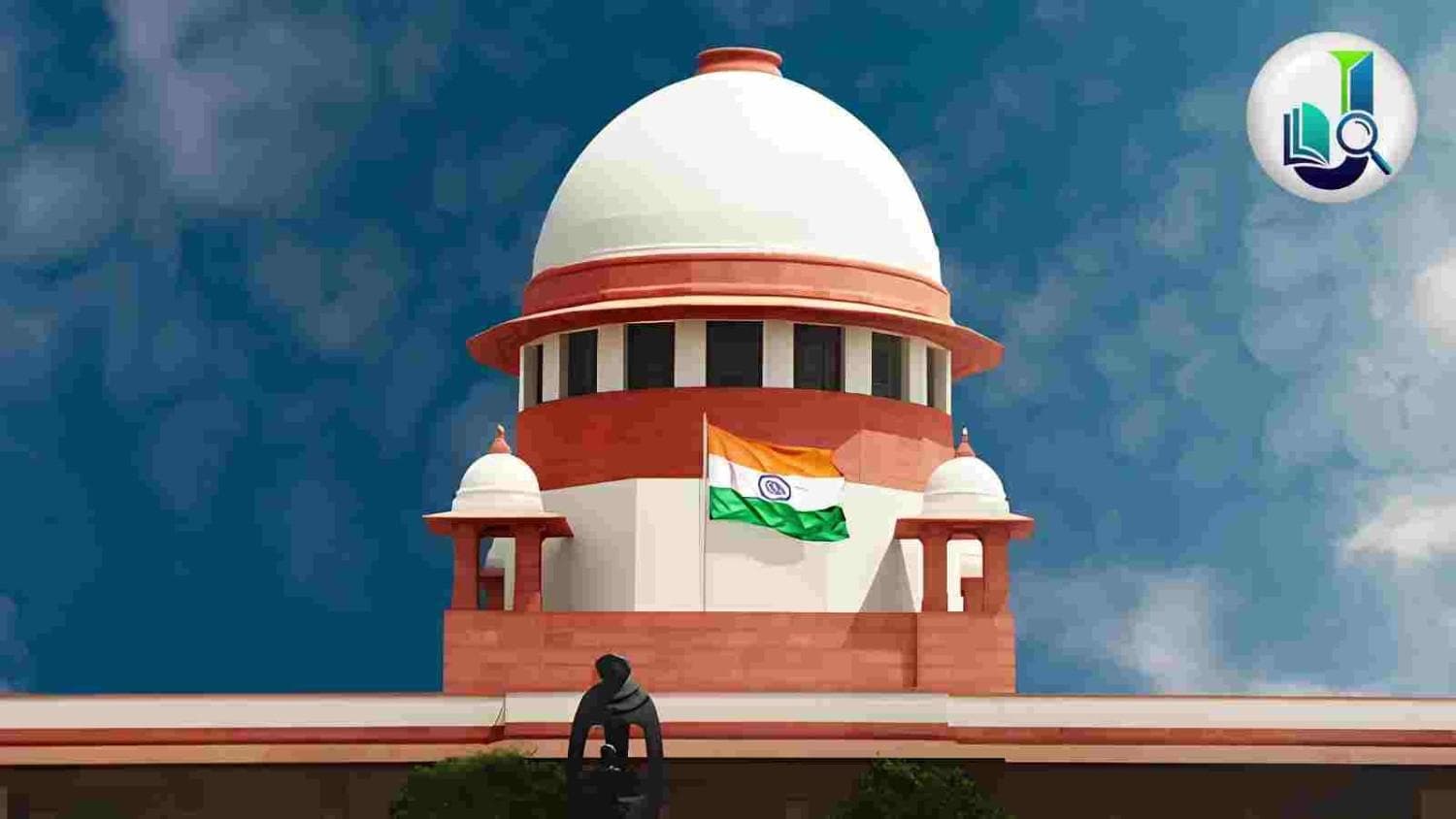
The Supreme Court bench comprising Justice Nongmeikapam Kotiswar Singh and Justice K. Vinod Chandran refused to interfere with the order passed by the National Company Law Appellate Tribunal (NCLAT) that had dismissed an insolvency petition filed under Section 9 of the Insolvency and Bankruptcy Code 2016 by Narayani Resources Private Limited against Essar Power Gujarat Limited. The bench dismissed the appeal, affirming the NCLAT’s finding that a genuine pre‑existing dispute existed between the parties, which barred the use of the insolvency process as a mere debt‑recovery tool.
The operational creditor, Narayani Resources, claimed that Essar Power Gujarat owed it approximately eighty‑five crore rupees for the supply of coal. It initiated corporate insolvency resolution proceedings by serving a statutory demand notice under the IBC. Essar Power Gujarat resisted the petition, asserting that the parties had entered into a settlement agreement in January 2025 for a sum of about one hundred and seven crore rupees. According to the corporate debtor, substantial payments had been made pursuant to that settlement, while the balance amount was contingent upon the issuance of a debit note by Narayani Resources, which was never furnished. Essar Power Gujarat further stated that it had paid eight crore rupees in advance towards interest and maintained that this amount was refundable.
Narayani Resources countered that, even accepting Essar Power Gujarat’s own version of the settlement, outstanding dues remained payable and therefore the insolvency application ought to have been admitted. The National Company Law Tribunal (NCLT) initially dismissed the creditor’s plea, prompting an appeal to the NCLAT.
The NCLAT, after examining the correspondence exchanged between the parties, observed that the dispute regarding reconciliation and settlement was evident from the reply to the demand notice and the rejoinder. It held that the dispute clearly predated the issuance of the statutory demand notice under the IBC. The tribunal noted that the defence raised by Essar Power Gujarat in its reply to the demand notice was not a feeble contention unsupported by evidence. Consequently, the NCLAT upheld the NCLT’s order rejecting the insolvency petition.
The Supreme Court, sitting as a partial working days bench, endorsed the NCLAT’s reasoning. It emphasized that insolvency proceedings initiated by an operational creditor under Section 9 of the IBC cannot be employed as a mechanism for recovering debts when a bona fide dispute exists between the creditor and the corporate debtor. The bench stressed that the existence of a pre‑existing dispute defeats the maintainability of an insolvency petition, irrespective of the amount claimed.
By dismissing the appeal, the Supreme Court reinforced the principle that the IBC’s corporate insolvency resolution process is not a substitute for ordinary civil remedies in cases where the parties are engaged in a genuine disagreement over dues, settlement terms, or account reconciliation. The decision clarifies that operational creditors must first resolve such disputes through appropriate forums before seeking recourse under the insolvency framework.
The outcome has immediate implications for similar cases where a settlement or ongoing negotiation is alleged. It signals that courts will scrutinise the timing and nature of any dispute raised by the corporate debtor and will refuse to admit insolvency petitions if the dispute predates the demand notice and is supported by evidence. The ruling thus delineates the boundary between legitimate use of the IBC and its misuse as a pressure tactic in debt recovery disputes.