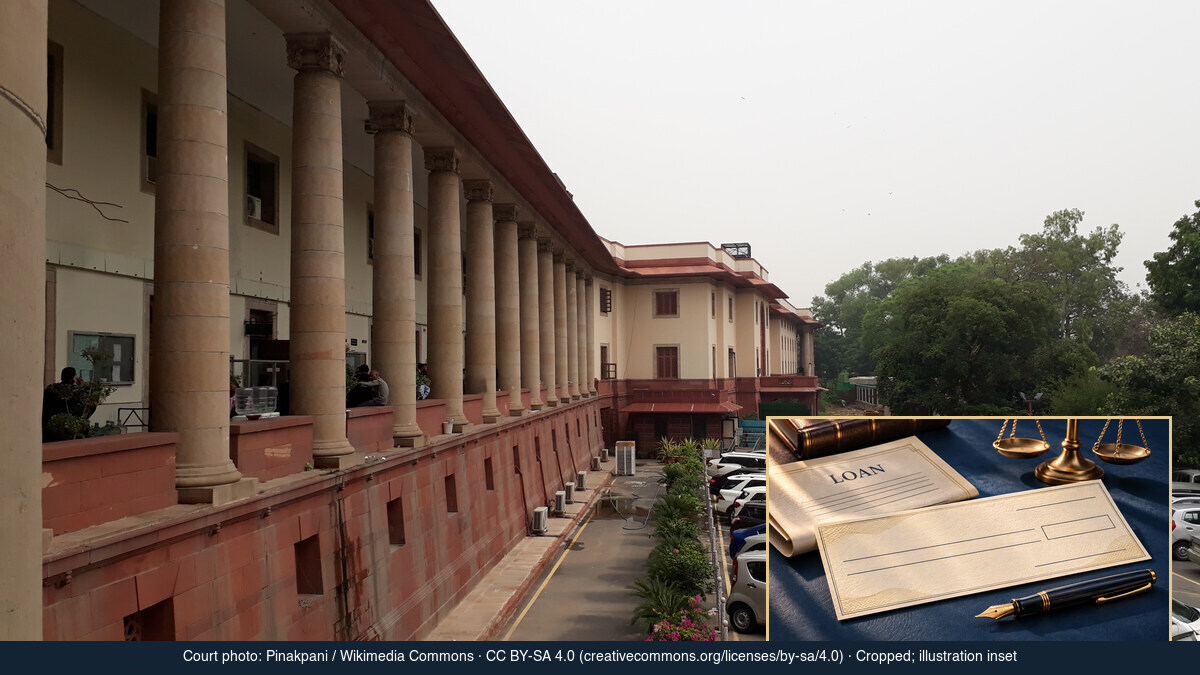
The Supreme Court said its May 2026 decision in Mansi Finance leaves courts free to examine whether state money-lending law bars recovery of the underlying debt in a cheque dishonour case. Justices Prashant Kumar Mishra and N.V. Anjaria disposed of an application seeking clarification on 29 October 2026.
Why Maharashtra’s licensing rules matter
Section 138 of the Negotiable Instruments Act concerns cheques issued for a legally enforceable debt or liability. The court explained that Maharashtra’s Money-Lending (Regulation) Act, 2014, treats an advance at interest on a promissory note as a loan within the statutory definition. Sections 4 and 13 deal with licensing and the consequences of lending without the required licence. A court considering enforceability must apply the relevant state law to the transaction before it.
What the earlier ruling decided
The May ruling principally concerned the basis for imposing vicarious liability under Section 141 of the Negotiable Instruments Act. The October bench held that the earlier decision needed no clarification and left parties free to raise a state-law bar before the court hearing their case.
Case: M/s Mansi Finance (Chennai) Ltd. v. M. Lalitha and others, 2026 INSC 1174, M.A. No. 3002 of 2026 in Criminal Appeal No. 2849 of 2026.