The Supreme Court struck down two Uttar Pradesh laws that excluded service before regularisation when calculating pension eligibility. In its 18 November judgment, the Court held that eligible employees must have their qualifying earlier service counted in line with its 2019 ruling in Prem Singh v. State of Uttar Pradesh.
Why the Court struck down the laws
Justices Dipankar Datta and Satish Chandra Sharma held that the Uttar Pradesh Qualifying Service for Pension and Validation Act, 2021, and the Uttar Pradesh Entitlement to Pension and Validation Act, 2025, reproduced the exclusion the Court had already found impermissible. The bench explained that a legislature may change the legal basis of a judgment retrospectively, but a validating law must cure the defect the Court identified.
What the judgment means for pension claims
Eligible employees can submit their service details to the competent authority, including employees who were outside the petitioning association. The Court directed authorities to decide claims within six months of receipt and to give claimants an opportunity to be heard before rejecting a claim. It generally limited arrears to three years and directed that delayed payments beyond the applicable deadlines carry 9% simple annual interest.
Case Uttar Pradesh Ground Water Department Non Gazetted Employee Association (Regd.) & Anr. v. The Chief Secretary & Ors., W.P. (C) No. 1458 of 2020, 2026 INSC 1252.
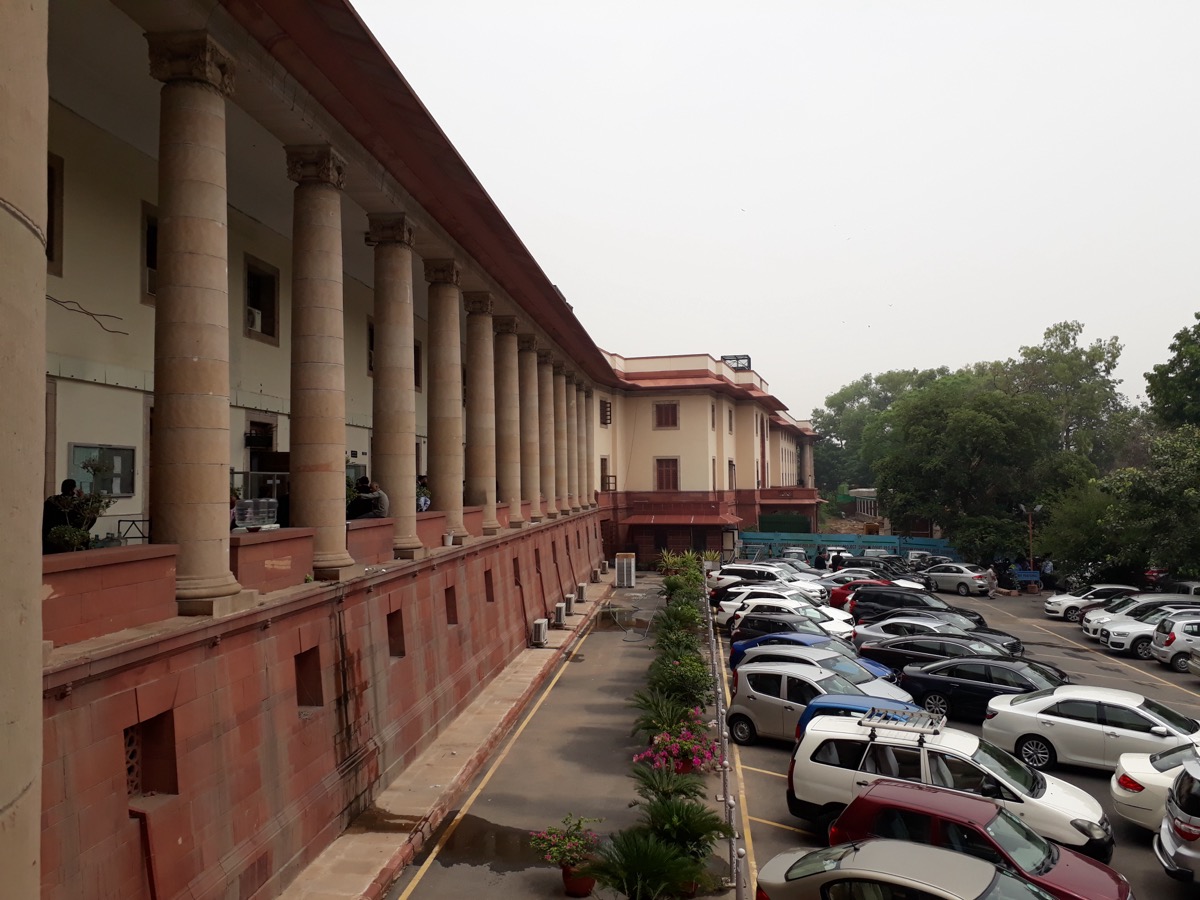
Supreme Court of India photograph by Pinakpani, CC BY-SA 4.0.