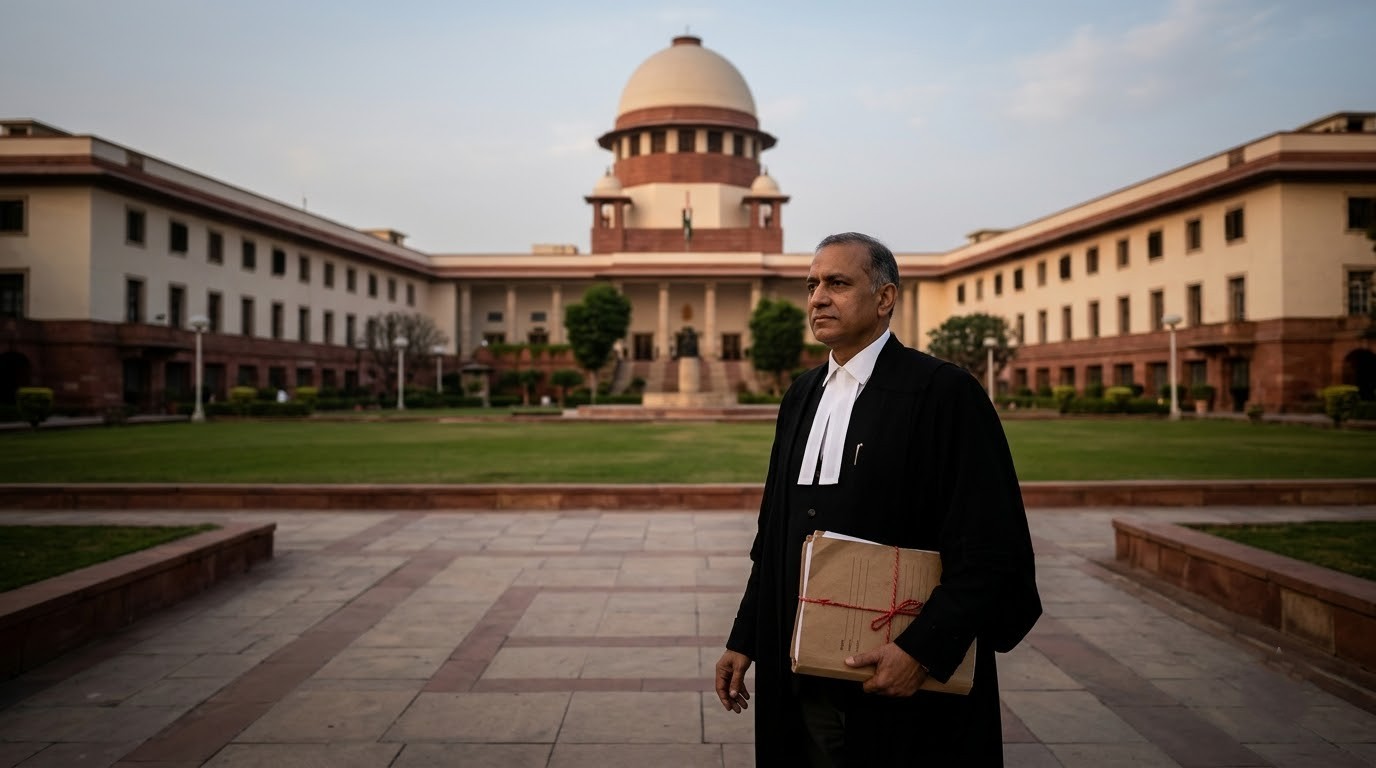
The Supreme Court has ruled that insubordination, behavioural difficulties or strained relations with members of the Bar cannot, by themselves, justify branding a judicial officer's integrity as doubtful. A bench comprising Chief Justice of India Surya Kant, Justice Joymalya Bagchi and Justice V. Mohana declined to entertain a challenge by the Allahabad High Court administration against Additional Civil Judge Manju Kumari, observing that her service record was otherwise satisfactory and devoid of any material suggesting dishonesty or lack of probity.
Distinction Between Temperament and Integrity
During the hearing, Justice Bagchi drew a sharp distinction between judicial temperament and integrity. He observed that an officer's alleged rudeness, reluctance to undertake assigned work or inability to maintain cordial relations with advocates might raise legitimate concerns about judicial temperament. However, such conduct would not automatically render the officer's integrity suspect. The judge remarked that insubordination was essentially a matter of temperament and discipline, whereas doubtful integrity involved specific allegations of dishonesty and extraneous considerations. The bench emphasised that questions of judicial temperament must be distinguished from allegations of dishonesty.
Background of the Adverse ACR Entry
The dispute originated from adverse remarks recorded in the Annual Confidential Report (ACR) of the judicial officer for the period 2019-20, when she was serving as an Additional Civil Judge in Ghaziabad. The adverse entry had described her integrity as 'doubtful', primarily on the basis of oral complaints received from advocates regarding her alleged rudeness and conduct in court. The High Court administration defended the assessment by submitting that several departmental directions had been issued to the officer concerning her behaviour. Instead of complying with the instructions, the administration alleged that she had declined in writing to discharge duties assigned by the Chief Judicial Magistrate and had also lodged a complaint against the latter. According to the administration, these circumstances collectively amounted to insubordination.
Court's Scrutiny of the Material
The bench questioned whether such allegations could legitimately sustain an adverse finding on integrity. Justice Bagchi pointed out that the complaints referred to by the administration did not allege dishonesty. Rather, they concerned exchanges and disagreements between the judicial officer and members of the Bar, with the officer having also furnished her explanation. The Court took note of the officer's service record, which was favourable for the years 2013-19 and from 2020-21 onwards, with the exception of the disputed assessment for 2019-20. Chief Justice Surya Kant questioned the rationale behind treating the officer as dishonest for a single year when her record for the remaining years did not disclose any such concern.
Institutional Approach and Final Disposition
When the administration informed the bench that the officer's ACR had improved following the adverse remarks, Justice Bagchi suggested that the institution should adopt a more magnanimous approach. The judge observed that where the concern related to an officer's behaviour towards members of the Bar, the ACR could appropriately record deficiencies in courtroom conduct rather than characterising the officer's integrity as doubtful. The bench also declined the High Court administration's request to keep open the possibility of initiating further action against the judicial officer. Justice Bagchi observed that the warning already issued appeared to have had the desired effect, as her subsequent performance had improved. He remarked that a model employer should recognise such improvement and allow the matter to rest.
Prior High Court Findings
The dispute had earlier reached the Allahabad High Court after the judicial officer sought expunction of the adverse integrity remarks from her ACR. Examining the matter, the High Court had found that the administration was unable to identify any material from the record that could substantiate the allegation of doubtful integrity. It had also noted that the adverse assessment appeared to have been based substantially on feedback provided by the District Judge, without independent corroboration of dishonesty.
How does the Supreme Court differentiate between judicial temperament and integrity in ACR assessments?
The Supreme Court held that insubordination, rudeness or strained Bar relations pertain to judicial temperament and discipline, whereas doubtful integrity requires allegations of dishonesty or extraneous considerations; behavioural issues alone cannot sustain an adverse integrity remark.
Concept | Scope | Basis for Adverse Remark |
|---|---|---|
Judicial Temperament | Courtroom conduct, relations with Bar, compliance with administrative directions | Rudeness, reluctance to work, insubordination, behavioural issues |
Integrity | Honesty, probity, absence of extraneous considerations | Allegations of dishonesty, corruption, mala fides |
The Supreme Court's decision reinforces the principle that adverse integrity entries in service records of judicial officers must be supported by concrete evidence of dishonesty, and cannot rest solely on complaints concerning judicial temperament or administrative discipline.