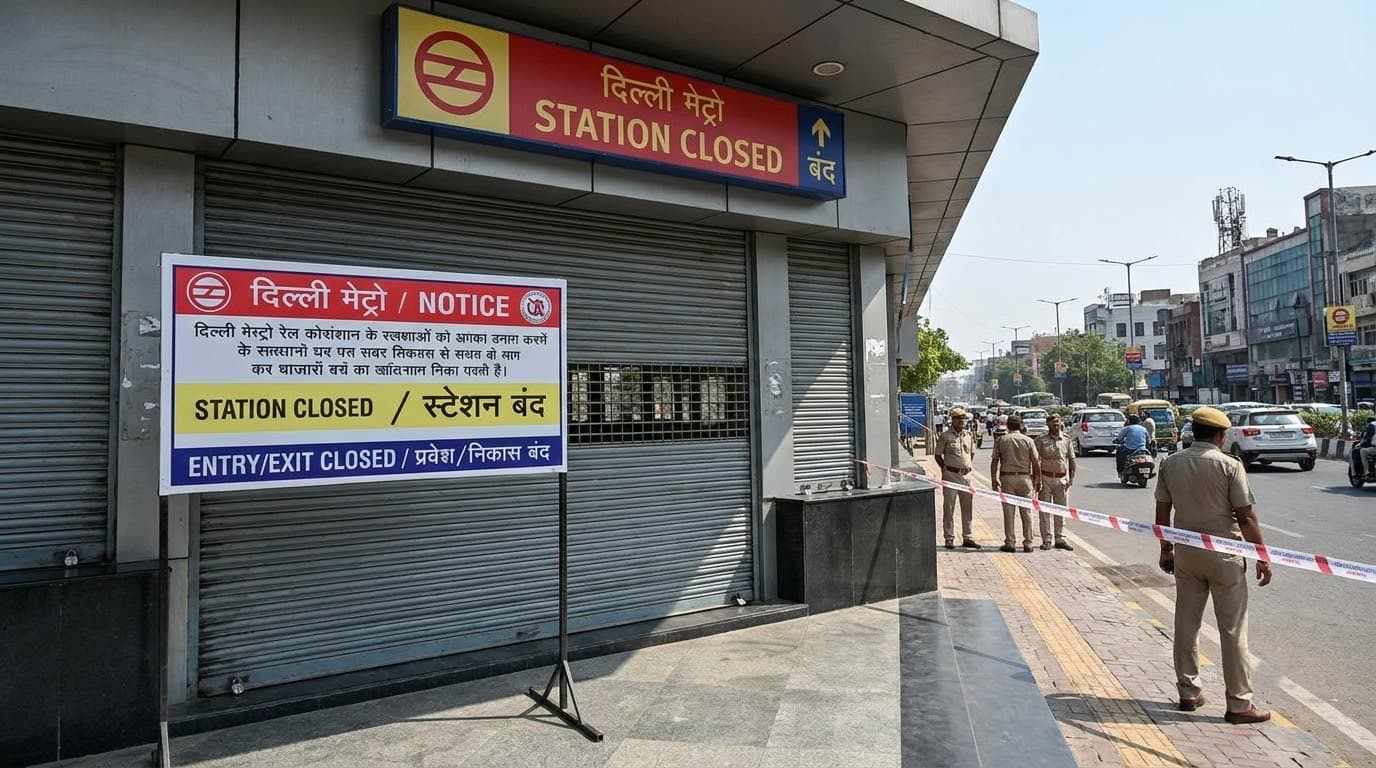
The Supreme Court is currently hearing a batch of petitions against the closure of Delhi Metro stations and the cancellation of long-distance train services to Delhi ahead of protests scheduled for October 10, 2026, demanding the removal of Chief Election Commissioner Gyanesh Kumar.
The protests have been called by various opposition parties and youth organisations, including the Cockroach Janta Party (CJP) and youth wings of several political parties. The authorities have shut services at 57 Delhi Metro stations in anticipation of the demonstrations.
A bench comprising Chief Justice of India Surya Kant and Justices Joymalya Bagchi and V Mohana is hearing the matter after an urgent mentioning by the petitioners. The court is examining whether the shutdown of public transport infrastructure constitutes a disproportionate restriction on the right to peaceful assembly and freedom of movement.
The petitioners contend that the closure of metro stations and suspension of train services effectively prevent citizens from reaching protest sites, thereby undermining constitutional guarantees under Article 19(1)(a) and (b) of the Constitution of India. They argue that such measures, taken without individualised risk assessments, amount to a prior restraint on dissent.
The bench has sought responses from the Delhi Police, the Delhi Metro Rail Corporation, and the Ministry of Home Affairs regarding the basis for the closures and whether less restrictive alternatives were considered. The court has also inquired into the coordination between state and central agencies in implementing the shutdowns.
No interim order has been passed by the court at this stage. The bench is hearing arguments on whether the petitions should be admitted for regular hearing and whether notice should be issued to the respondents.
The matter remains sub judice, with the court expected to deliver its observations after hearing further arguments from the parties involved. The case highlights the recurring tension between maintaining public order and upholding the right to protest in a democratic framework.
The Supreme Court’s scrutiny of the executive’s use of administrative powers to restrict access to public spaces ahead of planned demonstrations is being closely watched for its implications on civil liberties and the scope of judicial review in such contexts.
The outcome of this hearing may influence how authorities balance security concerns with fundamental rights during periods of heightened political activity, particularly when protests target constitutional functionaries.
The court has not expressed any concluded view on the merits of the pleas, and all observations remain strictly within the bounds of the arguments presented and the materials on record.