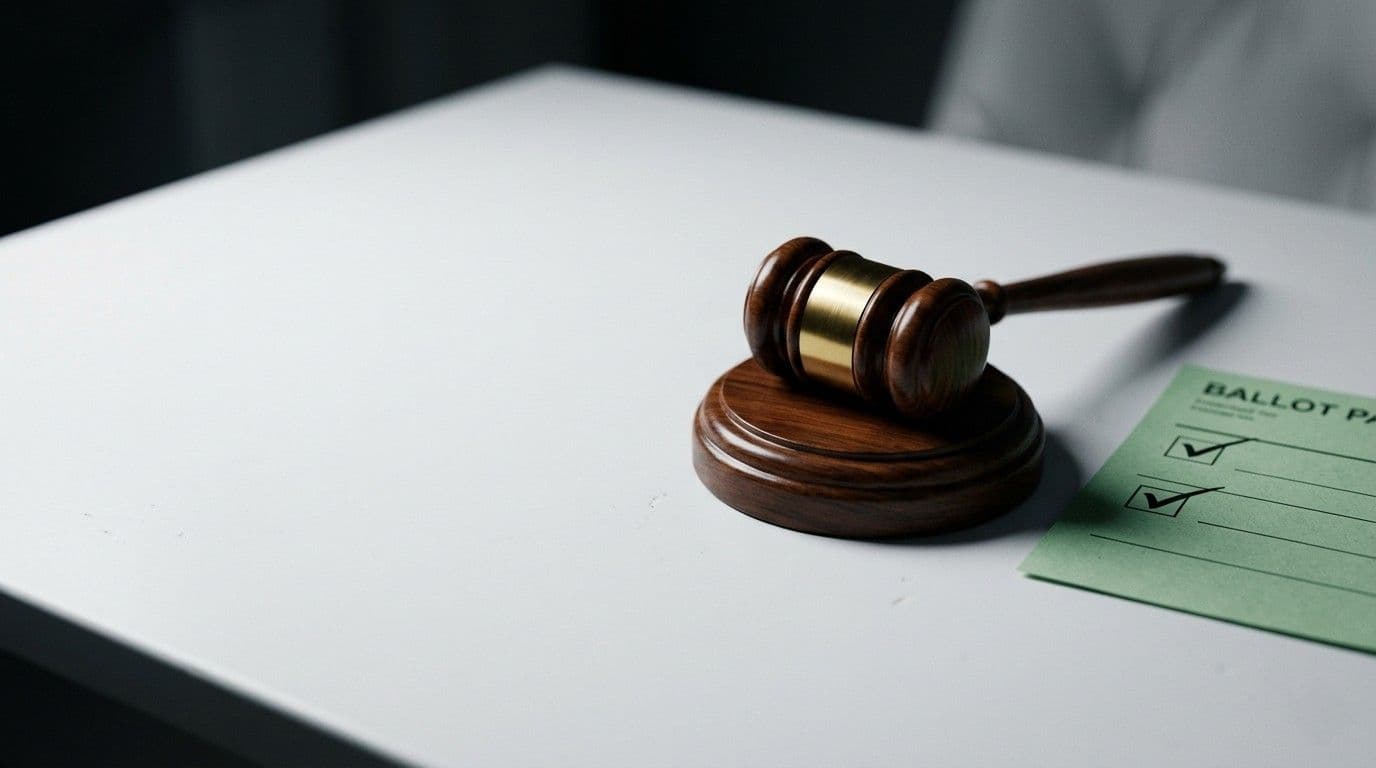
The narrow corridors of election law have once again led to the highest court of the land, as the dispute over the Sringeri Assembly seat reaches a fever pitch. T.D. Raje Gowda, the sitting MLA, has filed a special leave petition in the Supreme Court, challenging a Karnataka High Court directive that ordered a recount of the 2023 assembly election votes. This is not merely a localized tallying dispute; it is a profound legal confrontation regarding the sanctity of the "declaration of result" and the specific threshold of evidence required to disturb a democratic outcome long after the ink has dried.
At the core of this litigation is the tension between electoral finality and the search for absolute accuracy. The Karnataka High Court’s order for a recount was based on allegations of procedural irregularities and discrepancies in the counting of postal ballots. However, Gowda’s appeal to the Supreme Court argues that a recount cannot be ordered on "vague or speculative" grounds. In the theater of Indian elections, the judiciary has historically held that the secrecy of the ballot and the finality of the result are paramount, unless a "prima facie" case of gross error is established.
The Sringeri case is particularly sensitive because of the razor-thin margin that decided the original contest. When a victory is measured in double digits, every rejected vote or misplaced ballot becomes a potential instrument of reversal. By moving the Supreme Court, Gowda is seeking a stay on the High Court’s order, contending that such a recount, conducted years into a legislative term, would set a destabilizing precedent. The legal question now shifts to whether the "purity of elections" demands a second look at the boxes or if the initial certification by the Returning Officer must be treated as sacrosanct.
From a procedural standpoint, this case highlights the grueling timeline of Election Petitions in India. The Representation of the People Act provides a framework for challenging results, but the journey from a district court to the Supreme Court often consumes a significant portion of a representative's tenure. This delay creates a "limbo" where the legitimacy of the sitting member is under a judicial cloud, affecting their ability to legislate effectively and the constituents' right to certain representation.
Strategically, the Supreme Court’s intervention will define the "Standard of Proof" for future recount orders. If the Court upholds the High Court's directive, it may open the floodgates for similar petitions in close-margin seats across the country. Conversely, if it quashes the order, it will reinforce the principle that an election result, once announced, carries a heavy presumption of correctness that cannot be easily displaced by the "losing side’s" dissatisfaction.
The broader democratic implication is the role of the judiciary as the "referee of the referees." While the Election Commission of India manages the ground-level mechanics, the courts are the final arbiters of fairness. The Sringeri row forces us to confront a difficult question: at what point does the pursuit of a "perfect count" begin to undermine the "stability of the mandate"? For the voters of Sringeri, the wait for a final, indisputable answer continues as the legal arguments move from the hills of Karnataka to the capital.
In the final analysis, the Sringeri recount row is a testament to the fact that in a vibrant democracy, no victory is beyond the reach of the law. The Supreme Court's deliberations will not just decide who represents a single constituency, but will calibrate the balance between administrative efficiency and judicial oversight. As the "temple of justice" prepares to hear the case, the focus remains on ensuring that the will of the people—however narrow—is translated into a result that is both mathematically and legally beyond reproach.