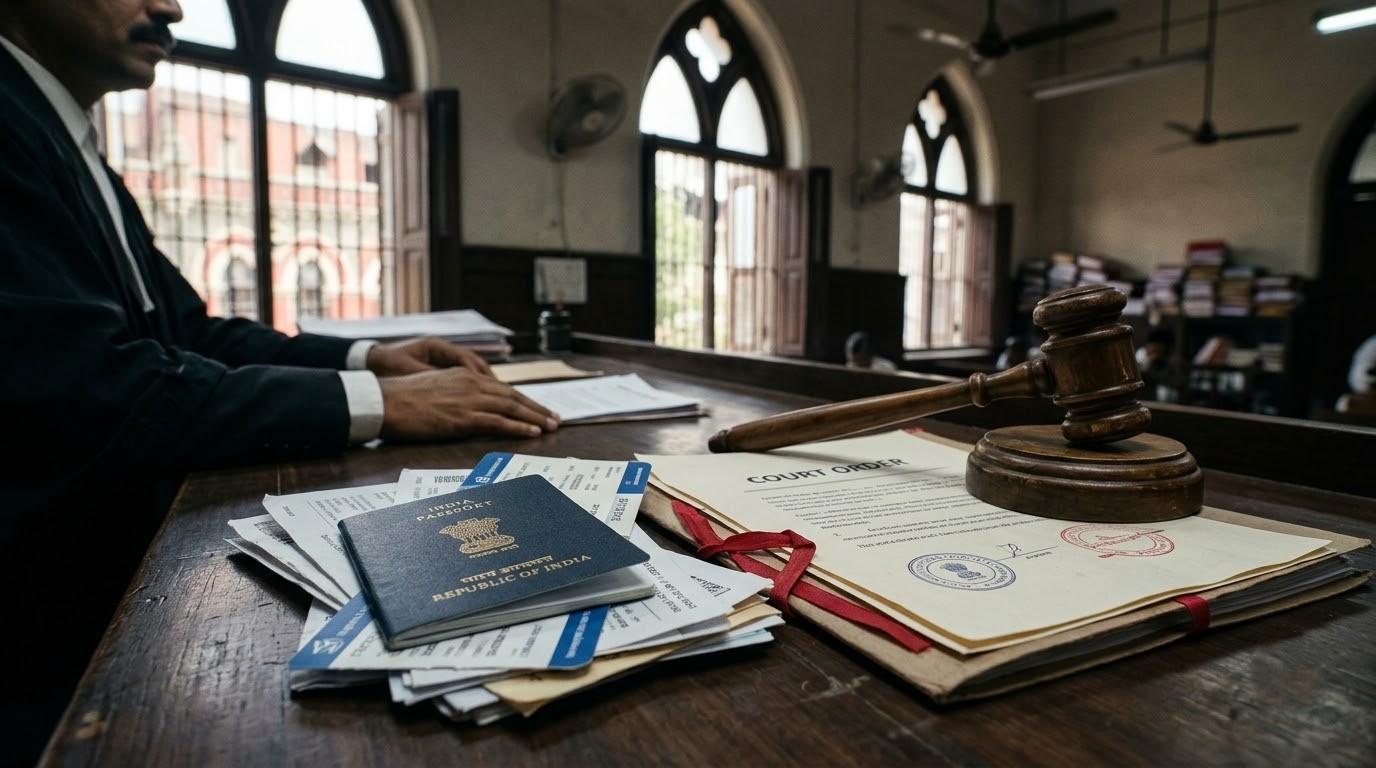
A special SEBI court in Mumbai has declined an application filed by convicted stockbroker Ketan Parekh seeking permission to travel to nine countries for a 91-day family vacation. Special Judge RM Jadhav held that granting such extended overseas liberty would not be expedient in the national interest and the economy of the country, given the risk of the applicant engaging in further violations of securities laws.
The application sought approval to visit Thailand, Malaysia, Indonesia, the United Arab Emirates, Norway, Sweden, Finland, Denmark, and Switzerland between December 20 and March 20. Parekh, who was convicted in connection with the 2000-2001 securities scam, requested the relaxation without offering any additional security deposit.
Why did the court deny Ketan Parekh's travel application?
The court denied the application because a 91-day blanket permission would create a platform for Parekh to commit further securities law violations, particularly front-running using non-public information, and because he had failed to comply with a SEBI Whole Time Member order to deposit Rs 27 crore in wrongful gains.
Court's Reasoning on National Interest and Recidivism Risk
Judge Jadhav observed that the applicant's history and the nature of the pending proceedings warranted a restrictive approach. The court noted that SEBI had opposed the plea on the ground that Parekh had previously misused travel concessions to orchestrate front-running activities leveraging non-public information of a large institutional client. The regulator further submitted that Parekh had not complied with a January 2, 2025 order of a Whole Time Member directing the deposit of Rs 27 crore representing wrongful gains. This non-compliance had prompted SEBI to initiate fresh prosecution under securities laws.
The judge concurred with the prosecution's assessment that the investigation was ongoing and Parekh's presence was necessary for hearings prior to the taking of cognizance and the passing of a final order. "Granting permission for traveling abroad for such a long period for 91 days would provide him the platform to commit identical activities in violation of the securities laws," the court recorded. The bench concluded that the possibility of the applicant indulging in unlawful activity in contravention of securities law could not be ruled out if such blanket permission were granted.
Distinction from Prior High Court Precedents
Parekh's counsel, Advocate Burzin Bharucha, relied on previous High Court orders that had permitted overseas travel. The special court, however, distinguished those precedents on the basis of duration. Judge Jadhav noted that the earlier cases cited by the defence involved brief overseas trips ranging between six and twenty days. The current request for a continuous 91-day sojourn across multiple jurisdictions was held to be materially different in scale and risk.
The court held that the application was devoid of merits and substance and accordingly rejected it. Special Public Prosecutor Anubha Rastogi appeared for SEBI during the proceedings.
Parameter | Precedents Cited by Defence | Current Application |
|---|---|---|
Duration of Travel | 6 to 20 days | 91 days |
Nature of Trip | Short-term visits | Extended multi-country vacation |
Court's Assessment | Permitted | Rejected as high risk for recidivism |
The order underscores the judiciary's emphasis on protecting the integrity of the securities market and the national economy when considering travel relaxations for individuals with a history of market manipulation and pending regulatory proceedings.