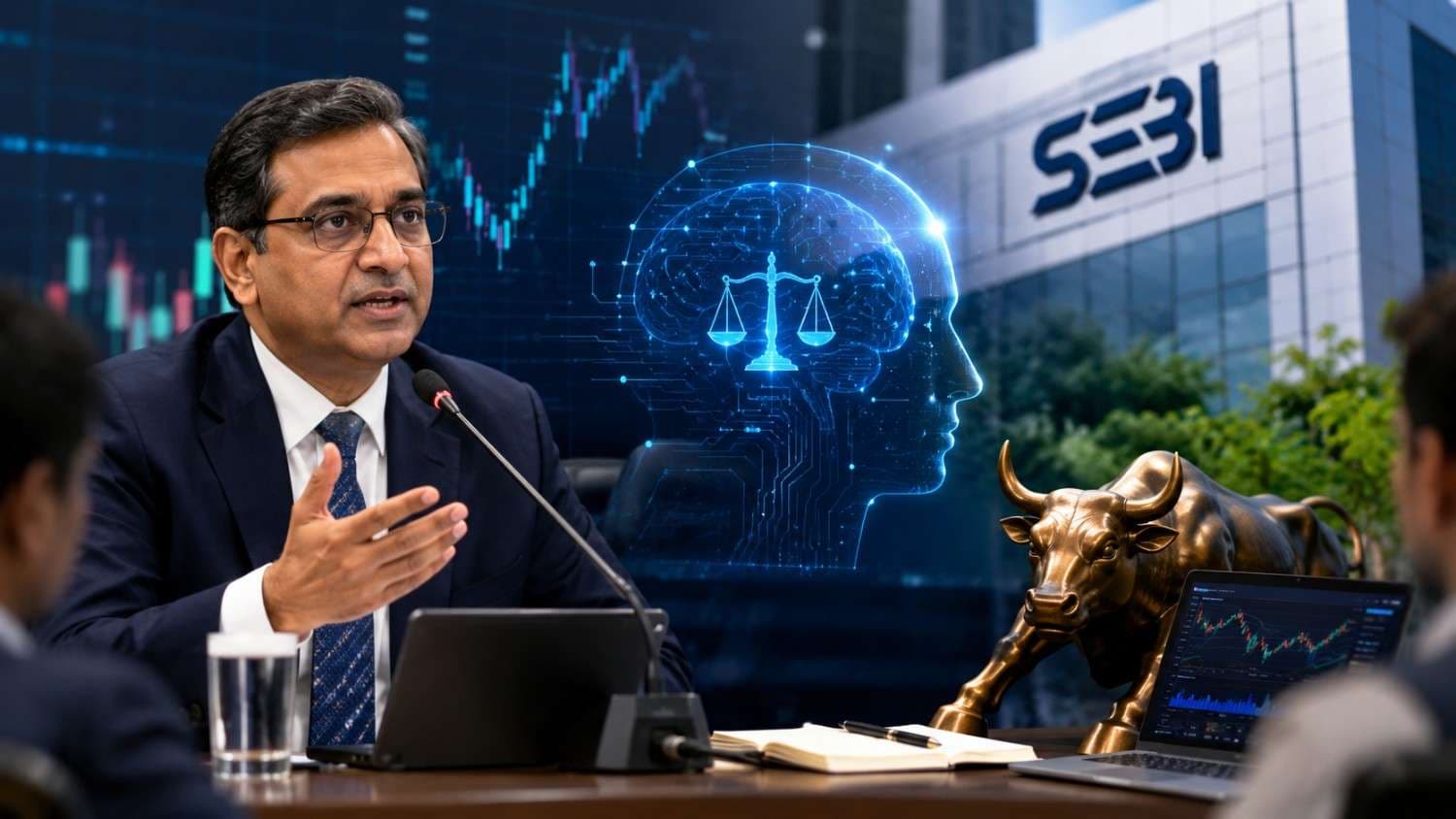
SEBI Chairman Mr. Tuhin Kanta Pandey declared at the 23rd FICCI Capital Markets Conference 2026 that the regulator was preparing guidelines for the responsible use of artificial intelligence and machine learning in the securities market. The proposed framework is expected to follow a tiered approach, calibrating requirements according to the risk posed by specific use cases.
The guidelines will include human oversight requirements, stronger data controls, and kill-switch mechanisms designed to halt AI systems quickly if they begin to behave abnormally. This development builds upon SEBI’s prior engagement with AI applications in the market.
In May of the previous year, SEBI issued a circular specifically addressing the reporting of AI and machine learning applications offered and used by mutual funds. The Mutual Funds Circular established a reporting mechanism for mutual funds utilizing AI or ML applications either as investor offerings, in internal operations, for disseminating investment strategies or advice, or for carrying out compliance functions.
The reporting mechanism required mutual funds to detail how an AI application was implemented and to disclose the safeguard mechanisms in place to prevent abnormal behaviour by such applications. This reporting mandate represents a narrow initial step that could evolve into a broader market-wide framework.
SEBI’s capacity to develop such a framework stems from its broad normative functions, which allow it to formulate rules and regulations and issue circulars or advisories on matters affecting the securities market. The regulator’s objective in doing so is to maintain market order and protect investor wealth.
The Supreme Court has previously affirmed that SEBI’s wide powers, combined with its expertise and robust information-gathering mechanisms, lend a high level of credibility to its decisions as a regulatory, adjudicatory, and prosecuting agency.
Despite these advances, significant challenges remain. A key concern is determining accountability when AI provides advice that leads to adverse outcomes or encourages harmful investments. The opacity inherent in AI and ML systems complicates efforts to identify risks in decision-making processes.
This gap between the growing role of AI in investment decisions and the market’s ability to understand, monitor, and, if necessary, intervene in that decision-making represents a central challenge for Indian securities regulation.
The Mutual Funds Circular attempts to address this opacity by requiring disclosures regarding the explainability of AI models in use. However, it remains unclear how SEBI intends to exercise its powers if it finds such disclosures inadequate. Furthermore, no threshold has been established to assess the adequacy of the logic and information underpinning AI-generated advice.
SEBI’s wide-ranging powers—which are normative, executive, and adjudicatory in nature—equip it to address these shortcomings should it choose to do so. A complete prohibition on AI use is unlikely to be considered appropriate, given the technology’s demonstrated benefits in efficiency and fraud detection.
SEBI itself is harnessing AI through initiatives such as Project SUDARSAN, an AI-based surveillance tool that scans social media to flag fraudulent investment content and impersonators posing as registered advisors. Another initiative, R(AI)DAR, reviews mutual fund advertisements for compliance and misleading claims.
The effectiveness of SEBI’s regulatory response will ultimately depend on its ability to keep pace with the rapid advancement of AI technologies while ensuring that market integrity and investor protection are not compromised.