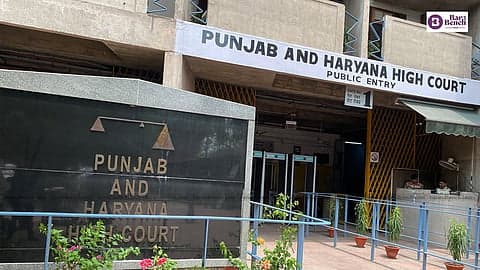
The Haryana State Legal Services Authority (HALSA) organised a special Lok Adalat on 18 July 2026 with the explicit purpose of addressing matters pending under the Negotiable Instruments Act, 1881. The initiative was spearheaded by Justice Deepak Sibal, who serves as a Judge of the Punjab and Haryana High Court and holds the position of Executive Chairman of HALSA. The Lok Adalat was convened simultaneously in all twenty‑two districts and thirty‑eight sub‑divisions of the state, reflecting a coordinated effort to maximise outreach.
According to the authority, the Lok Adalat dealt with nine thousand five hundred and ninety cases that pertained to various disputes emanating from the Negotiable Instruments Act, the majority of which relate to cheque dishonour proceedings under Section 138 of the Act. The proceedings were conducted in accordance with the provisions of the Legal Services Authorities Act, 1987, which empower Lok Adalats to settle disputes amicably and to record settlements that have the same force as a decree of a civil court.
Justice Deepak Sibal, while overseeing the exercise, emphasised that the primary objective of the Lok Adalat was to provide a forum where parties could reach mutually acceptable solutions without undergoing protracted litigation. He noted that the mechanism not only reduces the financial and temporal burden on litigants but also helps in preserving commercial relationships that might otherwise be strained by adversarial court proceedings.
The authority reported that the settlements achieved during the Lok Adalat resulted in the disposition of the aforementioned 9,590 cases. The aggregate monetary value of the settled claims amounted to Rs. 97,29,66,109. This figure, HALSA stated, underscores the efficacy of the Lok Adalat in delivering substantial financial relief to the parties involved while simultaneously contributing to the reduction of pendency in the subordinate courts of Haryana.
In explaining the broader implications, HALSA pointed out that the successful conduct of the special Lok Adalat has had a two‑fold impact. First, it has alleviated the backlog of cheque dishonour cases that have traditionally clogged the dockets of trial courts across the state. Second, it has reinforced public confidence in the Lok Adalat institution as an effective, efficient, and citizen‑friendly alternative dispute resolution mechanism. The authority added that the amicable nature of the settlements fosters harmony between the parties, which is often difficult to achieve through conventional adjudication.
The exercise also served as a practical demonstration of the state’s commitment to strengthening the Alternate Dispute Resolution framework. By holding the Lok Adalat in every district and sub‑division, HALSA ensured that litigants from remote areas had access to the forum without incurring additional travel costs or delays. The authority highlighted that such widespread accessibility is essential for the equitable dispensation of justice, particularly in matters involving negotiable instruments where the parties are frequently traders, businesses, or individuals engaged in routine financial transactions.
In conclusion, the special Lok Adalat conducted under the leadership of Justice Deepak Sibal resulted in the amicable settlement of 9,590 Negotiable Instruments Act cases, involving a total sum of Rs. 97,29,66,109. The outcome not only reduced judicial pendency but also affirmed the role of Lok Adalats as a viable means of achieving swift and consensual dispute resolution in Haryana.