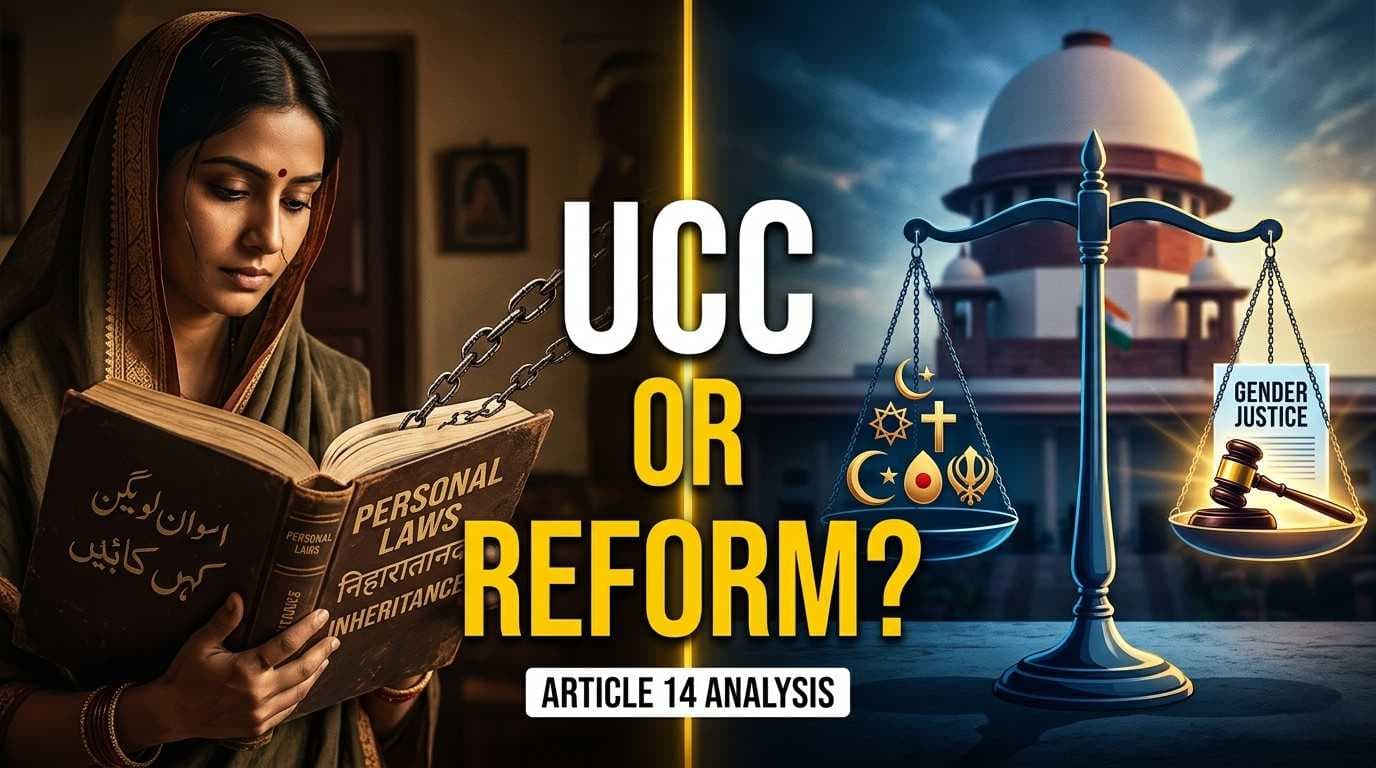
An analytical piece published on April 17, 2026, explores the growing tension between the push for a Uniform Civil Code (UCC) and the need for internal Personal Law reforms. Sparked by recent Supreme Court proceedings regarding discriminatory inheritance practices, the analysis argues that the reflexive call for a UCC often mistakes "uniformity for justice." It suggests that simply replacing diverse personal laws with a single code like the Indian Succession Act (ISA) might not be the panacea many expect, as the ISA itself suffers from legislative deficits and unaddressed Law Commission recommendations.
The article takes a historical perspective, noting that the Shariat Act of 1937 was not merely a sectarian relic but a product of a "nationalist affirmation" of legal pluralism. It cites Mahatma Gandhi’s philosophy that true unity stems from respecting religious and cultural autonomy rather than erasing identities. The central thesis posits that instead of a "top-down" replacement of laws, the more durable path to gender justice lies in the "systematic internal reform" of existing personal laws to align them with constitutional standards of equality.
A critical concern raised in the analysis is the potential for a "legal vacuum." If the Supreme Court were to strike down specific personal law statutes without a robust and fair alternative in place, it could leave the very women it seeks to protect in a more precarious position. The piece highlights that the current legal discourse often ignores the 247th Law Commission report, which suggested vital alterations to inheritance schemes that have yet to be fully integrated into broader civil law.
Ultimately, the analysis calls for "historical sobriety" and a rights-based approach that prioritizes "reform before uniformity." It argues that while the UCC remains a "constitutional ambition," the immediate priority should be repairing the inequities within specific communities' laws. This approach, the author suggests, would satisfy both the mandate for gender justice under Article 14 and the preservation of cultural pluralism, ensuring that the law evolves without alienating the citizens it governs.