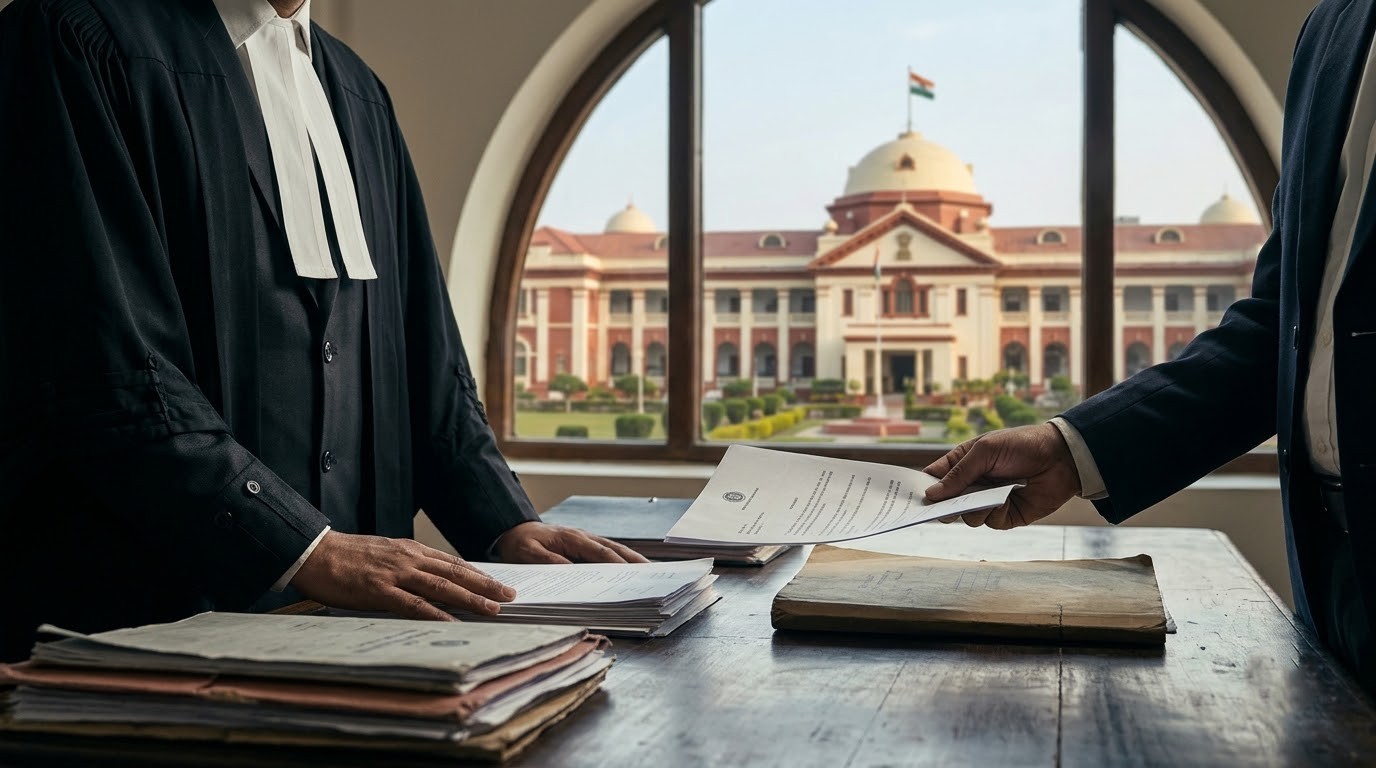
The Patna High Court has held that the termination of an advocate's professional engagement or removal from a client's panel does not, by itself, constitute defamation. Justice Ramesh Chand Malviya delivered the ruling on October 27 while allowing a petition filed by officials of the State Bank of India (SBI) challenging a trial court order that had rejected their application to dismiss a defamation suit filed against them.
Background of the Dispute
The respondent, an advocate, had served as an empanelled lawyer for SBI at the Jamui Civil Court from 1983 to 2018. In 2018, another panel advocate re-examined a title deed on which the respondent had submitted a title investigation report and opined that the document was not genuine. Following this, the bank removed the respondent from its panel by a letter dated February 28, 2019. The advocate alleged that a letter dated December 7, 2018, circulated by the bank, described him as a fraud in connection with the 2014 title verification report, thereby lowering his prestige, dignity, and reputation. He claimed financial loss and mental agony, filing a civil defamation suit against the bank officials.
The advocate had previously filed a criminal defamation case which was dismissed by the trial court. A subsequent revision petition was allowed on February 24, 2020, and that matter remained pending before the High Court. In the civil suit, the trial court rejected the bank's application to dismiss the suit on the ground that the bank had not clearly stated the specific law under which the suit was barred. Aggrieved, the bank approached the High Court.
Submissions Before the Court
Senior Advocate Chitranjan Sinha and Advocate Rakesh Kumar Singh, appearing for the bank, submitted that removing an advocate from a panel is neither a crime nor an act that harms an advocate's reputation. They contended that advocates for the state, central government, and corporations are routinely changed across all levels of the judiciary, including the Supreme Court, without attracting defamation proceedings. Counsel argued that the removal occurred approximately a year after the other advocate's report and was not a direct consequence of that opinion. They further submitted that a litigant must be free to change counsel, and professional ethics require an advocate to return the brief when the client no longer wishes to continue the engagement.
Advocate Pankaj Kumar Sinha, representing the advocate, argued that the December 2018 letter had falsely branded his client a fraud regarding a report that was correct and later found genuine by the police. He contended that the bank lacked authority to seek an explanation from a panel lawyer, its only power being removal. He also highlighted that the allegedly defamatory letter was circulated to the court nearly two and a half months before the formal removal letter was issued.
Court's Analysis on Defamation and Professional Engagement
The High Court examined the essential ingredients of defamation, noting that a person is defamed not merely because of a loss of standing or livelihood, but because another person makes or publishes an imputation concerning them to a third party in circumstances not excused by law. The Court held that a client, including a bank, exercising the legal right to end a professional engagement or remove an advocate from a panel makes no imputation and publishes nothing defamatory by that act alone.
The Court observed that no statutory provision creates a right for an advocate to be engaged by a specific client, nor does it place any litigant or institution under an obligation to brief, retain, or continue retaining a particular advocate. Quoting the order, the Court stated: “The right to practice is a right to appear when engaged; it is not a right to be engaged.”
Addressing the advocate's distress over the loss of a panel engagement held for approximately 35 years, the Court acknowledged the hardship but drew a clear distinction: “But hurt feelings and damaged ego are not defamation.” The Court clarified that the law of defamation protects reputation against false and harmful publications to others; it does not compensate for every reputational or financial consequence flowing from a lawful act such as the termination of a contract or professional engagement. The act of ending a relationship, the Court ruled, is not by itself a statement about the person with whom the relationship is ended.
Does a client's right to disengage counsel extend to banks and corporate entities?
Yes. The Patna High Court affirmed that a litigant, including a bank or corporation, possesses an unfettered right to terminate an advocate's engagement or remove them from a panel. This right arises from the fiduciary nature of the lawyer-client relationship and does not require justification. The exercise of this right, without publication of a defamatory imputation to a third party, cannot ground a defamation claim.
Disposition
The High Court allowed the petition filed by the SBI officials, setting aside the trial court's order rejecting the application to dismiss the suit. The Court concluded that the plaint filed by the advocate did not disclose a cause of action for defamation, as the removal from the panel constituted a lawful exercise of the bank's right to choose its legal representation, devoid of any actionable publication or imputation.
Aspect | Advocate's Contention | Court's Finding |
|---|---|---|
Nature of Removal | Alleged defamation via letter branding advocate a fraud; circulated to court. | Termination of panel membership is a lawful exercise of client's right; not an imputation. |
Right to Engagement | Implied right to continue on panel after 35 years of service. | No statutory right to be engaged by a specific client; right to practice ≠ right to be engaged. |
Defamation Standard | Loss of prestige, dignity, financial loss, and mental agony constitute defamation. | Hurt feelings and damaged ego are not defamation; requires publication of false imputation to third party. |