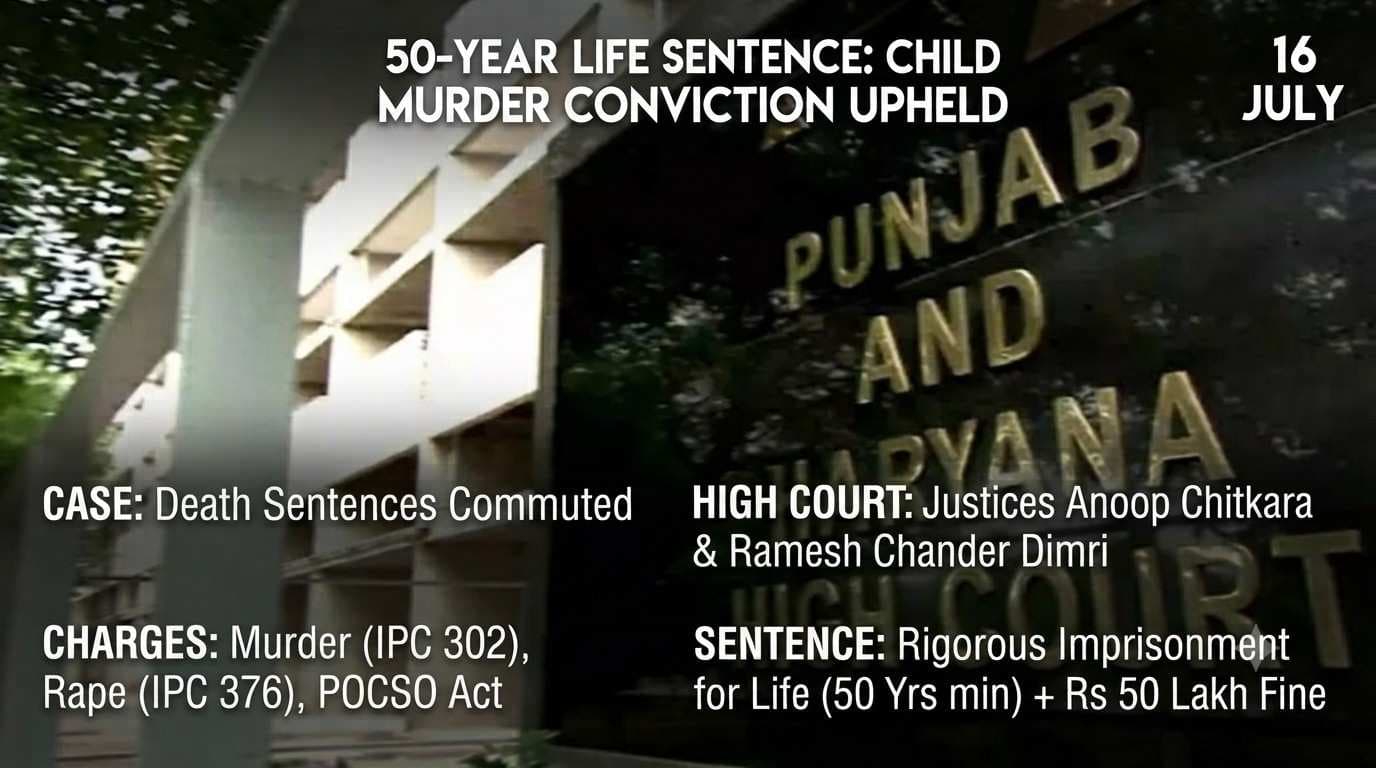
The incident occurred on 24 May 2021 when the victim, a seven‑year‑old girl belonging to a scheduled tribe family from Madhya Pradesh, was reported missing by her father. The family was residing at a tile plant in Palwal where the father worked as a labourer. According to the prosecution, the accused, a neighbour, took advantage of the parents’ absence for work and lured the child away. The trial court, after examining the evidence, recorded that the accused had committed penetrative sexual assault on the minor, subsequently throttled her to death and concealed the body in a pit. The post‑mortem report and DNA analysis corroborated the sexual assault charge. On the basis of these findings, the trial court convicted the accused under Sections 302 (murder) and 376 (rape) of the Indian Penal Code and the relevant provisions of the Protection of Children from Sexual Offences Act, and sentenced him to death.
High Court’s examination of the prosecution case
In its judgment delivered on 8 July, a Division Bench comprising Justice Anoop Chitkara and Justice Ramesh Chander Dimri held that the prosecution had proved the guilt of the accused beyond reasonable doubt. The Bench affirmed that the offence of penetrative sexual assault was established by the post‑mortem report and the DNA evidence, thereby upholding the conviction on both counts. The Court noted that the material placed on record left no reasonable doubt about the involvement of the accused in the crime.
Consideration of sentencing alternatives
Although the conviction was affirmed, the Bench turned to the question of sentence. It observed that the imposition of capital punishment must be reserved for the rarest of rare cases and that any deviation from this principle must be justified by mitigating circumstances. The Court referred to various judicial precedents that guide the exercise of discretion in sentencing, emphasizing that the punishment must be proportionate and not violate the accused’s right to a sentence comparable to that awarded to other similarly situated offenders.
The Bench stated that, taking into account all mitigating factors, the maximum incarceration permissible other than death should be imposed to avoid a disproportionate sentence. Consequently, it concluded that the death sentences on both murder and rape charges should be commuted to life imprisonment.